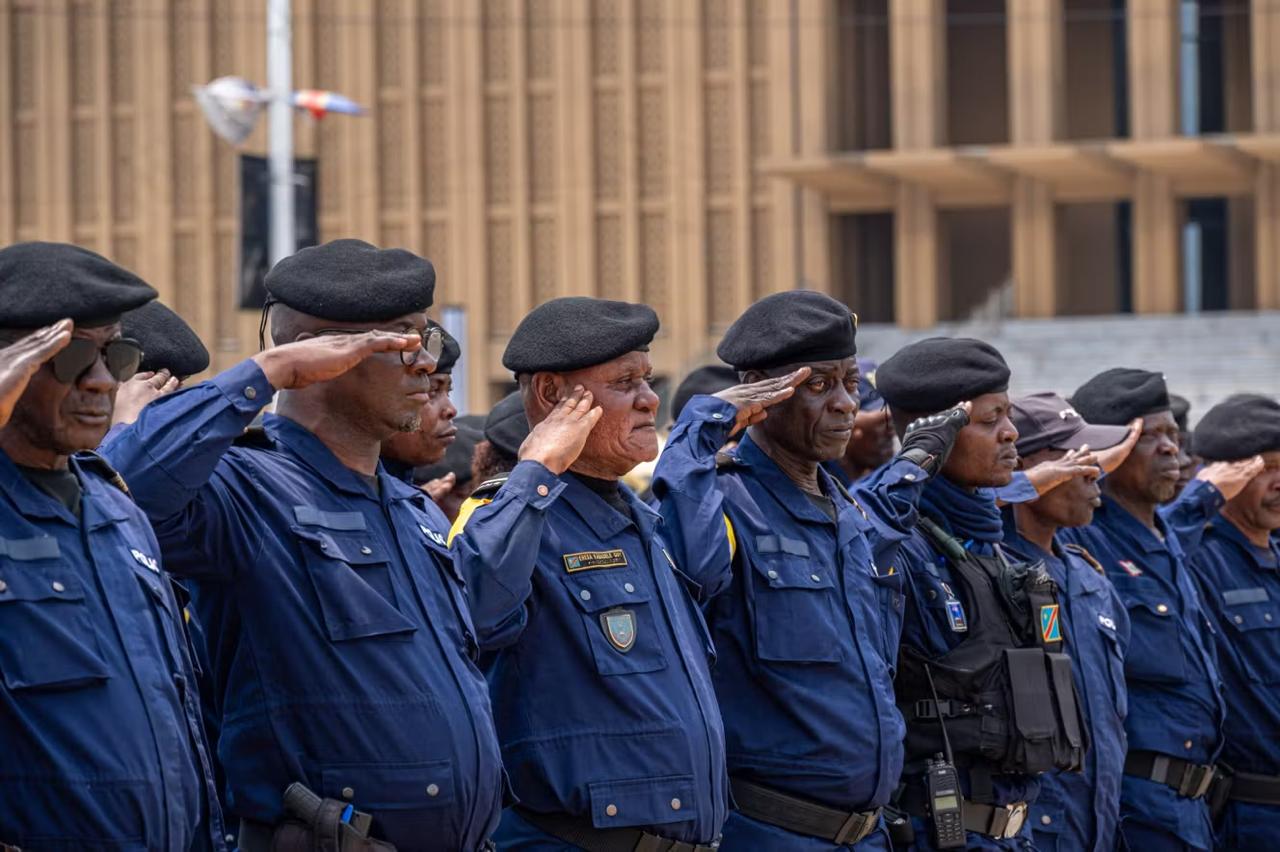
The Democratic Republic of Congo (DRC) is grappling with an unprecedented crisis within its national police force. A recent government-led audit has exposed a staggering discrepancy: out of 157,886 officially registered officers, a shocking 63,817 are either fictitious or inactive. This revelation has drastically reduced the number of actively deployed officers, pushing the police-to-population ratio to critically low levels that fail to meet the country’s pressing security demands.
In response, authorities have initiated a sweeping verification campaign, requiring officers to undergo biometric registration. The process, which begins in Kinshasa, will gradually expand to all 25 provinces. The initiative aims to purge duplicate records, eliminate ghost employees, and establish a secure database to streamline salary payments, recruitment, and promotions.
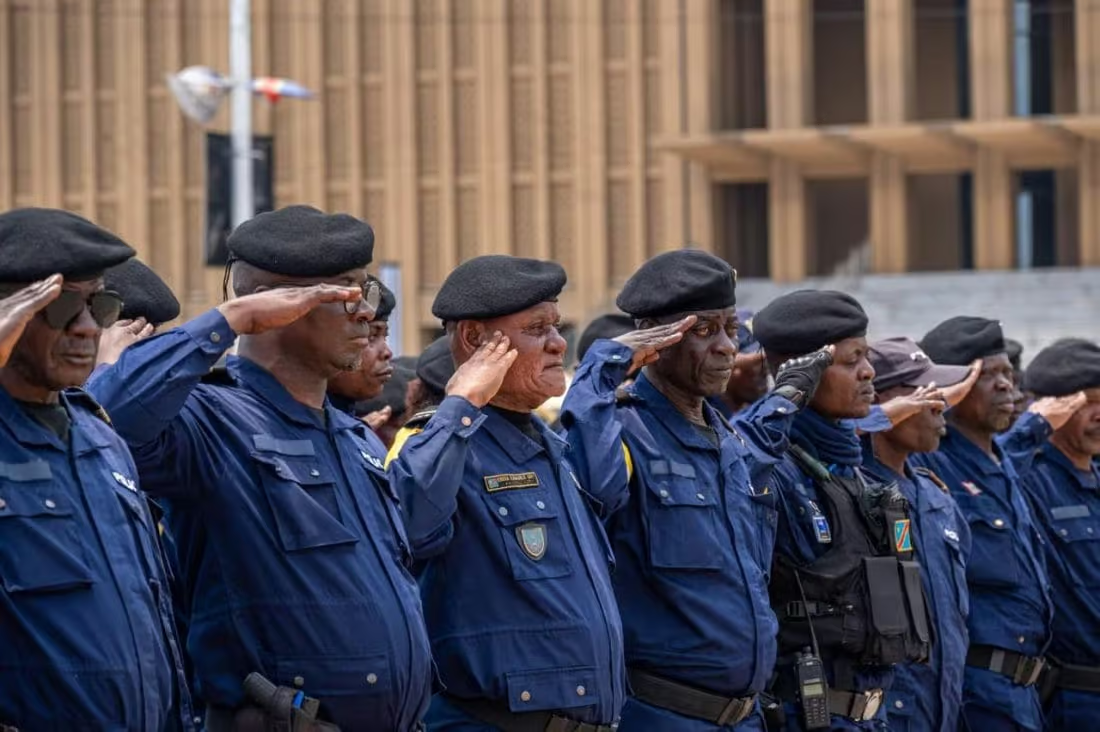 Congolese police officers during a parade in Kinshasa, February 24, 2025. © HARDY BOPE / AFP
A bold reform to rebuild trust and security
The audit underscores that the presence of these irregular officers costs the national treasury an estimated $99.8 to $233 million annually. This reform is part of a broader modernization program for the police, funded with a $2.55 billion budget and set to run through 2030. Key objectives include recruiting and training 90,000 new officers, restructuring security institutions, and fostering stronger ties between law enforcement and local communities.
This crackdown comes as public anxiety over rising crime—particularly in Kinshasa—escalates. Citizens report a surge in armed robberies, kidnappings, and violent assaults, putting immense pressure on the government to act. President Félix Tshisekedi has called for intensified efforts to dismantle criminal networks while accelerating security sector reforms to restore public confidence in law enforcement.