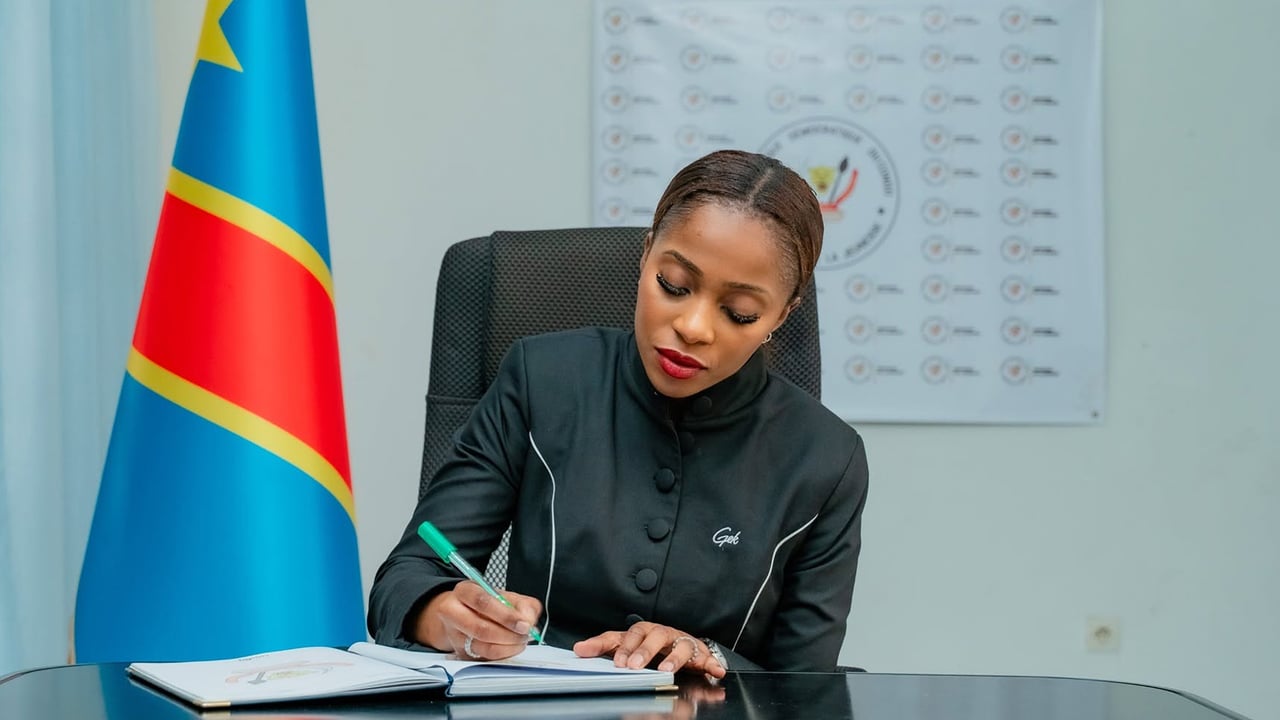
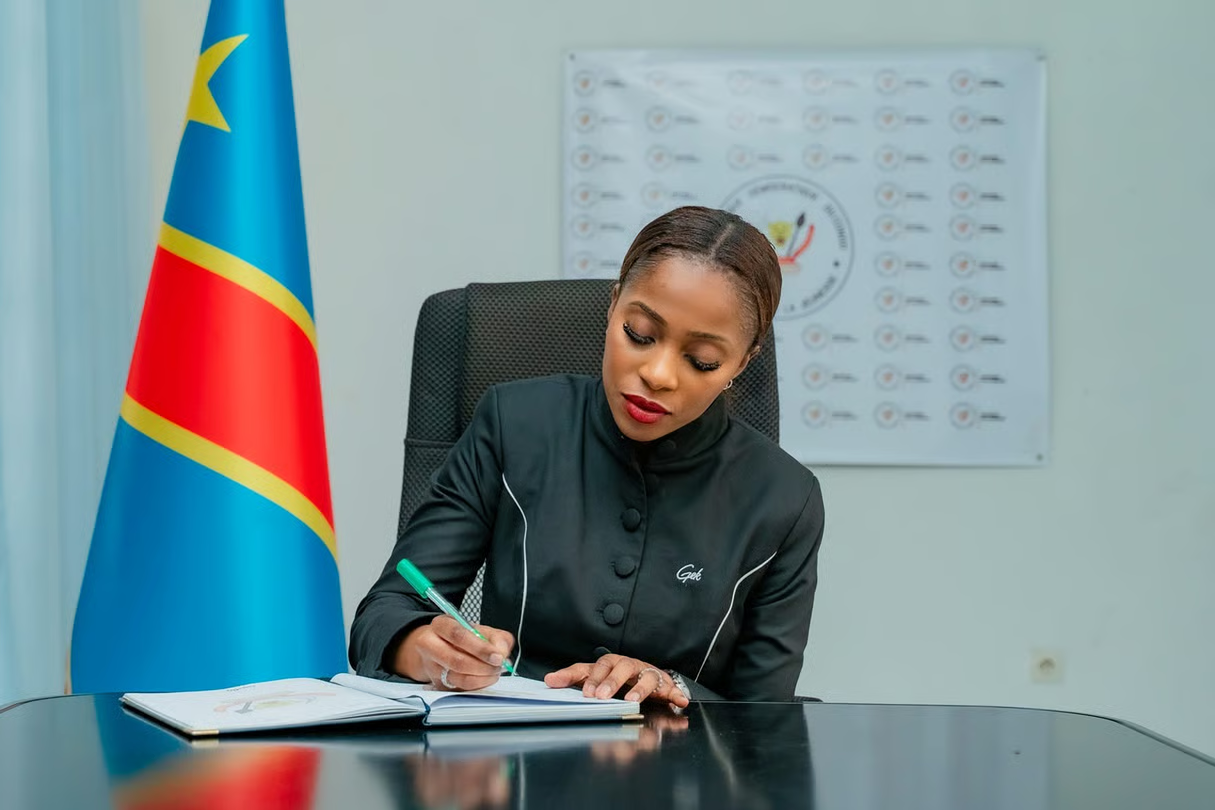
The Democratic Republic of the Congo (DRC) finds itself at the heart of a high-stakes constitutional debate, with Minister Grâce Kutino’s recent remarks drawing intense scrutiny. Her public statements, delivered with unwavering conviction, have sparked widespread speculation about the government’s true stance on proposed constitutional amendments. As discussions intensify within political circles and among the public, her words carry significant weight, prompting questions about alignment with official policy.
Minister Kutino’s role in the constitutional debate
Minister Grâce Kutino, serving as the head of the Ministry of Youth and Patriotic Awakening, has emerged as a vocal figure in the ongoing constitutional discourse. Her declaration, “Yes, I do,” during a recent parliamentary session, has become a focal point of analysis. Observers are now dissecting her remarks to determine whether they reflect a personal conviction or an official endorsement of the amendments under consideration.
The ambiguity surrounding her statements has fueled debates across the country. Some interpret her words as a clear signal of government support, while others argue that her position remains deliberately ambiguous. This uncertainty has further complicated an already contentious process, as political factions clash over the implications of the proposed changes.
Public and political reactions to her statements
The minister’s comments have triggered a wave of reactions from both the public and political leaders. Supporters of the constitutional amendments see her remarks as a validation of their efforts, while critics view them as a worrying sign of potential governmental overreach. Social media platforms have become arenas for heated discussions, with hashtags and opinion pieces amplifying the divide.
In the halls of power, reactions have been equally polarized. Some lawmakers have praised her for her clarity, while others have called for greater transparency regarding the government’s intentions. The lack of a definitive response from the executive branch has only deepened the uncertainty, leaving many to wonder about the true direction of the constitutional reform process.
What’s next for the constitutional debate?
As the debate continues to unfold, all eyes remain on Minister Kutino and the broader government. The coming weeks will be critical in determining whether her statements were a deliberate strategic move or an unintended slip of the tongue. The outcome of this constitutional process could have far-reaching consequences for the DRC’s political landscape, shaping the future of governance and citizen rights in the country.
The stakes could not be higher. With the nation watching closely, the government faces mounting pressure to clarify its position and provide definitive answers. Until then, the constitutional debate remains shrouded in ambiguity, with Minister Kutino’s words serving as both a catalyst and a source of contention.