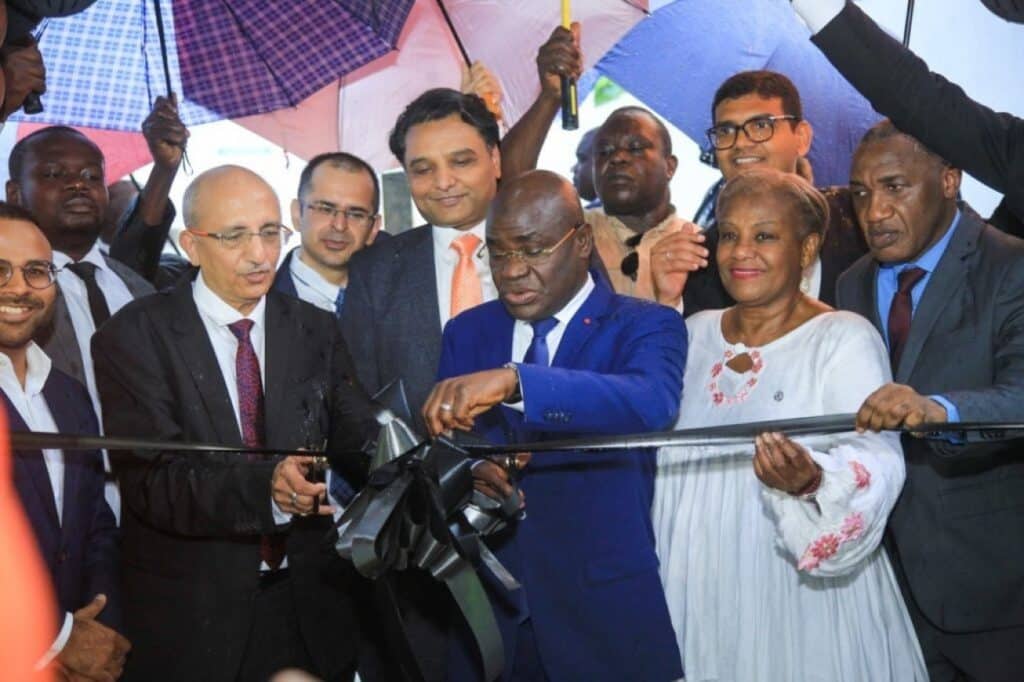
On June 18, 2026, the Ivorian government officially opened a new biochar production facility in Attinguié, located within the PK 31 industrial zone on the outskirts of Abidjan.
Developed by the Valency International group, this industrial initiative seeks to repurpose cashew shells—traditionally treated as manufacturing waste—into high-value assets for the energy and industrial sectors.
The inauguration event was led by Kalil Konaté, the Minister of Trade, Industry, and Handicrafts, who was joined by various administrative leaders, institutional representatives, and technical partners.
A major step for circular economy in West Africa
Recognized as the first large-scale commercial unit in Africa dedicated to producing biochar from cashew husks, the plant has the capacity to process nearly 20,000 tons of cashew transformation residues annually. The facility is expected to yield approximately 6,000 tons of biochar while also generating biofuel and energy through advanced agricultural sub-product recovery technology.
According to the project developers, this breakthrough will significantly lower the volume of waste produced by the cashew industry. Simultaneously, it creates fresh economic prospects within this vital sector.
Minister Kalil Konaté emphasized the importance of the project, noting that the nation is witnessing the conversion of agricultural by-products into strategic industrial resources. He praised the investment for its role in generating local value and fostering a more sustainable industrial landscape.
Following the ceremony, the Minister toured the facility alongside executives from Valency International and Revata Carbon. He reiterated the government’s steadfast support for pioneering industrial projects that drive job creation and economic expansion.
As the global leader in raw cashew nut production, Côte d’Ivoire is actively implementing strategies to boost local processing. This new biochar unit reinforces the country’s goal of building a robust transformation industry while utilizing agricultural waste through a circular economy model.
This infrastructure marks a turning point for the cashew sector, highlighting the Ivorian authorities’ determination to make industrial processing a primary engine for long-term economic development.