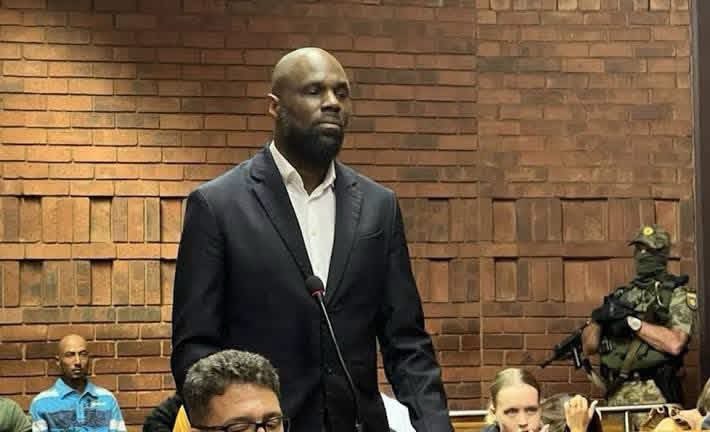
Court rules against bail application in sensitive legal proceedings
The judicial system has denied Kémi Séba’s request for bail, a decision announced in a high-stakes case now overshadowed by allegations of an international exfiltration scheme. Investigators allege that preparations were underway to facilitate Séba’s unauthorized departure from the country, prompting prosecutors to highlight risks that could undermine ongoing legal proceedings.
Coordinator’s early foreign contacts under scrutiny
The investigation has turned its focus to Héry Djehuty, coordinator of Urgences Panafricanistes and a close associate of Séba. According to prosecutorial findings, Djehuty initiated the first contacts with foreign intermediaries who may have been involved in arranging Séba’s potential escape. This revelation raises crucial questions about how external networks were engaged and what role Séba’s inner circle played in these covert preparations.
Why were these contacts established? Did Djehuty act under someone’s direct instruction, or did he pursue this initiative independently? The answers could reveal the extent of Séba’s entourage’s involvement in the suspected operation.
Financial contributions spark further investigation
Another layer of this case involves fundraising efforts led by Héry Djehuty on Séba’s behalf. Prosecutors are now examining whether these collected funds may have been diverted or intended to be diverted to finance logistical arrangements for an exfiltration. With Russian nationals and South African rangers named as potential facilitators, the origins and allocation of these monies have come under intense scrutiny.
Key inquiries include:
What were the declared purposes of these funds?
Were contributions solely allocated to legal defense?
Could some funds have been earmarked for covert operations?
Were financial records fabricated to obscure improper expenditures?
Foreign intermediaries: Russian contacts and South African rangers
Prosecutorial reports point to the involvement of Russian nationals as key facilitators in a potential exfiltration plan. The question now centers on how these individuals were identified, what channels were used to approach them, and what operational arrangements were discussed. International escape operations require intricate coordination, including secure transport, communication networks, and reliable support systems.
Simultaneously, South African rangers described as experienced security professionals have been linked to the suspected scheme. Authorities are investigating whether their expertise was intended to assist in navigation, logistics, or securing escape routes. A critical line of inquiry involves determining whether these South African operatives were connected to the Russian intermediaries and whether Héry Djehuty facilitated their introduction.
South African intelligence services under examination
Attention has also turned toward South African intelligence agencies, with speculation about their awareness of the unfolding plot. Investigators are reviewing whether local or international intelligence services were monitoring the movements of these suspected facilitators or had prior knowledge of the alleged exfiltration efforts. Tracking communications, travel patterns, and exchanges among key figures could expose whether an organized network existed to orchestrate Séba’s departure.
Bail denial hinges on risk of flight
The court’s decision to reject Séba’s bail application underscores the perceived gravity of the situation. Prosecutors emphasized that the suspected international escape plot complete with foreign operatives and logistical arrangements created an untenable risk of flight. The magistrate’s ruling hinged on concerns that Séba could abscond, thereby derailing the judicial process.
However, the full rationale behind the denial remains under review. Legal analysts suggest that the judge likely weighed factors such as the strength of the evidence, the likelihood of interference with the investigation, and the adequacy of assurances that Séba would remain available for judicial proceedings.
Unanswered questions and potential legal consequences
As the investigation progresses, critical questions demand answers:
Who instructed Héry Djehuty to establish foreign contacts?
What was the nature of the relationship between Russian nationals and South African rangers?
Who was responsible for financing travel, accommodations, and operational support?
Did Séba’s legal defense team receive full transparency regarding fund utilization?
Were South African intelligence agencies aware of or complicit in the alleged plot?
Did Séba have knowledge of his associates’ clandestine efforts?
Resolving these inquiries is essential to reconstructing the sequence of events and assigning individual accountability. The case now transcends Séba’s personal legal battle, evolving into an international investigation with ramifications for geopolitical networks and regional security.
Geopolitical implications and the path forward
The unfolding allegations suggest that Séba’s case is no longer confined to national borders. The suspected involvement of foreign operatives spanning multiple continents indicates a sophisticated, possibly premeditated scheme to facilitate his departure. Héry Djehuty’s central role in initiating these contacts is pivotal to understanding who orchestrated the effort, who provided financial backing, and what operational mechanisms were employed.
The investigation’s next phases will likely focus on tracing fund transfers, mapping communication channels, and identifying every participant in the alleged network. If evidence confirms that Séba’s associates engaged in these activities, the legal consequences could extend far beyond the current proceedings, potentially implicating multiple jurisdictions and international actors.
By Nicolas Biyong — Journalist