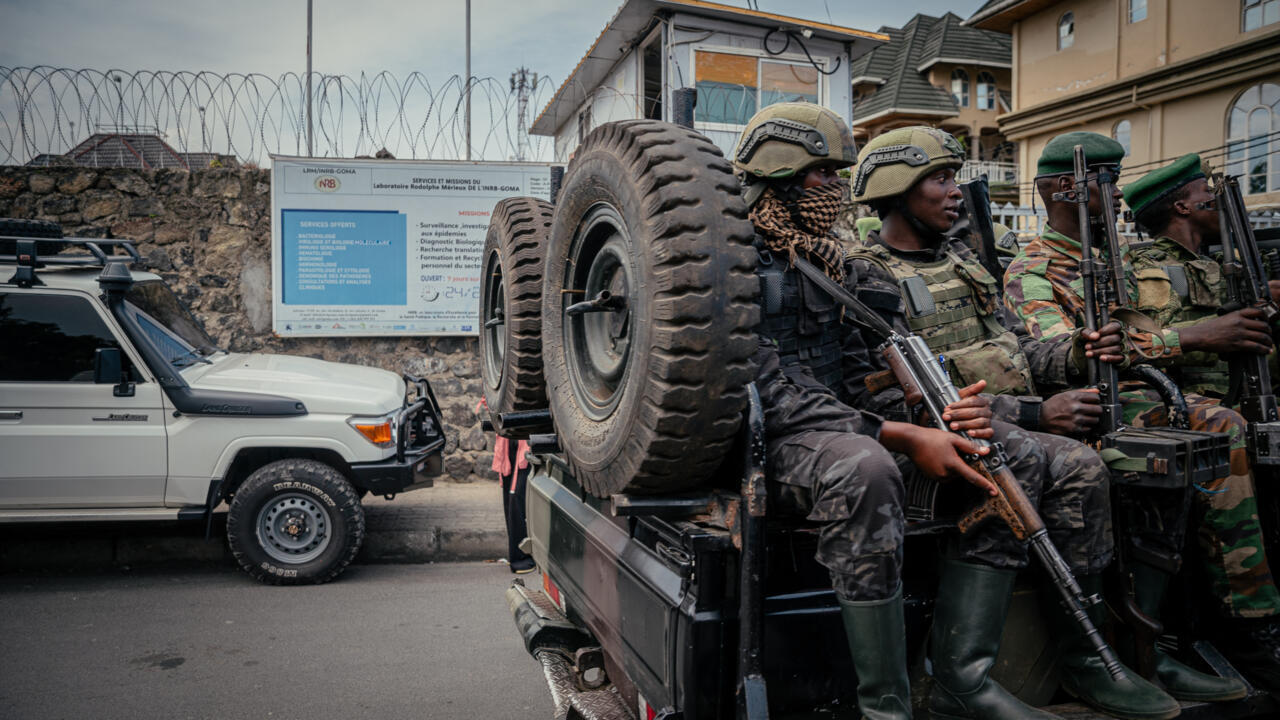
A crucial peace initiative, the Expanded Joint Verification Mechanism (MCVE+), established nearly four months ago in Montreux to monitor the ceasefire between Kinshasa and the AFC/M23, remains dormant. Its critical mission to ensure adherence to a fragile truce has been effectively paralyzed, casting a shadow over regional stability.
The primary reason for this significant delay stems from the expulsion of a Congolese officer. This incident occurred when the AFC/M23 movement, reportedly backed by Rwanda, removed one of the three Congolese officers who had been deployed to Goma in mid-July. These officers were tasked with representing the FARDC within the verification framework.
The accusation and Kinshasa’s stance
The AFC/M23 group has publicly accused the expelled officer of having prior affiliations with military intelligence services. This accusation served as their justification for his removal from Goma, effectively halting his participation in the MCVE+ operations.
Congolese authorities, for their part, have vehemently defended the integrity of their deployed personnel. They maintain that the officer in question was appropriately designated for the verification mechanism and that his expulsion is an unfounded obstruction. Kinshasa views this action as a deliberate attempt to undermine the peace process and hinder transparency in ceasefire monitoring.
Consequences on the ground
The ongoing paralysis of the MCVE+ carries severe implications for the volatile eastern regions of the Democratic Republic of Congo. Without an active and impartial body to verify ceasefire compliance, the risk of renewed hostilities and escalation of violence significantly increases. This deadlock undermines confidence-building measures essential for a lasting peace and leaves local populations vulnerable to continued insecurity.
The inability of the mechanism to begin its work means that any alleged violations of the ceasefire cannot be independently investigated, making it difficult to attribute responsibility and maintain accountability. This situation further complicates efforts to de-escalate tensions and could potentially lead to a wider breakdown of the fragile truce between government forces and the AFC/M23, exacerbating the humanitarian crisis in the region.