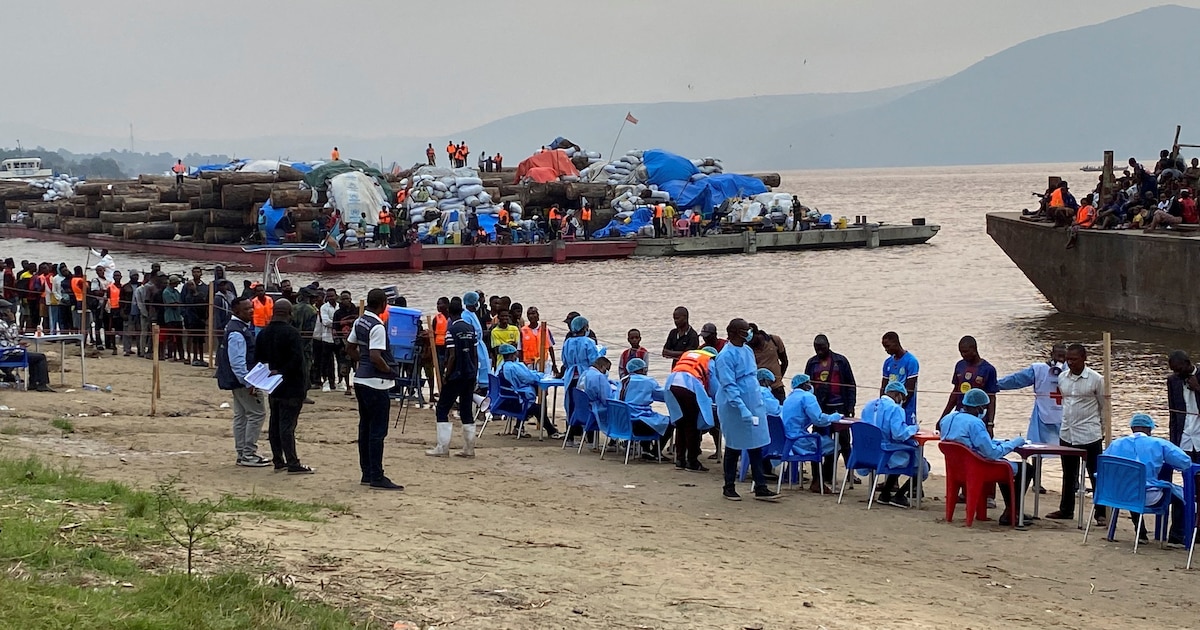
The Ebola epidemic in the Democratic Republic of Congo continues its relentless spread, with no signs of abating. On August 5, the Deputy Medical Director of Médecins Sans Frontières (MSF) delivered this stark assessment during the World Health Organization’s official visit to the country’s eastern region. Two and a half months after the outbreak was declared on May 15, this crisis has become the second-largest Ebola epidemic ever recorded, with an unprecedented rate of transmission. Official data from the Congolese government and WHO now confirms 1,850 deaths out of approximately 4,000 reported cases, pushing the fatality rate beyond 40%.
The Bundibugyo strain, responsible for this devastation, has already claimed more lives in a fraction of the time compared to previous outbreaks of this variant. According to the Africa Centres for Disease Control and Prevention (Africa CDC), this strain has killed over five times more people in a similar timeframe than in past recorded incidents. Jean Kaseya, Director-General of Africa CDC, admitted in late July, “I cannot confidently state that we have full control over this outbreak at this time.”
Violence and instability hamper containment efforts
The eastern Democratic Republic of Congo remains a crucible of unrelenting violence, severely complicating medical response and case tracking. The Ituri province, the epicenter of the outbreak, has been ravaged by relentless terrorist attacks from the Allied Democratic Forces (ADF), a Ugandan militant group. Meanwhile, numerous militias vie for control over land, minerals, and local influence, further destabilizing the region. The neighboring North Kivu province, also affected by the epidemic, has seen large areas fall under the control of the M23 armed group—a proxy force tied to neighboring Rwanda—following intense clashes with the Congolese army over a year ago.
The humanitarian fallout from this turmoil has been catastrophic. Millions have been displaced, fleeing to Uganda, Burundi, or safer regions within Congo itself. These displaced populations endure appalling living conditions, exacerbating the spread of disease in overcrowded, unsanitary settings. Compounding the crisis, early detection and surveillance systems were critically underfunded, delaying the identification and confirmation of Ebola cases.
Contact tracing efforts remain alarmingly inadequate. In Bunia, the outbreak’s ground zero, 90% of admitted patients were not previously tracked contacts. Across Ituri province, only 59% of contacts have been monitored. Africa CDC estimates that for every confirmed urban case, roughly 40 contacts must be traced—meaning the effort should encompass around 134,400 individuals. However, only 17,500 have been reached, covering just 13% of the target. Shockingly, one-fifth of identified individuals receive no regular follow-up due to personnel shortages or ongoing violence. Another troubling indicator: 60% of fatalities occurred in the community rather than healthcare facilities.
Vaccines and treatments still in experimental phases
Despite these challenges, scientific progress offers a glimmer of hope. A first clinical trial for a vaccine targeting the Bundibugyo strain began this month at the University of Oxford, with the initial dose administered to a volunteer. The trial aims to enroll 50 adults to assess the vaccine’s safety. Additionally, the Coalition for Epidemic Preparedness Innovations (CEPI) is funding the development of another vaccine by Singapore’s Hilleman Laboratories, with plans to rapidly produce and test doses in the Democratic Republic of Congo.
With no approved vaccine yet for this highly virulent strain, Africa CDC announced on August 6 its intention to massively deploy the existing Ebola Zaïre vaccine in affected areas. While the Bundibugyo strain differs from Zaïre, vaccinated individuals exhibit only mild symptoms and no fatalities, according to CDC data. Reports indicate over 40 patients are also participating in an early-stage trial evaluating a combination of treatments.
Jean Kaseya has further announced plans to expand the use of remdesivir, an antiviral, across the Democratic Republic of Congo, citing successful outcomes in neighboring Uganda. “Uganda’s case fatality rate of 10% is largely attributed to the swift deployment of remdesivir for all patients and contacts,” Kaseya stated. Projections from international health authorities warn this outbreak could surpass the devastating 2014–2016 West Africa epidemic—the deadliest on record, which claimed over 11,000 lives.
Global aid response remains slow and insufficient
Delayed international support has further fueled the epidemic’s growth. Earlier this year, USAID’s decades-long provision of health and medical aid to the Democratic Republic of Congo was abruptly halted following policy shifts under the previous U.S. administration. The funding gap left the country’s response critically weakened. On August 5, the U.S. State Department announced a $242 million allocation, bringing total American Ebola aid to $512 million. This infusion, though welcomed, arrives three months into the outbreak, finally enabling WHO and CDC to secure the necessary $518 million for a six-month response plan. Yet, critics argue this amount falls far short of past U.S. contributions to humanitarian and health crises. The U.S. remains the largest donor to the Ebola response, overshadowing contributions from the European Union.