The enduring US-Morocco alliance: historical roots and its role in Ceuta’s migration crisis
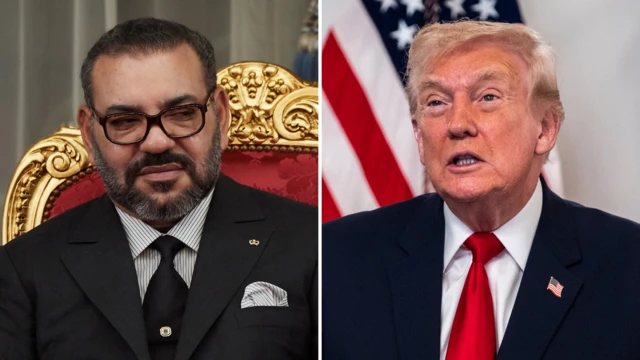
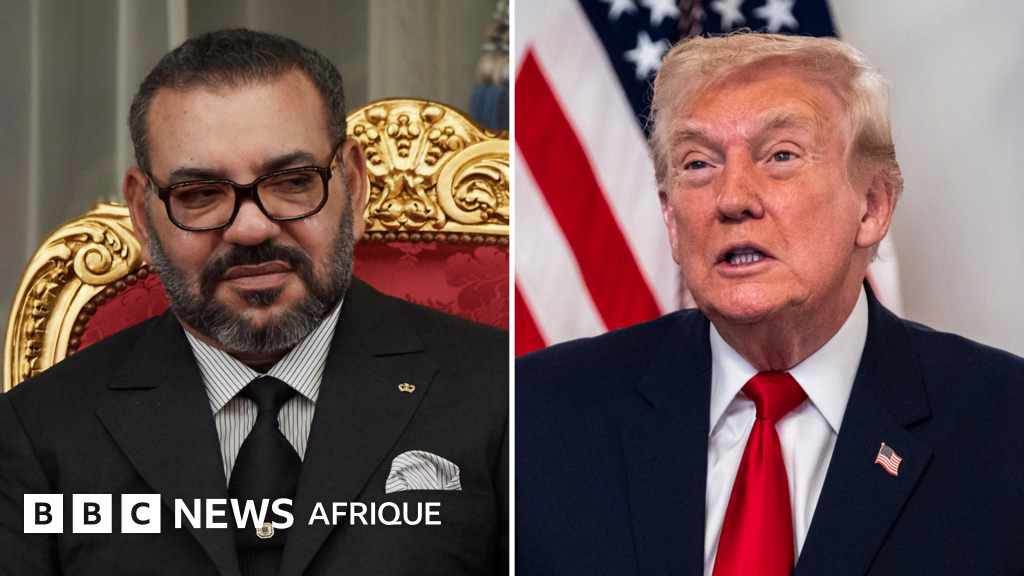
In a striking gesture of diplomatic appreciation, King Mohammed VI of Morocco recently renamed a 1,000-kilometer highway in the Western Sahara after former US President Donald Trump. This move came shortly after over 70,000 people surged into the Spanish enclave of Ceuta, resulting in at least 140 fatalities on both sides of the border and triggering a severe migration emergency.
The US response to the incident underscored the depth of its ties with the North African kingdom. While Washington did not openly endorse Morocco’s border policies, it refrained from questioning Rabat’s role in the crisis, instead redirecting criticism toward Spain’s immigration policies. This stance has raised eyebrows in Madrid, a NATO ally hosting American military personnel at bases in Rota and Morón.
Though Morocco is not a NATO member, it stands as one of Washington’s most trusted partners in intelligence-sharing and military cooperation across Africa. Here’s how this relationship evolved and why it matters now, especially in the context of the Ceuta migration surge.
Early diplomatic ties
Despite vast geographical and cultural divides, the United States and Morocco established relations remarkably early. In 1776, the same year the US declared independence from Britain, Morocco was already an independent sultanate under the Alaouite dynasty, which still rules today.
By 1777, just a year and a half after America’s founding, Sultan Mohammed III granted US ships unrestricted access to Moroccan ports—a move Rabat later hailed as the first international recognition of the new nation. However, the US State Department’s Office of the Historian marks the formal beginning of ties to June 23, 1786, with the signing of the US-Morocco Treaty of Peace and Friendship in Marrakech.
For the fledgling American republic, this treaty was far more than symbolic diplomacy. With the British navy no longer protecting its merchant vessels, American ships were vulnerable to raids by Moroccan, Algerian, Tunisian, and Tripolitan corsairs. The agreement ensured safe passage for US ships in Moroccan waters and opened new trade opportunities, bolstering America’s global legitimacy.
“Morocco’s strategic position at the Mediterranean’s gateway, connecting Europe, Africa, and the Islamic world, proved invaluable for US commercial and diplomatic ambitions,” explains Timothy W. Kneeland, professor of history and political science at Nazareth University in New York.
The treaty, renegotiated in 1836, remains in force today. “As Moroccans often point out, the 1786 treaty is the longest-standing agreement still active in US history,” notes Sarah Yerkes, a senior fellow at the Carnegie Endowment for International Peace specializing in US foreign policy in the Middle East and North Africa.
However, the treaty did not immediately translate into close or consistent relations. When Morocco was divided in 1912 between French and Spanish protectorates, the US initially hesitated to recognize the new colonial order before doing so in 1917. After Morocco regained independence in March 1956, Washington swiftly recognized the new state and opened its embassy in Rabat within three months.
Security partnerships and Western Sahara
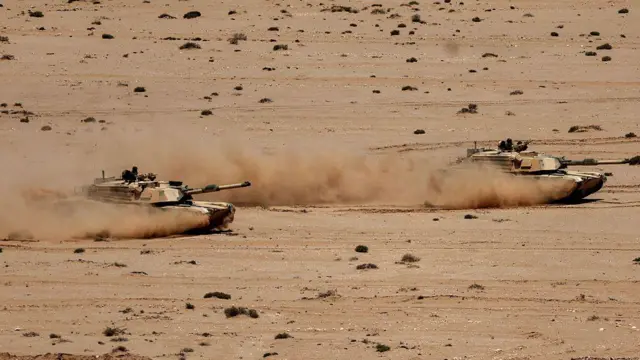
Security cooperation between the US and Morocco predates the country’s independence. In 1950, while Morocco was still under French protectorate rule, Washington negotiated with Paris to develop and use several Moroccan air bases.
Two decades later, the US deepened its support for its North African ally. In November 1975, as Spanish dictator Francisco Franco lay dying, Morocco’s King Hassan II organized the Green March, mobilizing 350,000 civilians to pressure Spain into ceding control of Western Sahara, a territory off the coast of the Canary Islands.
Spain eventually transferred administrative control to Morocco and Mauritania. While Washington publicly advocated neutrality and a negotiated solution, declassified diplomatic documents reveal a stance more aligned with Rabat’s position. Henry Kissinger reportedly told Hassan II in 1974 that he would likely have acted similarly in his place. By January 1976, Kissinger acknowledged that the US had “placed few obstacles” in Morocco’s path regarding Western Sahara.
Months later, a State Department report characterized US policy as “essentially pro-Moroccan,” according to the State Department’s Office of the Historian.
Sarah Yerkes notes that security ties truly solidified after the 9/11 attacks. “Geopolitically, Morocco has been an indispensable US partner in combating international terrorism,” says Kneeland. In 2004, the George W. Bush administration designated Morocco as a “major non-NATO ally,” a status that streamlines access to US military equipment and defense cooperation.
Morocco hosts African Lion, the US Africa Command’s largest annual military exercise. The two nations jointly train special forces and co-chair the Africa group of the international coalition against ISIS, coordinating counterterrorism efforts across the continent. According to the Stockholm International Peace Research Institute, the US supplied 60% of Morocco’s large-scale arms imports between 2021 and 2025, followed by Israel (24%) and France (10%).
Trade and diplomatic breakthroughs
The US-Morocco Free Trade Agreement, signed in 2006, was the first such pact the US established with an African country. By 2025, bilateral trade had surged to $7.4 billion, nearly eight times the $927 million recorded in 2005, before the agreement took effect. While modest in the context of US trade—Morocco ranks as the 46th-largest export market—it remains a significant milestone.
Diplomatically, Morocco achieved a major victory in 2020 when the Trump administration recognized Moroccan sovereignty over Western Sahara as part of the normalization agreement between Morocco and Israel. The US continues to uphold this position, advocating Rabat’s autonomy plan as the sole basis for resolving the conflict. “Morocco is the most successful participant in the Abraham Accords. Its normalization with Israel has endured the Gaza conflict and remains firmly established,” asserts Yerkes.
The US-Morocco-Spain dynamic
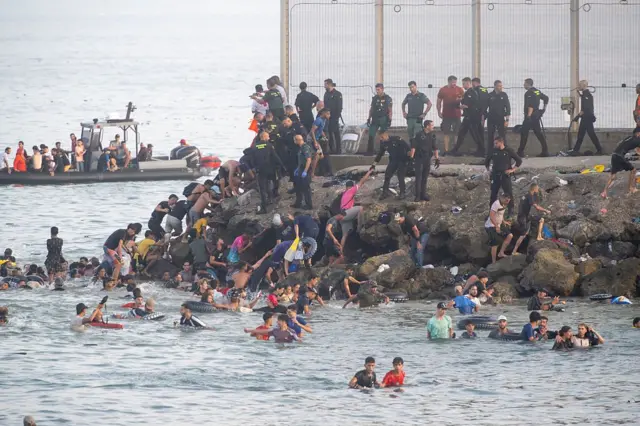
The Ceuta crisis has strained the triangular relationship between the US, Morocco, and Spain. While Madrid is a key NATO ally and depends on Rabat for managing its North African borders, both alliances are now under pressure.
Spain initially attributed the influx of migrants to human trafficking networks and social media, even thanking Morocco for its cooperation. Yet Spanish politicians, analysts, and media outlets have increasingly accused Morocco of either orchestrating or enabling the border breach.
Meanwhile, the Trump administration sharply criticized Spain for its disagreements with NATO’s military spending limits and its veto on using Rota and Morón bases for operations in Iran. These tensions came to a head during the Ceuta crisis.
While Washington did not explicitly endorse Morocco’s version of events, it notably avoided demanding explanations from Rabat or repeating accusations of deliberate border laxity. Instead, Trump framed the incident as a consequence of Spain’s immigration policies, directly challenging the Sánchez government.
“I don’t believe Washington views the Ceuta events as a Moroccan initiative. The White House has been far more critical of Spain and what it sees as mismanagement of the border that led to this crisis,” interprets Yerkes.
The US response underscores the resilience of its alliance with Morocco, even as strains emerge with its Spanish NATO partner. Analysts suggest Morocco could become an even more valuable US partner for security and logistics, especially after Spain’s refusal to allow its bases or airspace to be used for strikes against Iran. In a message to King Mohammed VI on Throne Day—marking the monarch’s 1999 accession—Trump emphasized the alliance’s trajectory.
“This year, we celebrate 250 years of American history and an unbreakable friendship with Morocco, a bond forged on mutual trust and respect,” he stated, reiterating Morocco’s claim to Western Sahara and expressing hope for continued cooperation in all sectors “for the next 250 years.”