In a clear stance on territorial sovereignty, the European Parliament has endorsed an updated air services agreement between the European Union and Morocco, explicitly excluding Western Sahara from its scope. This move aligns with the European Court of Justice’s (ECJ) longstanding position that the territory is separate and distinct from the Moroccan mainland.
The revised protocol, which received parliamentary approval earlier this month, primarily adjusts the original 2006 agreement to accommodate Croatia’s EU membership since 2013—without altering its core provisions. By formally omitting Western Sahara from the treaty’s geographic application, the EU has reaffirmed its refusal to recognize any Moroccan administrative or sovereign authority over the territory, reinforcing its legal separation.
Western Sahara’s legal and resource protection groups have hailed the decision as a landmark victory. The Sahrawi Working Group on Natural Resources and Legal Affairs described the exclusion as “an unmistakable acknowledgment of Sahrawi sovereignty”, emphasizing that the vote underscores the territory’s distinct status under international law.
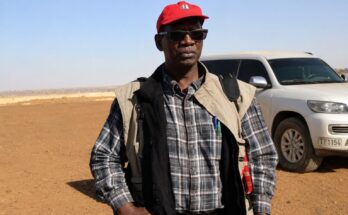
Oubi Bouchraya Bachir, the group’s chair, stressed that the Parliament’s action sends a strong message: “By confining the agreement strictly to Morocco’s internationally recognized borders, lawmakers have reaffirmed that Western Sahara remains a separate entity where Rabat holds no jurisdiction.”
The International Observatory for Western Sahara’s Natural Resources also welcomed the decision, noting that while the update is technical—merely reflecting Croatia’s EU accession—the agreement’s territorial scope remains unchanged. The Observatory pointed to the ECJ’s 2018 ruling, which established that EU-Morocco accords cannot extend to Western Sahara, a position later confirmed by the European Commission. Airlines operating in the EU have been explicitly informed that flights to or from Western Sahara fall outside the pact’s jurisdiction.
The vote reflects the EU’s broader reluctance to engage in any framework that could imply recognition of Moroccan claims over the territory. Legal experts argue this sends a signal to Morocco that its sovereignty over Western Sahara remains unrecognized under international law.