Political volatility is currently sweeping through West Africa, marked by a series of power grabs in the Sahel region, Guinea, and more recently, Guinea-Bissau.
Military regimes in Mali, Niger, and Burkina Faso have explicitly sought to sever ties with France, their former colonial administrator, since taking control.
In addition to providing tactical support to the Bénin military, the Élysée Palace confirmed that President Emmanuel Macron has been facilitating a strategic information exchange and coordination effort with regional partners.
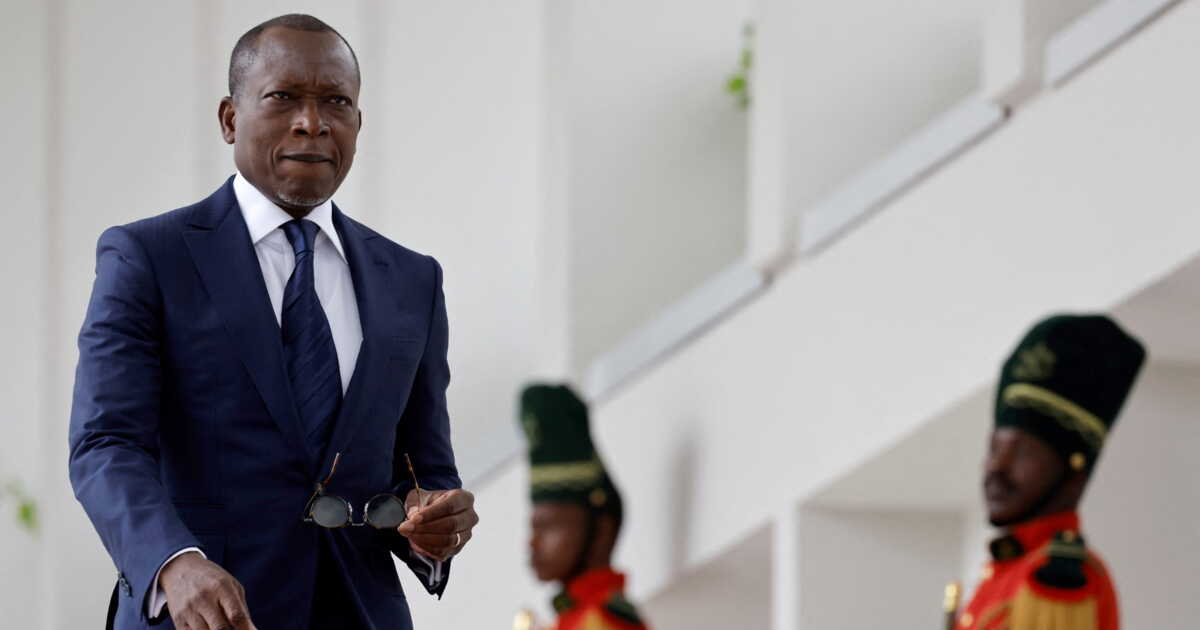
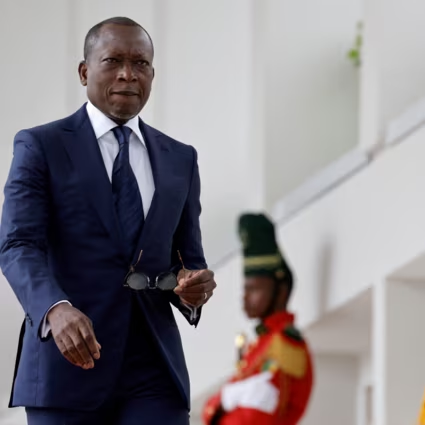
On Sunday, Macron held discussions with President Patrice Talon—the target of the failed putsch—as well as the leaders of Nigeria and Sierra Leone, the latter of whom currently chairs ECOWAS.
An advisor to the French president noted that France has offered its complete political backing to ECOWAS, which played a decisive role over the weekend.
The crisis began Sunday morning when eight soldiers appeared on national television in Bénin to announce the removal of Patrice Talon. Following hours of tension in Cotonou, the president reassured the public that the government had regained full command. However, local authorities later confirmed several fatalities resulting from clashes between loyalist forces and the mutineers.
To suppress the uprising, Bénin received critical assistance from neighboring Nigeria. Abuja launched air strikes on the Togbin base in the economic capital, where the rebels had retreated. Nigerian ground troops also participated in a nighttime operation to secure the facility between Sunday and Monday.
Ensuring electoral inclusivity
By Sunday evening, ECOWAS had committed to deploying military reinforcements from four regional nations to uphold constitutional governance. Omar Alieu Touray, President of the ECOWAS Commission, stated on Tuesday that the region is facing a state of emergency due to both the spread of jihadist movements and the recurring coups.
While approximately twelve soldiers have been detained, several key figures of the rebellion, including leader Lieutenant-Colonel Pascal Tigri, remain at large. During the brief uprising, the mutineers captured Abou Issa, the Army Chief of Staff, and Faïzou Gomina, the National Guard Chief of Staff; both were released on Monday.
The atmosphere in Cotonou, the economic hub of this coastal nation, has largely returned to normal. Patrice Talon, who has governed Bénin since 2016, is scheduled to step down following the April presidential elections, as he reaches the constitutional two-term limit.
Despite being credited with significant economic progress, Talon faces criticism for what some describe as an authoritarian shift in a country once considered a beacon of democracy. His preferred successor, Finance Minister Romuald Wadagni, is the frontrunner for the upcoming vote, especially since the main opposition party, The Democrats, has been sidelined due to sponsorship requirements.
On Tuesday, former president and current leader of The Democrats, Thomas Boni Yayi, expressed his strong disapproval of the violence. He condemned the attack as a disgraceful act and called for the organization of transparent and free elections.
Omar Alieu Touray further observed that elections have become a primary catalyst for instability in the region, noting a concerning decline in electoral inclusivity across several ECOWAS member states.