Military rule and the erosion of constitutional legitimacy
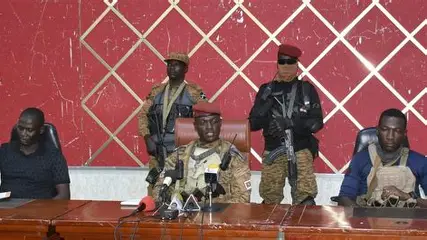
The recent public statements by Captain Ibrahim Traoré have intensified discussions regarding the nature of his leadership and the political trajectory of Burkina Faso since the September 2022 coup. Observers note that his declarations leave little room for ambiguity: they reflect an unapologetic embrace of a power seizure outside constitutional frameworks, framing this rupture as a new political standard.
A succession of military takeovers
Ibrahim Traoré did not ascend to power through universal suffrage; his rise followed a coup that ousted Lieutenant-Colonel Paul-Henri Sandaogo Damiba, who himself had come to power in a previous military takeover against President Roch Marc Christian Kaboré. This chain of coups underscores a fundamental departure from the democratic mechanisms that traditionally underpin a head of state’s legitimacy.
The dangerous normalization of force
Critics warn that by presenting his military rise as inherently legitimate, Ibrahim Traoré risks normalizing the idea that force can be an acceptable means of seizing power, provided it garners temporary popular support. Such a precedent could set a perilous precedent: in the absence of institutional legitimacy, future grievances might similarly justify further military interventions, deepening institutional fragility and entrenching chronic instability where weapons supersede ballots.
Governance beyond rhetoric: substance over symbolism
Proponents of the current regime often highlight restored sovereignty, reduced foreign influence, and a resurgence of national pride as key achievements. While these themes resonate with certain segments of the population, they cannot substitute for tangible governance outcomes. History demonstrates that nationalist slogans, no matter how resonant, do not replace economic stability, security, or the proper functioning of state institutions.
The prevailing focus on political communication—abundant speeches, patriotic symbols, and amplified social media endorsements—has overshadowed the need for concrete results. The crises that justified the coup—terrorism, territorial recovery, and livelihood improvement—remain unaddressed for many Burkinabè. Security, the most urgent expectation, continues to falter: deadly attacks persist in multiple regions, displacing thousands and deepening a humanitarian crisis affecting hundreds of thousands. Access to healthcare, education, and public services remains severely compromised in areas under siege.
Economic stagnation amid insecurity
The security crisis has paralyzed agriculture, internal trade, and investment, prolonging economic hardship. Citizens demand tangible improvements: jobs, purchasing power, essential services, and stability to rebuild their lives. Yet, despite announcements and military reorganizations, these needs remain largely unmet, eroding public confidence in the transition’s promises.
Centralization of power and shrinking dissent
Another concern is the growing concentration of authority. Independent voices—journalists, civil society actors, and opposition figures—face an increasingly restrictive environment where criticism of the regime is often conflated with a lack of patriotism. This blurring of national loyalty with regime support represents a troubling deviation from democratic norms: loving one’s country does not necessitate uncritical allegiance to its leaders.
The adage ‘Jupiter renders mad those he wishes to destroy’ encapsulates a timeless truth about power. Throughout history, leaders who equate their personal legitimacy with the nation’s salvation have often dismissed criticism, marginalized opponents, and conflated their fate with that of the country. Such hubris isolates them from the realities of the people they govern.
The test of legitimacy: actions over words
True leadership legitimacy is not forged through force, slogans, or defiance, but through the respect of institutions, the protection of citizens, the safeguarding of fundamental freedoms, and the sustained improvement of living conditions. The ultimate judgment of Ibrahim Traoré’s tenure will hinge on these benchmarks. Until the crises of security, economy, and social welfare are addressed with measurable progress, the questions surrounding his authority and its sustainability will continue to dominate Burkina Faso’s political discourse.