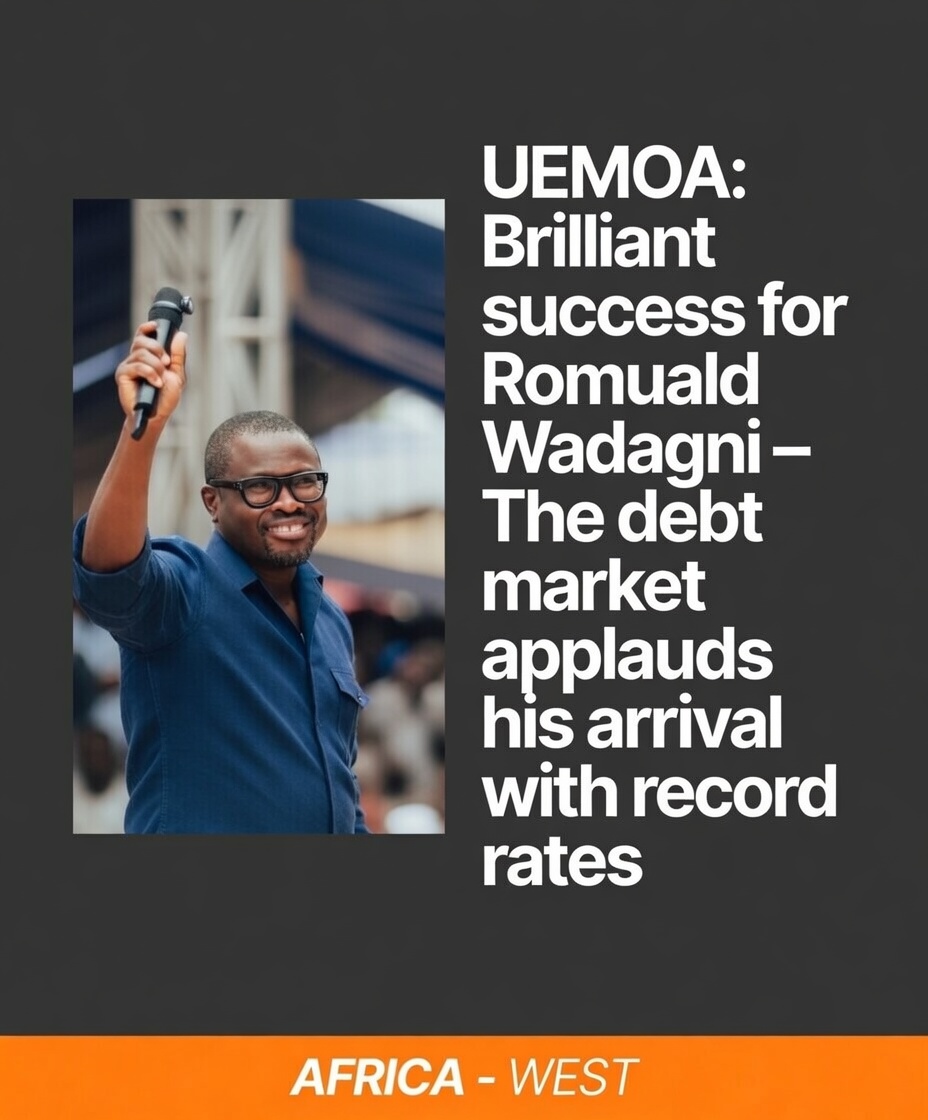
The inauguration of Romuald Wadagni as president marks a pivotal shift for the financial ecosystem in Cotonou. National and global investors are closely monitoring the initial indicators of an administration defined by high-level technical proficiency and a commitment to industrial expansion.
This political transition provides the financial markets with a rare and valuable asset: predictability. The election of a former Minister of Economy and Finance ensures a continuity that has immediately resonated within trading circles.
A confidence premium in the debt markets
Following the electoral results, Benin’s sovereign bond yields on the secondary market remained exceptionally stable, with some rates even trending downward. Financial experts view this as a “competence premium.” President Wadagni’s previous leadership in securing Eurobonds and pioneering Sustainable Development Goal (SDG) bonds has earned him significant credibility with international creditors and rating agencies such as S&P and Moody’s.
Renewed momentum on the BRVM
At the Regional Securities Exchange (BRVM), there is a tangible sense of hope. Financial institutions operating within Benin are preparing for a surge in large-scale infrastructure initiatives and enhanced Public-Private Partnerships (PPPs). Furthermore, market participants anticipate that this new political era will encourage major domestic companies to list publicly, thereby strengthening the local capital market.
Industrial strategy and foreign investment: The GDIZ focus
Beyond fiscal metrics, the market is focused on the real economy, specifically the industrial transformation occurring at the Glo-Djigbé Industrial Zone (GDIZ). Wadagni’s presidency is seen as a safeguard for Foreign Direct Investment (FDI), offering multinational corporations reassurances regarding legal frameworks and macroeconomic consistency.
Expert perspective
“Financial markets prioritize stability over all else. By electing Romuald Wadagni, Benin has signaled a dedication to disciplined management and a strategic long-term outlook. The primary objective now involves translating this financial trust into broad-based economic growth while managing debt sustainability,” notes Marc T., a Senior Fund Management Analyst.
Key indicators for Q2 2026
- Sovereign Credit Rating: The potential for international agencies to shift their outlook from “Stable” to “Positive.”
- Treasury Bond Yields: Upcoming issuances on the UMOA market will serve as a barometer for investor sentiment.
- GDIZ Capital Inflow: The total volume of investment directed toward the manufacturing sector during the first 100 days of the term.
As Benin begins this new chapter, “Wadagni-nomics” appears to have already secured the favor of the financial world. The focus now shifts to the administration’s initial budgetary policies to sustain this momentum.