Gabon leverages science to boost food self-sufficiency
Libreville, Monday, June 8, 2026 — A bold wager is unfolding at the heart of Gabon’s economic agenda. The nation is determined to slash its food import bill and phase out foreign poultry imports by 2027. Yet this battle is not being fought in bustling markets or crowded ports. It is being waged on experimental fields at the National Center for Scientific and Technological Research in Kougouleu.
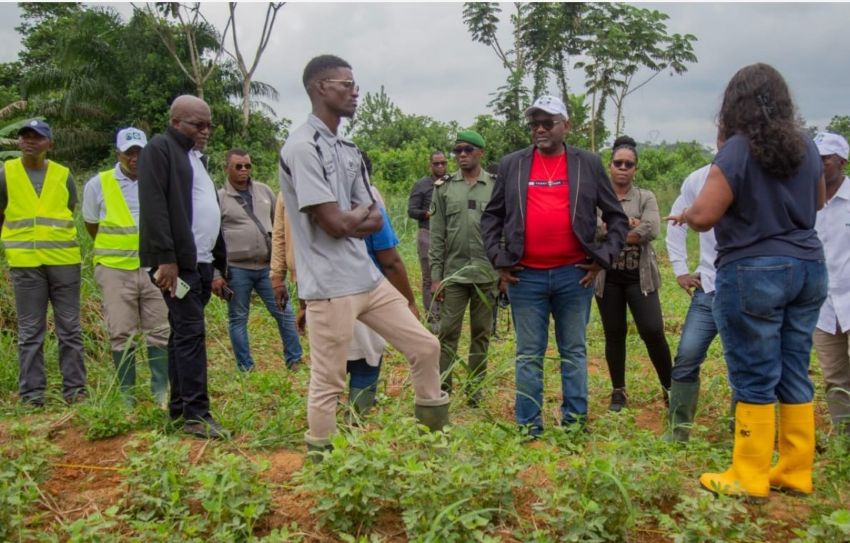
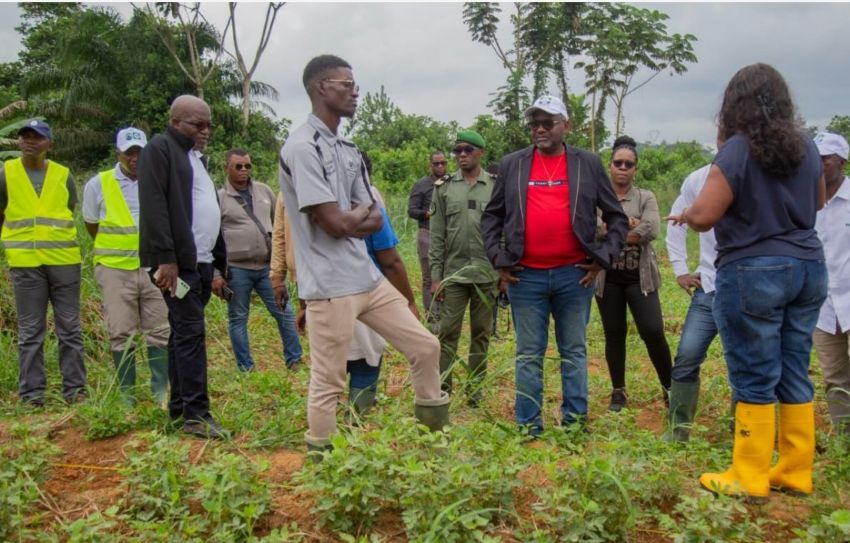
The visit by Gabon’s Minister of Higher Education, Scientific Research, and Government Spokesperson, Charles Edgar Mombo, to this critical site underscores a pivotal shift. Research is no longer confined to academic pursuits—it has become a direct instrument of economic transformation and national sovereignty.
With food imports still draining a significant portion of the country’s foreign expenditure, the ability to produce essential livestock feed locally has emerged as a strategic priority, rivaling the importance of mining and energy sectors.
Research as a national engine
The government’s goal is unambiguous: build a robust poultry sector capable of meeting domestic demand while gradually reducing reliance on imports. Central to this ambition is the production of animal feed, particularly maize and soybeans, which form the backbone of industrial poultry farming.
At Kougouleu, researchers at CENAREST are tackling this challenge head-on. Eleven maize varieties are undergoing rigorous trials to identify those best suited to Gabon’s unique soil and climate conditions. The stakes are high—these crops must deliver yields robust enough to sustain a rapidly expanding poultry industry.
The scientific teams are also testing eleven soybean varieties imported through international partnerships with research centers in Malawi. Additional trials are underway in Nyanga Province, including in Tchibanga, to assess performance across different ecological zones.
This marks a significant departure from the past. Science, once seen as detached from immediate economic concerns, is now an operational force in national development.
A vision for an integrated livestock sector
The government’s strategy hinges on a straightforward principle: produce feed locally to cut production costs and enhance the competitiveness of Gabonese farmers. This approach aligns with a broader trend across African nations grappling with soaring food import bills. International institutions consistently highlight import dependency as a major economic vulnerability on the continent.
Gabon, however, boasts considerable advantages—fertile land, abundant water resources, and favorable climatic conditions for multiple crops. Minister Mombo emphasized the nation’s untapped potential during his visit, praising researchers for their dedication and affirming that the higher education system is fully aligned with President Brice Clotaire Oligui Nguema’s strategic vision.
Beyond agriculture, this initiative carries political weight. Science is no longer just about generating knowledge; it is now a cornerstone of national priorities.
Sovereignty still in the making
Progress is promising, but challenges persist. Researchers stress the need to expand experimental plots to refine trials and scale up production. Transitioning from laboratory success to industrial-scale output remains a critical hurdle.
Financial constraints also loom large. Modernizing agriculture demands hefty investments in infrastructure, accessible financing for farmers, and streamlined value chains. Yet for the first time in years, Gabon appears to be weaving a cohesive strategy that links research, farming, industry, and economic independence.
The minister’s visit to Kougouleu symbolizes this paradigm shift. In the new vision championed by authorities, food independence will not stem solely from investments or policy decrees. It will be forged in laboratories, research centers, and through scientific innovation.
By 2027, if targets are met, Gabon could prove that in Africa, food sovereignty is built as much by scientists as by farmers. A quiet revolution, yet one with the potential to reshape the nation’s economic future.