Gabon : La vérité avant le FMI
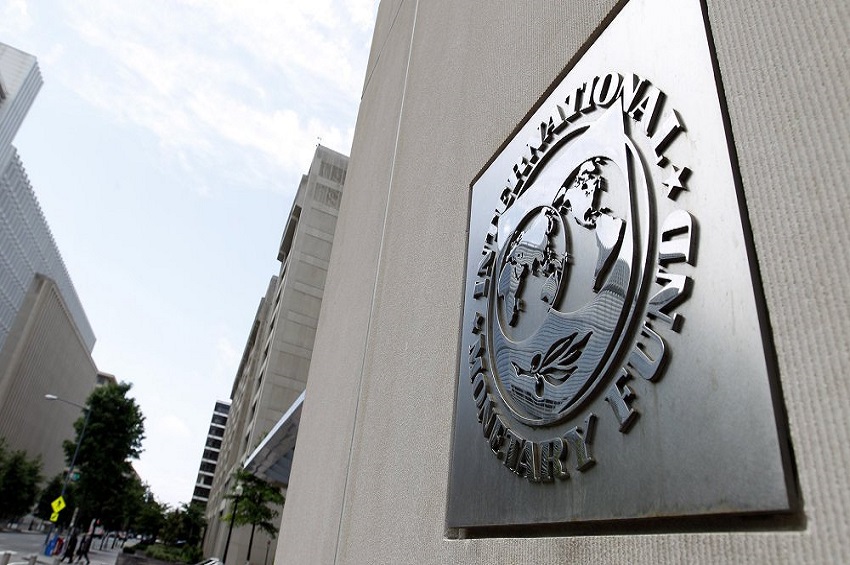
Libreville, Jeudi 4 Juin 2026 – For many months, a consistent assurance circulated within economic, diplomatic, and financial circles: an agreement between Gabon and the International Monetary Fund (FMI) was reportedly on the horizon.
However, despite repeated pronouncements, the anticipated signing never materialized. President Brice Clotaire Oligui Nguema recently offered an unprecedented clarification on the reasons for this delay. Beyond the technical negotiations with the Bretton Woods institution lies a fundamental issue far exceeding mere financial considerations: does Gabon truly comprehend the full scope of its public debt?
The stakes are considerable. For global investors, rating agencies, financial backers, and capital markets, an accord with the FMI signifies much more than a simple funding mechanism. It represents a crucial indicator of credibility, stability, and confidence in the nation’s economic trajectory. By indicating that the signing is now projected for late 2026, the Head of State confirmed progress on the file, but more importantly, he illuminated the persistent ambiguities inherited from decades of past governance.
An audit as a foundation for trust
The President’s primary revelation concerns the actual level of national indebtedness.
According to his statements, the figures presented at the onset of the transition period were inconsistent. An initial assessment reported a debt of 7,500 billion CFA francs, while another valuation showed a different amount, closer to 8,000 billion. Such a significant divergence naturally raised serious questions at the highest levels of government.
In response to this situation, Brice Clotaire Oligui Nguema affirmed his demand for a comprehensive audit before committing to any engagement with the FMI. His stated objective is straightforward: to precisely ascertain the country’s financial reality before endorsing a program that will have long-term implications for the Gabonese state.
This approach reflects a commitment to transparency, a quality rarely emphasized in African financial negotiations. Yet, it also prompts a deeper inquiry: how can an oil-producing state find itself unable to provide an undisputed snapshot of its public debt?
The answer points to the management practices that characterized the years preceding the current administration. For several decades, Gabonese public finances frequently faced criticism for their lack of clarity, the proliferation of off-budget commitments, and inadequate control mechanisms.
In this context, the audit emerges not merely as an option, but as an absolute necessity.
The FMI confronts Gabon’s challenge
The International Monetary Fund has agreed to accommodate this requirement for clarification.
As confirmed by the Gabonese President, the FMI consented to postpone the conclusion of the program to allow for the completion of this audit. This decision is underpinned by pragmatic reasoning: the FMI itself requires an accurate evaluation of the true financial situation before deploying its resources.
This verification phase is particularly critical given that Gabon remains one of the most strategically important economies within the CEMAC zone. Its economic weight, rich oil and mineral resources, and its role in regional financial stability position it as a central player for sub-regional equilibrium.
Discussions now focus equally on budgetary transparency and prospective reforms. An FMI program is never limited solely to financing; it typically entails commitments regarding governance, fiscal management, revenue generation, and control over public expenditures.
An awaited signature, inevitable reforms
The announcement of a signing before the end of the year marks a significant milestone, but it does not signal the culmination of the process.
Observers understand that an FMI program frequently accompanies structural reforms whose effects are directly felt by the populace. Measures such as rationalizing public spending, implementing fiscal reform, improving revenue collection, reorganizing certain subsidy policies, and modernizing financial administration are commonly recommended.
The President provided no specific details on the precise nature of the future agreement or the potential amount of resources to be mobilized. This cautious approach is understandable, as negotiations are ongoing and final decisions have yet to be made.
However, the true challenge today extends beyond the sole issue of financing. Gabon seeks to restore its financial credibility after several years of uncertainty. For international partners, the audit requested by Libreville could represent the inaugural act of a new economic governance culture founded on transparency and accountability.
From this perspective, the delay in the agreement no longer appears as a setback. Instead, it could represent the necessary cost for rebuilding a lasting relationship of trust between the Gabonese state, financial markets, and international institutions. In the realm of public finance, trust cannot simply be mandated; it is first and foremost built upon the veracity of figures.