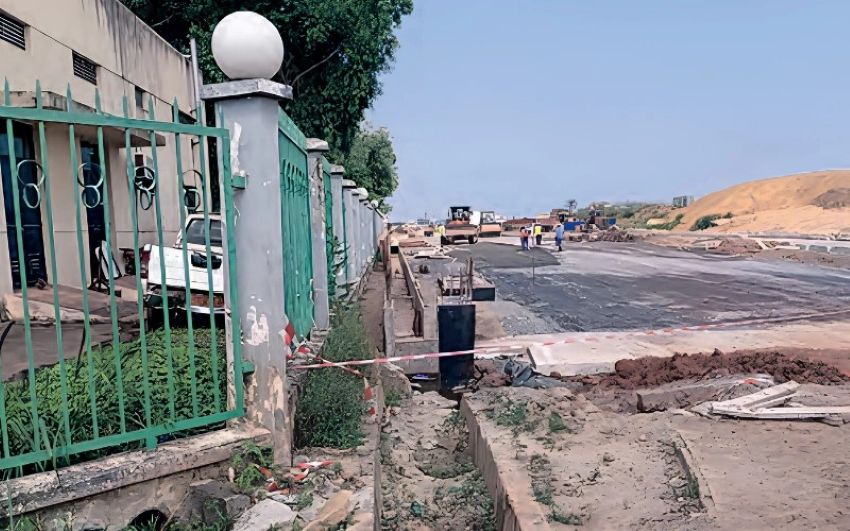
Gabon : Boulevard de la Transition, le chantier des comptes
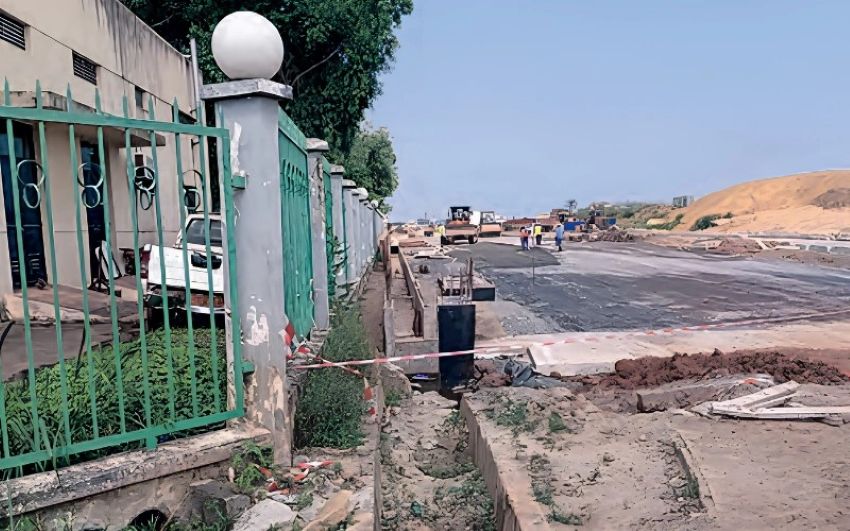
Libreville, Wednesday, August 26, 2026 – In Libreville, the ambitious Boulevard de la Transition project is progressing on two distinct fronts. On the ground, construction crews face pressure to accelerate work, aiming to overcome delays and deliver initial sections of the road. Concurrently, within government offices, a more sensitive and critical race has begun: ensuring the complete traceability of public funds allocated to this significant infrastructure endeavor.
An investigation, whose findings were made public on August 23rd, reportedly revealed a substantial increase in the project’s original cost, escalating from 8 billion to 16 billion CFA francs. Furthermore, approximately 3 billion CFA francs were allegedly disbursed to a foreign operator identified as Goran. These claims, which judicial authorities are tasked with verifying, now place this high-profile construction site at the heart of serious questions concerning the management of public contracts in Gabon.
The issue carries considerable weight, particularly because the Boulevard de la Transition is recognized as one of Libreville’s pivotal modernization initiatives. Spanning approximately three kilometers, this thoroughfare is designed to alleviate traffic congestion within the capital and forms part of a broader urban development plan, which includes the upcoming administrative city. The project had already been designated as a top governmental priority for the year 2026.
Originally conceived to embody tangible urban transformation, the project now finds itself embroiled in a more fundamental governance challenge for a state committed to fostering a new culture of financial management. Key questions arise: How could a public contract’s value double so dramatically, and what specific procedures allowed for the disbursements that are currently under scrutiny?
A financial file now in the hands of justice
Reports indicate that around 3 billion CFA francs were paid to the operator Goran without the prerequisite bank guarantee. The individual in question was subsequently questioned by authorities and reportedly admitted to committing “serious errors” before departing Gabonese territory. It is understood that the complete file has since been forwarded to the prosecutor for further action.
These serious allegations necessitate absolute caution. At this juncture, the publicly available information does not definitively establish that an offense has been committed, nor does it assign criminal responsibility to any specific individual. The primary role of the ongoing judicial inquiry is precisely to ascertain the nature of these financial flows, the legitimacy of the contractual procedures, identify any potential liabilities, and clarify the circumstances surrounding the operator’s departure.
Nevertheless, a significant institutional question persists. Should the absence of a prior bank guarantee indeed be confirmed, why was this essential condition not enforced before the disbursement of funds? If the contract amount genuinely doubled, what specific contractual amendments, administrative approvals, and economic justifications account for this substantial increase?
These inquiries extend beyond the specific case involving Goran. They delve into the fundamental workings of public procurement, a domain where administrative decisions, private enterprises, public financing, and economic interests invariably intersect.
The urgency of asphalt must not overshadow financial accountability
In parallel with the financial investigation, control over the construction site has reportedly been intensified. A report dated August 22nd, which I have reviewed, specifically calls for the rapid procurement of materials, an increase in equipment resources, and the resumption of night work. During a meeting held on August 20th, a presidential directive set a target to bring the section between PK0+240 and PK0+800 to the impregnation phase by September 1st.
This accelerated pace of work aligns with the project’s critical urban objectives. However, it also raises a crucial governance point. While the state legitimately seeks to complete an infrastructure that promises significant benefits to its citizens, it must equally prioritize the preservation of evidence, meticulous documentation of contracts, and the establishment of any potential responsibilities when audits uncover anomalies.
The paradox of the Boulevard de la Transition lies precisely here. The more visible the construction site becomes, the higher the demand for transparency must be. The public expects more than just observing the progress of the asphalt; they also need to understand the true cost of the project, the reasons behind that cost, and the rules governing how contracts were awarded and executed.
This demand for accountability is particularly strong given that the government has previously grappled with the financial and social ramifications of major urban development projects. In 2025, the Council of Ministers notably approved a waste management plan for debris generated by Libreville’s modernization efforts and the Boulevard de la Transition works. Furthermore, the resettlement project for affected populations received support from the BDEAC.
Therefore, this dossier must be pursued along two parallel and inseparable tracks. The first concerns the effective delivery of the physical infrastructure. The second, equally vital, concerns the financial truth of the contract. The success of one cannot compensate for the failure of the other.
The Boulevard de la Transition must not become merely a symbol of a construction project measured solely by kilometers of road laid. Instead, it must serve as an opportunity to demonstrate that public investment can be meticulously controlled from inception to the final franc spent. Should the alleged anomalies be confirmed, responsibilities must be clearly established, and any resulting damages rectified. Conversely, if these allegations prove unfounded, the justice system must also declare this unequivocally. In either scenario, the true work of the Transition mirrors the long-standing demand of citizens: to transform public spending into an expenditure that is traceable, justifiable, and verifiable.