Understanding the scale of kidnappings is crucial to grasping Boko Haram’s financial strategy. Nigeria, by far the most affected nation, offers stark figures. A report from SBM Intelligence, a Nigerian-based security risk consultancy, paints a picture of a “structured and lucrative industry.”
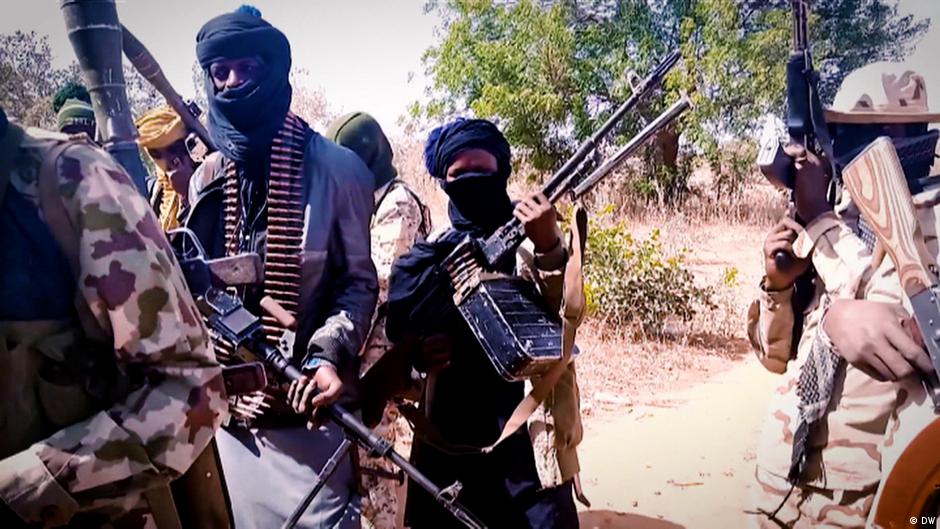
This detailed report reveals that between July 2024 and June 2025, a period spanning approximately one year, over 4,700 individuals were abducted in nearly a thousand separate incidents. Hundreds of deaths are also attributed to these abductions, which frequently target schools. While prevalent across northern Nigeria, these incidents also extend into the central regions, perpetrated by various groups. Among the most notorious are Boko Haram, designated a terrorist organization by the UN in 2014, and its splinter faction, the Islamic State’s West Africa Province (ISWAP).
However, these kidnappings are not confined solely to Nigeria. Cameroon experienced such an event last year with the abduction of bus passengers in Ziguagé, located in the country’s Far North region, an act claimed by Boko Haram. More recently, in Niger, the same group kidnapped seven Chadian nationals near the border with Chad in late March. Tragically, one of the hostages was killed, while the others are believed to remain in captivity.
To understand the motivation behind these mass abductions by Boko Haram, we turned to Remadji Hoinathy, a researcher at the Institute for Security Studies (ISS).
“These abductions serve two primary purposes,” Hoinathy explained. “Firstly, they facilitate the forced recruitment of young people into these groups’ ranks, including young women, and sometimes even entire communities, who are then utilized as combatants, laborers, or even sex slaves. Secondly, kidnappings fulfill a crucial economic objective: the collection of ransoms. These payments, often thousands or even millions of Naira or CFA francs, are paid by families, communities, and to a lesser extent, states, to secure the release of those abducted.”
In the case of the Chadian hostages, jihadists are demanding 50 million CFA francs for five individuals. For the sixth, a doctor, Boko Haram is reportedly asking for ten times that amount – 500 million CFA francs. This alarming demand has been condemned by the Chadian League for Human Rights in the Lake Province.
Government denies ransom payments
Despite the official stance, these enormous sums often see at least partial payment. SBM Morgen’s report on Nigeria underscores the “lucrative” nature of this industry, noting that ransom demands over a single year in Nigeria approached 35 million dollars. Of this, over 1.8 million dollars, nearly 5% of the total demanded, was reportedly paid by either the state or the families of the hostages.
Officially, Nigeria’s policy is to refuse ransom payments to avoid financing terrorism. In 2022, Abuja enacted a law criminalizing ransom payments, with offenders facing up to 15 years in prison. However, this law appears to be inconsistently enforced by authorities on the ground, as many Nigerians continue to pay ransoms to free their loved ones. There are also suspicions that authorities themselves engage in ransom payments.
Nigerian authorities are suspected of having paid a ransom to Boko Haram to secure the release of approximately 230 students and staff from a Catholic school abducted in November 2025 in Niger State. These accusations emerged amidst international pressure, particularly from the Trump administration, which criticized Nigeria for failing to protect Christians.
According to an AFP investigation published on February 23, citing multiple intelligence sources, the government reportedly paid a significant sum to the jihadist group. The figures vary, with some sources suggesting around 6 million euros, while others estimate the total ransom at approximately 1.3 million euros.
These sources further indicate that the money was allegedly delivered in cash, transported by helicopter to a Boko Haram commander in Borno State. The Nigerian government vehemently denies these accusations, labeling them as unfounded. Officials assert that the hostages’ release was the result of intelligence work and a precise military operation. Experts suggest that acknowledging ransom payments could inadvertently serve the propaganda efforts of these groups.
Boko Haram and the Lake Chad Basin
Boko Haram emerged in 2002 in Maiduguri, within Nigeria’s northeastern Borno State. The preacher Mohammed Yusuf founded the group with the stated aim of establishing a radical Islamic state. The name Boko Haram, derived from the Hausa language, translates to “Western education is a sin,” reflecting the group’s rejection of all perceived corrupting Western cultural and political influences.
Maiduguri served as the movement’s initial stronghold, where it cultivated its religious influence. Over time, Boko Haram transcended Nigerian borders, evolving into a regional menace. Its operations expanded into Niger, Chad, and Cameroon, maintaining a significant presence throughout the Lake Chad Basin.
We asked researcher Remadji Hoinathy of the Institute for Security Studies why the Lake Chad Basin holds such strategic importance for Boko Haram.
“The Lake Chad Basin is crucial because, firstly, it’s a cross-border area, and it’s not far from the Sahel region, which is also affected by affiliates of the Islamic State, like EIGS. On its northern flank lies Libya, which remains a vital transit point for militants and weapons heading towards the Lake Chad Basin,” Hoinathy explained.
He continued, “Another advantage for these groups in the Lake Chad Basin is its location on the periphery of states, where governmental presence has historically been weak. It’s also a significant economic production zone, with agriculture and pastoral activities fostering a robust local cross-border economy.”
“The unique geographical ecosystem of the Lake Chad Basin, characterized by islands, swamps, and forested areas, also provides excellent cover and hiding spots when military pressure intensifies,” Hoinathy concluded.
A dissident jihadist movement: ISWAP
ISWAP emerged in 2016 following a significant schism within Boko Haram. This divergence stemmed from disagreements among some members regarding the extremely radical tactics of Abubakar Shekau, the group’s historical leader, whose methods indiscriminately targeted civilian populations, including Muslims.
Breaking away from this brutal approach, ISWAP pledged allegiance to the Islamic State (IS) and adopted a more structured and organized strategy. Notably, the group seeks to strengthen its local presence by cultivating cordial relationships with local populations, rather than relying solely on terror.
Since then, Boko Haram and ISWAP have become fierce rivals, engaged in a violent struggle for control over territories and resources within the Lake Chad Basin, fueling a devastating fratricidal conflict.
The military response from states
Regional states are striving to coordinate their military responses, a task that remains challenging, as noted by researcher Remadji Hoinathy.
“Initially, each state responded militarily within its own territory,” Hoinathy observed. “However, all four states are also members of a regional body, the Lake Chad Basin Commission, which established the Multinational Joint Task Force.”
He added, “Beyond military efforts, there’s a non-military dimension to this fight through a regional stabilization strategy. This involves implementing development initiatives and strengthening state presence in communities affected by Boko Haram. Yet, after more than a decade, this asymmetric warfare persists on the ground, raising questions about the effectiveness of the various responses. In many instances, Boko Haram has demonstrated a significant capacity to adapt to these measures, exhibiting resilience, reconstituting itself, and continuing to pose problems for all states and communities.”
Since 2009, this jihadist insurgency, led first by Boko Haram and then by its rival, the Islamic State West Africa Province (ISWAP), has resulted in over 40,000 deaths and displaced two million people in northeastern Nigeria, Africa’s most populous nation, according to the UN. To assist Nigeria in its fight against these movements, Washington has deployed approximately 200 soldiers to the country over the past year to support and train its armed forces.