how the AES unified force aims to succeed in Sahel security
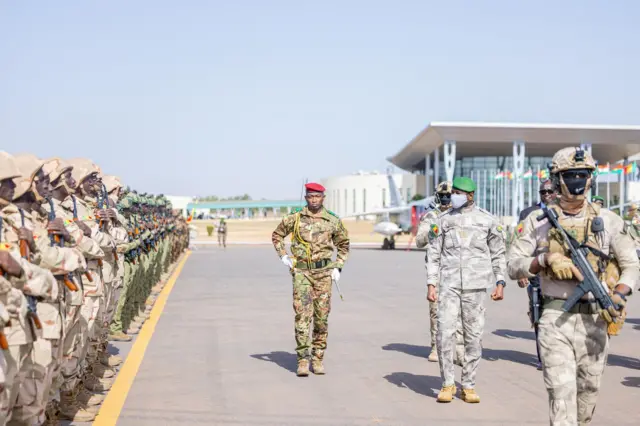
Photo credit: Presidency of the Republic of Mali
The military leaders of Mali, Burkina Faso and Niger are convening in Bamako for a two-day summit starting Monday, marking the second gathering of the Alliance of Sahel States (AES) heads of state. According to Mali‘s government information center, this meeting will assess progress since the inaugural Niamey summit on July 6, 2024, evaluate security, diplomatic and development challenges, and appoint a new confederation president.
Mali’s government emphasizes this as an opportunity to review the implementation of the roadmap during the confederation’s first year and advance the operationalization of its institutions. Regional and international stakes will feature prominently in the December 22-23 discussions.
The AES has achieved notable milestones in its first year, including the operationalization of confederation bodies and strengthened coordination between member states. However, significant security challenges persist, particularly along the tri-border areas where armed groups remain active.
what is the AES unified force?
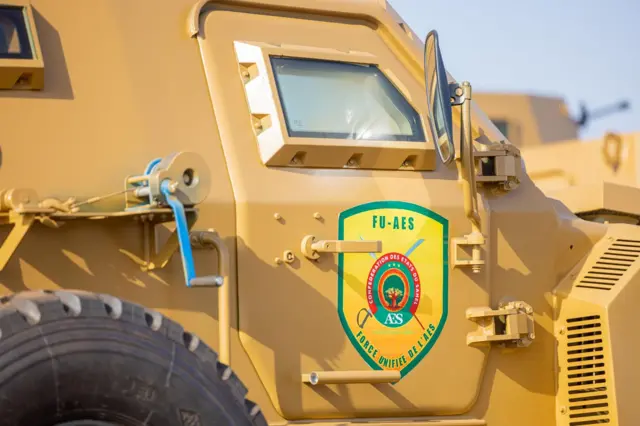
Photo credit: Presidency of the Republic of Mali
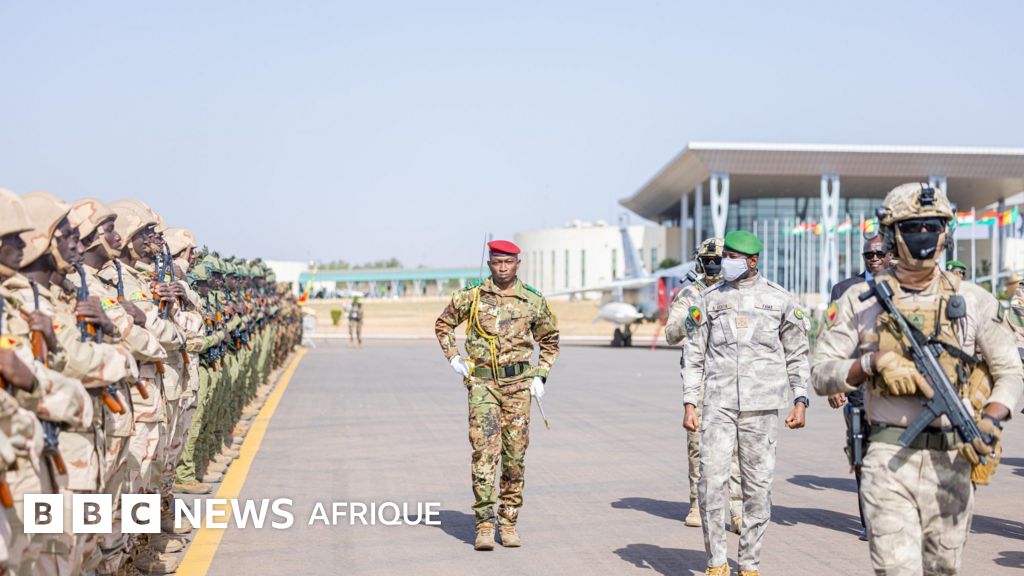
The three countries have faced persistent security threats from armed attacks, border instability and the mobility of jihadist groups operating across national boundaries. The AES unified force, officially launched in Bamako on December 20 under Malian Transition President General Assimi Goïta, represents a strategic response to these challenges.
Comprising 5,000 troops from Mali, Burkina Faso and Niger under the command of Burkina Faso‘s General Daouda Traoré, this multinational force aims to combat insecurity and jihadist groups within the AES territory.
“Peace, security and sovereignty cannot be delegated,” stated General Sadio Camara, Mali’s Defense Minister, presenting the unified force as a strategic partnership rooted in Sahelian values of solidarity and dignity. This initiative represents an irreversible commitment by the three AES member states.
how can the AES unified force achieve its objectives?
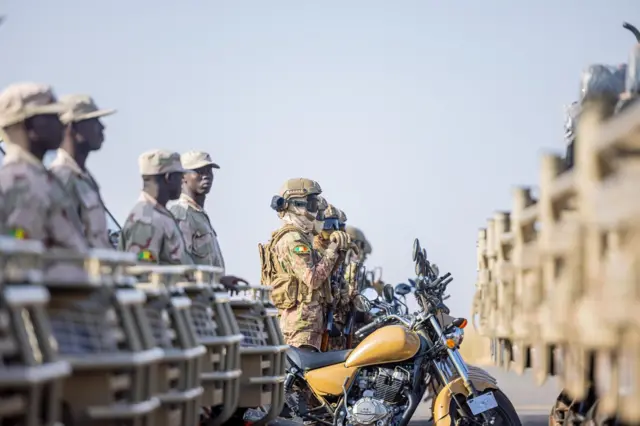
Photo credit: Presidency of the Republic of Mali
Fiacre Vidjenagninou, Principal Researcher at the Behanzin Institute in Cotonou and Senior Associate Researcher at Egmont Institute in Brussels, emphasizes that the unified force’s credibility hinges on delivering tangible results that alleviate population suffering rather than remaining mere announcements.
Critical operational aspects include command structure, decision-making processes, intelligence sharing, logistics, casualty evacuation and post-operation territorial control. “A unified force must follow a simple method: focus efforts where the enemy is strongest, implement an intelligence-to-action mechanism, strike quickly and maintain presence,” Vidjenagninou explains.
He warns that hit-and-run tactics prove ineffective as armed groups often return to reclaim territory. “The force needs holding capacity: controlling axes, securing markets, protecting villages and reassuring populations.” Without addressing local grievances—such as absent local justice, unresolved land disputes, community conflicts and persistent violence—the fight against armed groups cannot succeed.
“A force can win battles but without minimum governance, it cannot achieve lasting stabilization,” Vidjenagninou states.
strategic expansion versus focused approach
The researcher advises caution against rapid expansion of the force to additional countries, noting that coordination becomes increasingly complex with potentially conflicting interests and trust issues. “The smartest approach is to prove effectiveness with three countries first, then gradually cooperate with neighbors through highly operational coordination on specific corridors, strengthen cross-border pursuit agreements, and so on,” he suggests.
Only after successfully completing these stages should formal integration be considered once trust is established. The AES unified force represents a significant political milestone for these three nations, but its credibility will be determined by its ability to jointly command operations, maintain territorial control and produce sustainable results for the people.
next steps for the AES
During the Bamako meeting, AES heads of state will hold discussions with the unified force’s command structure. The two-day summit will also formalize the establishment of the AES Television, headquartered in Bamako, and the Daandè Liptako radio (Voice of Liptako) based in Ouagadougou. Discussions will further address the Confederation Investment and Development Bank, with an initial capital of 500 billion CFA francs.
The AES emerged following coups in Mali in August 2020, Burkina Faso in September 2022 and Niger in July 2023. The Economic Community of West African States (ECOWAS) responded with sanctions and threatened military intervention, particularly in Niger. In response, the three countries withdrew from ECOWAS and established the AES in September 2023 through the Liptako-Gourma Charter. The alliance formally evolved into a confederation on July 6, 2024, in Bamako.