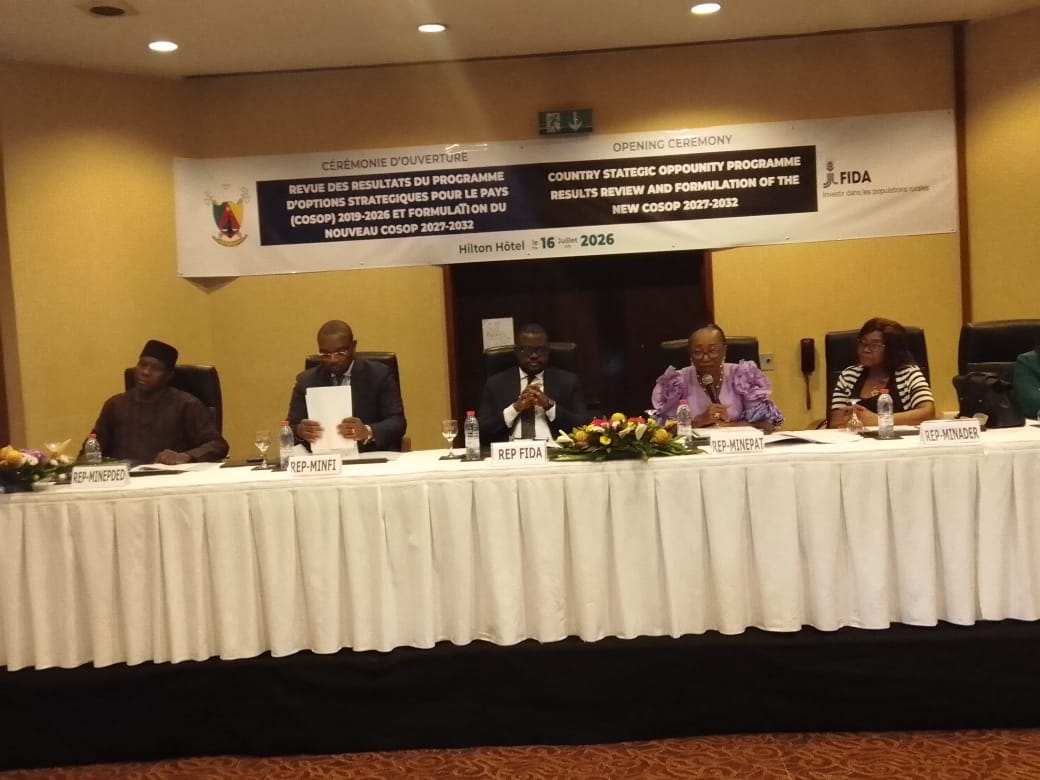
The Cameroun government and the International Fund for Agricultural Development (FIDA) recently concluded a joint review of their strategic partnership, revealing remarkable progress in rural agricultural development. Held in Yaoundé on July 16, 2026, the workshop assessed the outcomes of the Country Strategic Options Program (COSOP) spanning 2019–2026 while laying groundwork for the 2027–2032 phase.
Established under COSOP, the initiative prioritized financial investments to uplift rural communities—particularly women and youth—by enhancing agricultural productivity and livelihoods. The program’s alignment with Cameroon’s National Development Strategy 2020–2030 (SND30) and the United Nations Sustainable Development Cooperation Framework ensured targeted, sustainable interventions.
Key achievements in agricultural production
The review highlighted significant milestones across multiple agricultural programs:
- Sustainable productivity boost for small farms: Achieved a 98% implementation rate, supporting 139 cooperatives in rice and onion value chains with 10,505 farmers (49% youth, 39% women). The goal of 10,000 members—with 50% led by women or youth—was nearly met by 2024.
- Agropastoral entrepreneurship for youth (PEA-Jeunes): Trained 99% of target youth in modern techniques, far exceeding the 50% target. However, hydro-agricultural land development fell short at 43% (649 hectares out of 1,600 planned) for rice and onion production.
-
Rice and onion yields surge:
- Lowland rice productivity climbed 74% (3.7 tons/hectare vs. 5-ton target).
- Upland rice reached 63% of its 4-ton goal (2.5 tons/hectare).
- Onion production hit 86% of the 21-ton/hectare target (18 tons/hectare).
-
Raw rice and onion output gains:
- Raw rice production totaled 52,996 tons (70.38% of the 74,750-ton goal).
- Onion bulb production reached 45,000 tons (52.47% of the 85,562-ton target).
All projects incorporated environmental and social management plans, with notable strides in climate-resilient practices. The ecosystem-based adaptation program achieved 100% adoption, contributing to a draft Agropastoral Sector Orientation Law and three supporting strategies for bamboo restoration.
Looking ahead: COSOP 2027–2032
The 2019 COSOP, originally slated to end in 2024, was extended to December 2026 following a mid-term review. The upcoming phase will build on these results, further aligning with national and UN development priorities to sustain rural transformation.