Behind the FPL’s multilingual video appeal lies a calculated reading of Niger’s deepening security crisis — and of a junta that has yet to deliver the stability it promised. The Front Populaire pour la Justice (FPL) is not simply issuing a call to arms; it is positioning itself as the only actor willing to speak directly to a generation left without answers.
The context behind the FPL’s overture
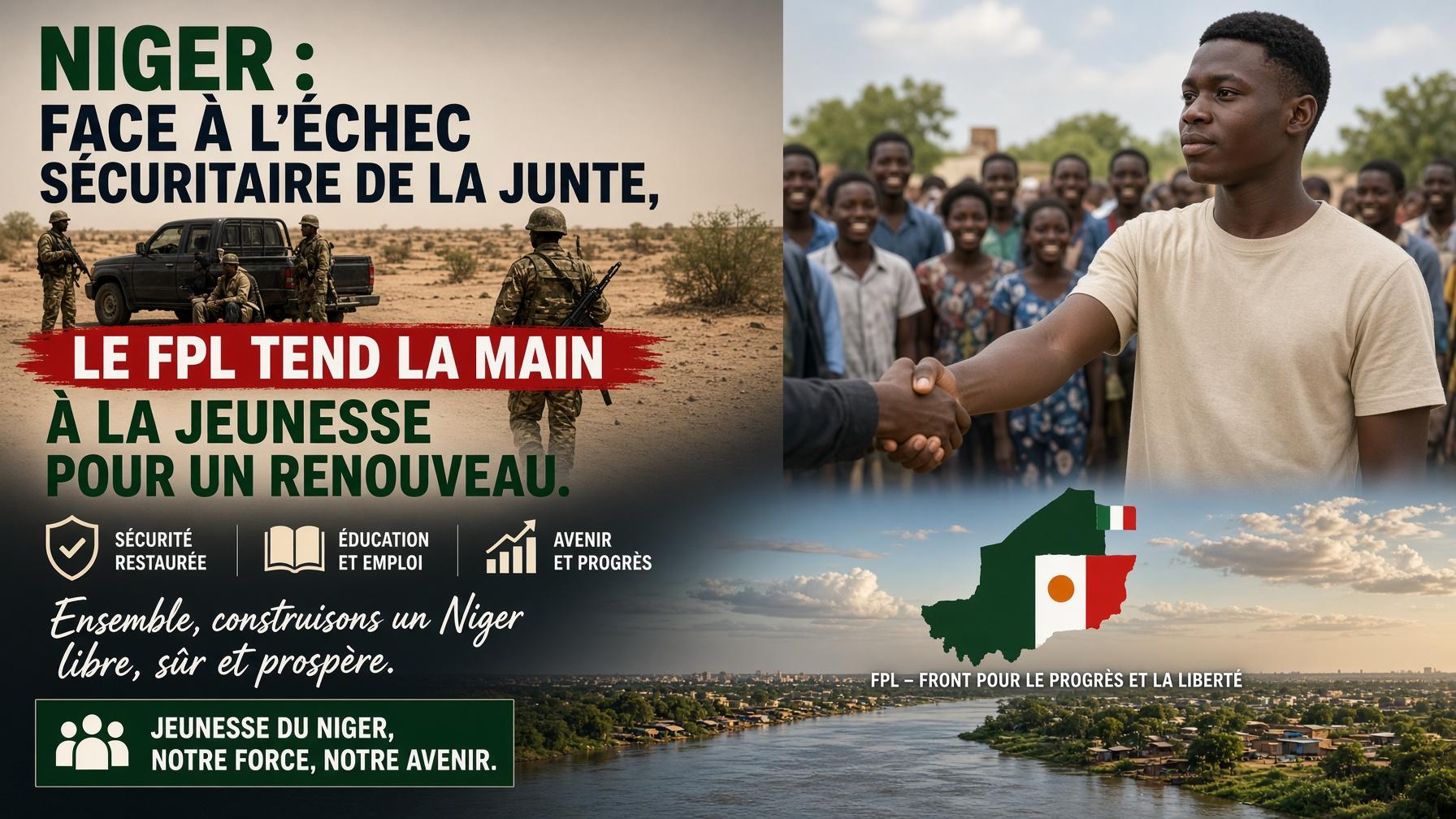
As the military regime in Niamey struggles to shield civilians from worsening violence, the FPL has moved to fill a vacuum. Its message — broadcast in Arabic and several local languages — is aimed squarely at Niger’s youth, inviting them to join the fight. For many citizens, the move reads as a long-overdue jolt against a deadlock that has only tightened.
In a pointed video message circulating on social media, the group’s spokesman draws a clear line: “We have no quarrel with the people of Niger. Our one and only problem is the regime currently in power. We are issuing a special call to the youth to join us on the FPL front against this regime.” The framing is deliberate — separating the population from the government and casting the FPL as an alternative for those seeking change.
Why the multilingual approach matters
By speaking in Arabic and multiple local languages, the FPL signals an intent to transcend regional and ethnic divides. In a country as vast and diverse as Niger, such an approach carries a message of unity straight to the communities most exposed to violence. It also reflects a modern instinct: using digital tools to bypass official channels and reach a younger audience that feels ignored by those in power.
The junta’s security record under scrutiny
The appeal lands in a context of escalating insecurity. Despite the junta’s firm rhetoric, armed group attacks and chronic instability continue to hit civilians, especially in rural and border areas. Three grievances stand out among the population:
- A deteriorating security climate: armed threats persist despite promises to restore peace.
- Institutional and economic voids: young people see no concrete prospects and receive no support in their daily struggles.
- A sense of abandonment: communities grow frustrated as state protection fails to materialise on the ground.
For a large share of the youth, the FPL’s invitation looks like a chance to take charge of the country’s destiny and actively defend their communities.
A youth-driven alternative takes shape
On the ground, the FPL’s move is drawing growing interest among those demanding a political and security alternative. “The current situation cannot go on. We need real solutions to protect our families and restore justice,” says a young community activist. For many, the initiative represents a legitimate channel for engagement against a power seen as stuck.
By placing the youth at the heart of its project, the FPL is betting on the nation’s vital force to drive a new dynamic. Niger’s future rests, more than ever, on its citizens’ ability to mobilise for a secure and just order.