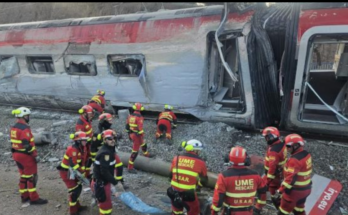
A Russian jet-powered drone targeted a crowded platform at Dnipro’s central train station in eastern Ukraine on October 29, 2026, leaving at least 13 civilians dead and several injured. Authorities confirmed that a passenger train bound for Zaporizhzhia was present on the platform when the strike occurred.
Civilian tragedy unfolds at a critical transport hub
The attack struck a busy railway platform in Dnipro, a major industrial city near active combat zones, at a moment when passengers were boarding the Dnipro-Zaporizhzhia train. Ukrainian officials stated that the drone strike directly hit the platform, killing 13 people and injuring others. Rescue teams, emergency services, and law enforcement were swiftly deployed to secure the area and assist survivors.
Dnipro’s mayor, Borys Filatov, condemned the strike as a horrific act, while President Volodymyr Zelensky labeled it an appalling attack. The Ukrainian railway operator, Ukrzaliznytsia, verified that the drone had struck a platform where civilians were gathered, further underscoring the gravity of the incident.
Ukraine’s railway network: a lifeline under siege
Since Russia’s full-scale invasion in February 2022, Ukraine’s railway system has been a vital artery for civilian mobility, supply chains, and regional connectivity. Stations like Dnipro serve as essential transit points for people fleeing conflict zones, commuting for work, or reuniting with loved ones. When such infrastructure becomes a target, the impact extends far beyond physical damage—it disrupts lives, fractures communities, and breeds fear among the public.
In this instance, the presence of a passenger train on the platform highlighted the vulnerability of public transport hubs. Despite an air raid warning issued prior to the attack, the sheer number of travelers and the imminent departure made immediate evacuation impractical. Ukrzaliznytsia acknowledged the alert but noted the challenges in clearing stations during peak hours or when trains are ready to depart.
Drone warfare: a growing threat to Ukraine’s infrastructure
Drones have become a defining feature of the Russia-Ukraine war, enabling precision strikes on both military and critical civilian targets. Jet-powered drones, in particular, pose a greater challenge for detection and interception due to their speed and maneuverability. Ukraine has had to invest heavily in air defense systems and maintain constant vigilance across its territory to mitigate such threats.
While the exact details of the Dnipro strike—including the drone’s trajectory and intended target—remain under investigation, the civilian casualties raise serious concerns about compliance with international humanitarian law. The indiscriminate nature of the attack on a heavily trafficked station demands urgent scrutiny.
Diplomatic and humanitarian fallout
The strike coincides with Ukraine’s repeated calls for stronger military and diplomatic support from Western allies. President Zelensky has urged the U.S. and European nations to escalate pressure on Russia in response to its intensifying assaults on civilian infrastructure.
Beyond political repercussions, the tragedy at Dnipro underscores the persistent human cost of the war. Public spaces, once taken for granted, have become potential targets, forcing Ukrainians to alter their routines and live with the constant dread of the next attack. With 13 lives lost, the attack is not merely a statistic—it represents shattered families, interrupted journeys, and a people still bearing the brunt of a protracted conflict.
As rescue efforts continue, one question looms large: how can Ukraine safeguard its civilians when even essential infrastructure has become a battleground? The strike on Dnipro’s train station on October 29 is a grim reminder that, years into the war, the civilian toll remains unacceptably high.