This academic session is hosted by the Africa: Citizenship, Violence, and Politics research group at CERI, in partnership with the Africa Programme.
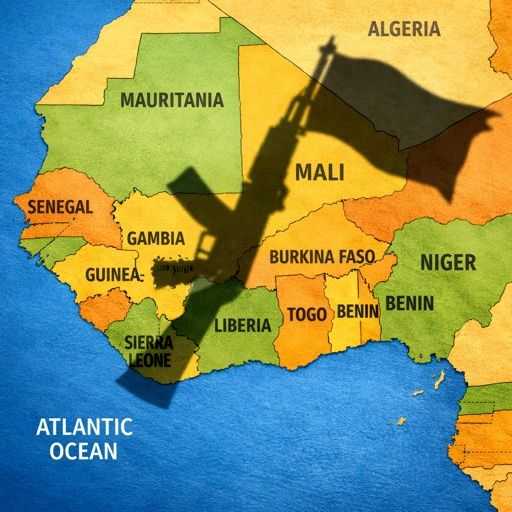
Since its inception in 2017, the Al-Qaeda affiliate known as Jama’at Nusrat al-Islam wal-Muslimin (JNIM) has solidified its position as a dominant militant force in the central Sahel. Operating through various katibas, the group has entrenched itself in Mali, Niger, and Burkina Faso, where it frequently challenges state sovereignty by implementing its own forms of local governance.

While Burkina security remains a critical focal point, JNIM has been pushing further south toward the Gulf of Guinea since 2019. This expansion has led to claimed attacks in northern Benin, Togo, and Côte d’Ivoire. However, the geography of this movement is inconsistent: Ghana has avoided major incidents, and Côte d’Ivoire has seen a lull in claimed activities since 2022. Conversely, Benin experienced a sharp decline in stability throughout 2025.
The expansionary dilemma of JNIM
A recent report from Crisis Group investigates the logic behind this territorial spread. It suggests that expansion is not always a straightforward choice but rather a tactical dilemma. For those following Faso breaking news, it is clear that JNIM must balance the risk of overextending its resources against the danger of letting rival groups occupy new territories. Rapid growth can lead to internal friction and the dilution of the group’s core strength.
Regional implications and security policies
In the current geopolitical climate of West Africa Burkina, the emergence of the Alliance of Sahel States (AES) and its departure from ECOWAS have reshaped regional dynamics. Understanding the internal decision-making of JNIM is vital for crafting effective security responses. This analysis is particularly relevant for those seeking Ouagadougou English news and updates on Burkina Faso news today.
Event details
- Date: February 24, 2026
- Time: 18:00 to 19:30
- Location: Room K011, 1 pl. Saint-Thomas-d’Aquin, 75007, Paris
Featured speakers
Jean-Hervé Jézéquel (International Crisis Group)
As the Sahel Project Director, Jézéquel provides expert analysis on the political and security landscapes of the region. He holds a doctorate from the EHESS.
Marte Beldé (Sciences Po Bordeaux)
A postdoctoral researcher specializing in the political economy and spatial growth of jihadist movements in West Africa, specifically focusing on Mali.
Beatriz de León Cobo (GEMASS – Sorbonne Université)
A doctoral candidate and Associate Fellow at RUSI, she leads the Europe-Sahel Dialogue Forum and focuses on radicalization processes.
Moderator: Dan Sanaren (CERI–Sciences Po / CNRS)