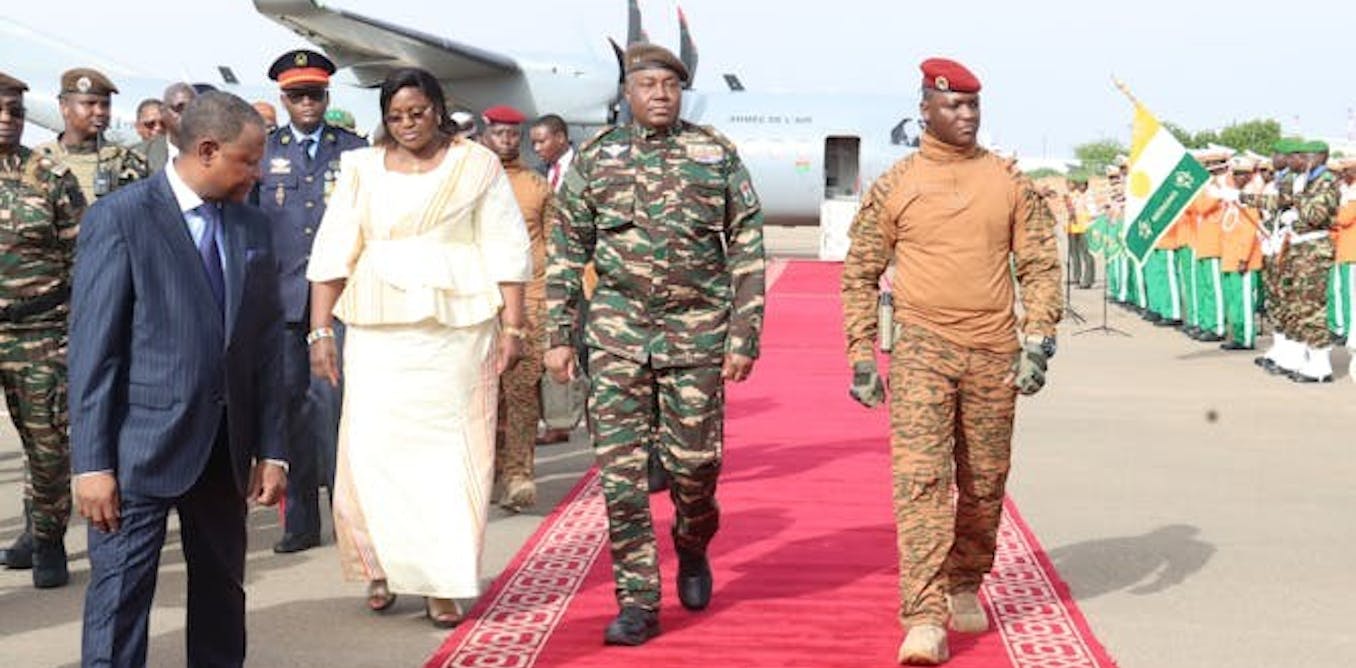
The end of January 2026 signaled a definitive conclusion to partisan politics within the nation. On January 29, the administration led by Captain Ibrahim Traoré formally disbanded every political organisation, including those that had previously backed his September 2022 rise to power.
While these groups had been suspended since Traoré first took command, the junta framed this final decree as a necessary “restructuring” of the state intended to heal social fractures. This development is a major highlight in Burkina Faso news today, marking a total shift in the country’s governance.
In reality, this action eliminates the remaining avenues for independent civic engagement, further consolidating authority in Traoré’s hands. Additionally, the state has moved to confiscate all assets belonging to these former political entities. For those following Faso breaking news, this represents a significant tightening of control.
Though the junta initially enjoyed vibrant civilian backing, this crackdown sharply contradicts their earlier rhetoric regarding popular mobilization and revolutionary change. However, for observers of West Africa Burkina, this progression is hardly unexpected.
Across the Sahel, those who champion military takeovers are discovering that early passion rarely leads to long-term political leverage. Coups that begin with the blessing of the masses frequently conclude with the junta marginalising or actively suppressing the very groups that helped them secure their grip on the state. This cycle has been visible for decades.
Analysis of military interventions over the last ten years, including the recent surge of coups in Africa, suggests a recurring theme.
Once established, military rulers have little incentive to distribute power. Civilian factions are primarily useful during the initial chaos; they provide the optics of legitimacy, showing the world that the takeover is a response to public outcry. As Ouagadougou English news sources often note, these alliances are frequently temporary.
Eventually, these same civilian groups become obstacles. They possess their own leadership, distinct constituencies, and specific expectations for the transition process. Their ability to criticize delays or mobilize followers is a form of independence that juntas find threatening. This has direct implications for Burkina security and long-term stability.
Initial public support should never be mistaken for a permanent mandate or a sign that the new regime will remain inclusive. The recent prohibition of political activity in Burkina Faso serves as a stark reminder: help from outside the barracks may start a revolution, but it rarely buys a seat at the table once the dust settles.
The illusion of influence: why civilian backing is temporary
Contrary to common perceptions, military takeovers often garner support from segments of the population. In some instances, civilians actively push for these interventions, playing a key role in stabilizing the new administration.
This was clearly seen in the recent wave of unrest across Africa. From Mali to Niger, military actions were celebrated by various civil society groups and political actors. For the coup leaders, these partnerships offer immediate visibility and a ready-made support base.
However, a secondary pattern is just as reliable. While civilian groups expect to maintain influence in the post-coup era, juntas frequently sideline or even persecute their former partners once their position is secure.
This historical trend ignores ideological boundaries. For instance, after the 1969 coup in Soudan, the Communist Party initially backed Colonel Jaafar Nimeiri. Within months, Nimeiri began removing them from government, and by 1971, he had violently dismantled the party entirely.
Similarly, following the 2013 intervention in Égypte, the Tamarod movement supported General Abdelfattah el-Sisi. Their influence vanished almost immediately as the military narrowed the scope of political life.
The growing regrets of Sahelian activists
Today, many groups in the Sahel are discovering this hard truth. In Mali, the Mouvement du 5 juin – Rassemblement des forces patriotiques (M5-RFP), once a primary ally of Colonel Assimi Goïta, has become a fierce critic of the regime.
The M5-RFP was instrumental in the August 2020 protests that led to the military’s arrival. They expected to help shape the transition, but the junta excluded their leaders from meaningful roles. When Goïta launched a second coup in May 2021, the movement’s relevance was effectively erased.
A similar story unfolded after the 2021 coup in Guinée. Opposition figures who fought against Alpha Condé initially praised General Mamady Doumbouya. They even lobbied the CEDEAO to avoid sanctions, believing they would have a voice in the new government.
Just as in Mali, the junta ignored these allies. Within a year, political leaders were being detained for protesting their exclusion. The recent dissolution of parties in Burkina Faso is simply the latest chapter in this established playbook. Early political support is no shield against the consolidation of military rule.