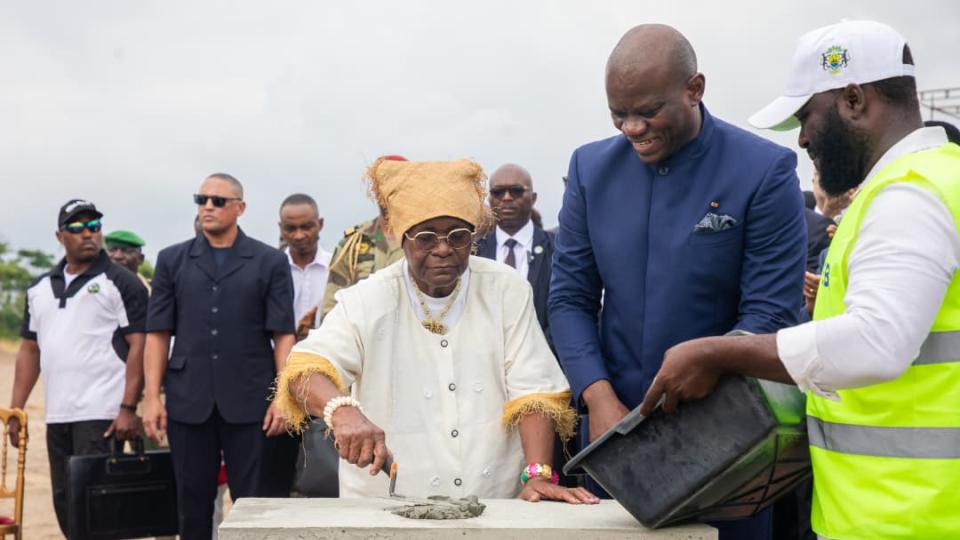
Gabon is making a historic leap forward with the launch of the Kobé-Kobé deep-water port project, one of the most ambitious undertakings in its recent history. Tied to the Belinga iron ore deposit, a new railway link, and the future Booué hydroelectric dam, this integrated industrial and logistics hub reflects the government’s determination to reduce oil dependence and boost local value addition to natural resources.
For decades, the country’s economy has relied heavily on oil revenues. Now, the Kobé-Kobé initiative is emerging as a cornerstone of a new economic vision aimed at diversifying growth drivers. Far more than just a port, it will serve as a comprehensive industrial ecosystem designed to link Gabon’s mineral wealth with global markets while maximizing local benefits.

The future deep-water port will be located on the Atlantic coast in the Estuaire Province, boasting a draft depth of 14 to 16 meters. This capability will allow it to accommodate large-capacity vessels, significantly strengthening Gabon’s logistical competitiveness in a region where port infrastructure is increasingly contested.
An integrated project at the heart of economic transformation
The Kobé-Kobé complex is built around a fully integrated value chain. At its core lies the Belinga iron ore deposit, one of the world’s largest untapped reserves. To transport the ore from the interior to the coast, a new railway line is being developed to connect the mining site to the port. Complementing this is the Booué hydroelectric dam, which will supply the energy needed to power both the mining and industrial operations.
A strategic agreement signed in April 2026 between the Gabonese government and Africa Global Logistics (AGL) marks a critical milestone in the project’s realization. The goal is to establish a leading logistics platform capable of supporting the country’s industrialization drive.
Up to 160,000 jobs expected
The social and economic ripple effects of the project are expected to be profound. Forecasts suggest the complex could generate up to 160,000 direct and indirect jobs throughout its development phases. This presents a major opportunity for Gabon’s youth, many of whom face persistent employment challenges.
The demand for skilled labor will span construction, logistics, industrial operations, rail transport, energy, and maintenance sectors. Authorities aim not only to create jobs but to stimulate the growth of local enterprises capable of participating in the supply chain, fostering broader economic resilience.
The realization of economic sovereignty
Beyond its economic dimensions, the Kobé-Kobé project carries profound symbolic weight. It embodies President Brice Clotaire Oligui Nguema’s vision of building an economy anchored in the valorization of national resources and strategic infrastructure ownership.
As economic sovereignty becomes a defining priority for African nations, this multi-sectoral complex—spanning mining, energy, rail, and port operations—stands as a tangible example of that ambition. If timelines are met, Kobé-Kobé could, by 2030, stand as a landmark achievement in Gabon’s post-oil economic transition.