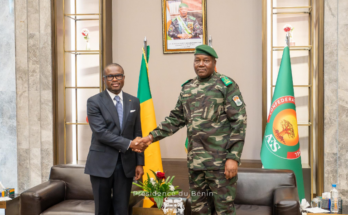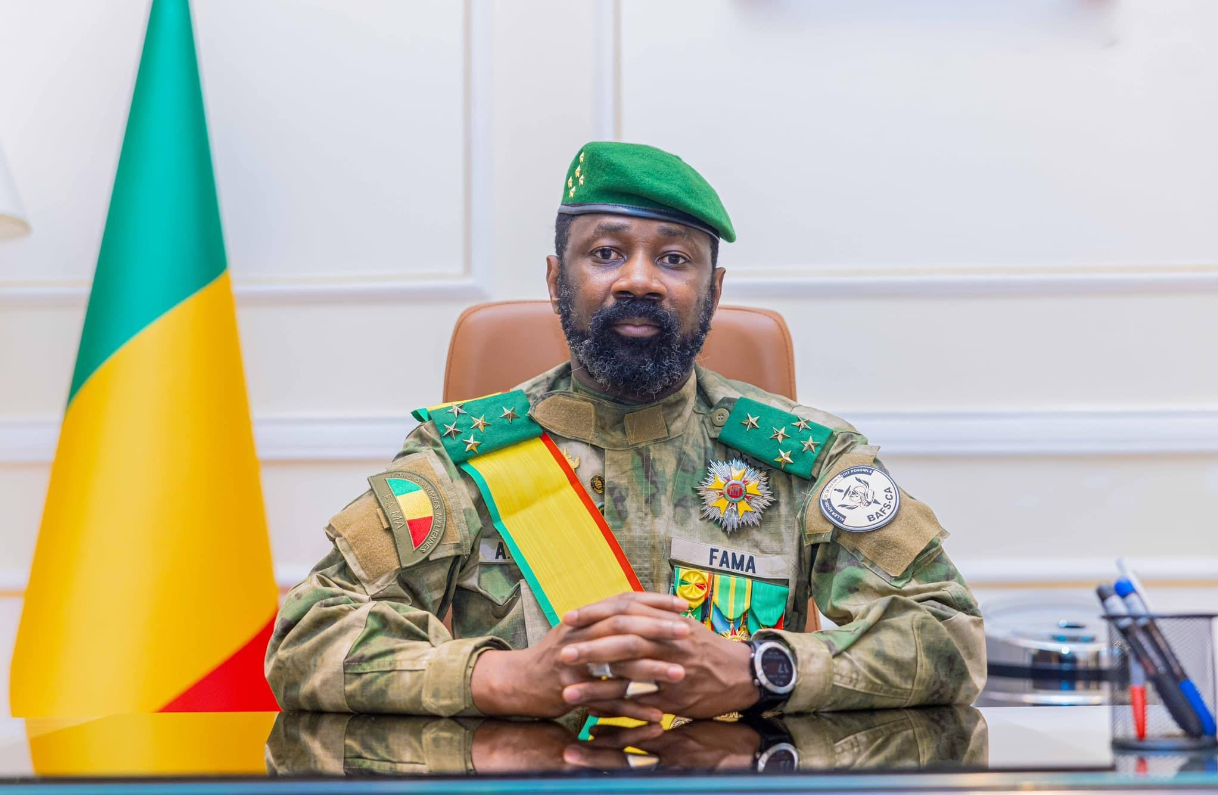
The leader of Mali, General Assimi Goïta, arrived in Ouagadougou on November 5, 2026, for a high-level working and friendship visit with Burkina Faso’s captain-president, Ibrahim Traoré. While the trip underscores the deepening ties between Bamako and Ouagadougou, the absence of Niger’s head of state—Abdourahamane Tiani—has sparked questions about the cohesion of the Sahel States Confederation (AES).
Diplomatic momentum without Niamey
According to Burkina Faso’s State Protocol Directorate, Assimi Goïta’s visit is framed as a bilateral meeting aimed at strengthening cooperation between the two neighboring countries. Ibrahim Traoré will host the Malian leader with full official honors at the presidential palace in Ouagadougou.
The timing of this encounter raises eyebrows: it features only two of the three AES founding members. Despite repeated public commitments to trilateral unity, this summit excludes the third capital, Niamey. The move prompts observers to question whether the AES is evolving into a two-tier alliance or simply prioritizing bilateral initiatives in the short term.
From alliance to confederation: a fragile foundation?
The Sahel States Confederation, launched in September 2023 and formalized in July 2024, was designed to consolidate military, political, and economic cooperation among Burkina Faso, Mali, and Niger. The stated goal was clear: build a united front against shared threats—terrorism, trafficking, and economic instability—in a region under siege.
Yet this week’s meeting in Ouagadougou reveals an uncomfortable truth: the alliance’s operational heart may not yet beat as one. While the three nations continue to champion the idea of solidarity on paper, their diplomatic choreography does not always reflect that ideal in practice.
Niger still at the table, but not at the table
It would be premature to conclude that Niger has been sidelined. On October 16, 2026, the foreign ministers of the three countries gathered in Ouagadougou to advance the AES’s strategic agenda. That gathering, held under the banner of the Confederation’s ministerial steering committee, demonstrated ongoing collaboration on regional priorities.
Still, the conspicuous absence of Abdourahamane Tiani from a bilateral summit between Mali and Burkina Faso highlights a delicate balance. A Confederation of three requires decisions made by three. When one voice is missing from key discussions, even symbolically, it calls into question the depth of trilateral commitment.
Agendas, priorities, and the risk of fragmentation
Under the shadow of regional insecurity, Mali and Burkina Faso share pressing security challenges. Cross-border jihadist movements and armed factions threaten civilians and military alike. In response, both countries have emphasized national sovereignty and self-reliance—values that resonate across the AES platform.
But sovereignty does not mean isolation. Security cooperation between Bamako and Ouagadougou can only reach its full potential if it is embedded within a broader, tripartite framework. The current visit in Ouagadougou offers an opportunity: to advance bilateral initiatives while ensuring they remain aligned with the Confederation’s wider goals.What comes next for the AES?
The next 48 hours will reveal whether this meeting yields concrete outcomes. Will the talks between Goïta and Traoré include provisions for future coordination with Niamey? Or will the momentum stall, leaving the AES looking more like a loose partnership than a unified bloc?
What is certain is this: the strength of the Sahel States Confederation lies not in the sum of its bilateral relations, but in the regular and meaningful engagement of all three member states. As the world watches, Mali and Burkina Faso have a chance to set an example—one that invites, rather than excludes, their partner in Niamey.
Key takeaways
- The absence of Niger’s president from the Ouagadougou summit raises questions about AES unity.
- Despite trilateral rhetoric, bilateral meetings may signal a shift toward two-nation cooperation.
- Security cooperation requires trilateral coordination, not just bilateral coordination.
- The Confederation’s future depends on whether Bamako, Ouagadougou, and Niamey can sustain a united front.