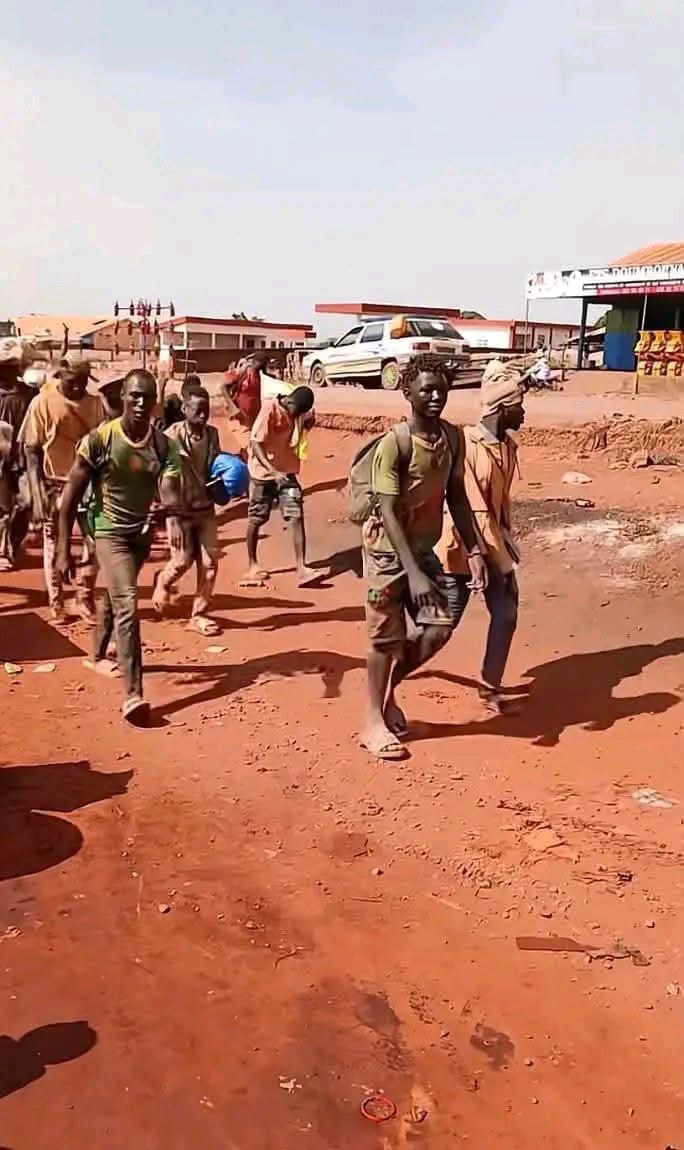
Cross-border illegal gold mining by Burkinabè nationals has emerged as a pressing environmental and diplomatic concern across West Africa. While some seek quick profits from foreign lands, their actions are leaving a trail of ecological destruction that disproportionately affects local communities.
Environmental degradation ignored across political boundaries
The clandestine gold rush unfolding in neighbouring countries is far from innocuous. Illegal mining operations result in severe soil erosion, toxic water contamination, rampant deforestation, and abandoned hazardous pits that render agricultural land unusable. These consequences are not theoretical they directly threaten the livelihoods of families whose existence depends on natural resources.
Villages surrounding mining sites face immediate threats: polluted rivers compromise drinking water, fertile soil turns barren, and long-term food security becomes uncertain. The environmental toll extends beyond national borders, yet the burden falls entirely on local populations who had no say in these exploitative practices.
Accountability must cross frontiers
When Burkinabè nationals are expelled from neighbouring countries for illegal mining activities, the response from their home government is often defensive rather than reflective. While protecting citizens abroad is a legitimate responsibility, it should not overshadow the need to acknowledge the environmental harm caused to other nations.
Expulsion should not be framed as an unlawful act but rather as a necessary measure taken by countries struggling to preserve their ecosystems. The principle of reciprocity must apply: if Burkinabè citizens demand justice abroad, their nation must accept that the same standards govern behaviour at home.
What happens when the problem returns home?
The expulsion of nationals engaged in illegal mining abroad presents an opportunity for Burkina Faso to reassess its own policies. If these individuals contributed to ecological devastation across borders, their actions also expose the fragility of local environmental protections.
Hypothetical scenarios become critical questions: What if similar illegal mining escalated within Burkina Faso’s own borders? Would local communities accept unchecked exploitation of their fields, rivers, and natural reserves? The answer must be a resounding no yet the same logic should apply wherever damage occurs.
Sovereignty and solidarity in environmental protection
Environmental protection cannot be selective. The same ecosystems that sustain life in Bénin, Côte d’Ivoire, Ghana, or Burkina Faso deserve equal safeguarding against exploitative practices. No nation should serve as a sacrifice zone for unregulated resource extraction.
The core issue is not an imagined conflict between peoples but rather a universal principle: respect for territorial sovereignty and ecological integrity. Governments must enforce laws rigorously, regardless of where their citizens commit violations.
A turning point for responsible governance
Burkina Faso faces a defining choice: prioritise diplomatic protection of citizens abroad while neglecting environmental responsibilities, or champion a consistent approach that values ecological justice. The path forward demands clear investigations, proportionate penalties, and cooperation with affected neighbours.
When Burkinabè miners return home, the message must be unequivocal: exploiting foreign lands without accountability today may well invite the same disregard for Burkina Faso’s lands tomorrow. Environmental justice begins at home and extends to every border.
By Jeanne Ntouba — Journalist