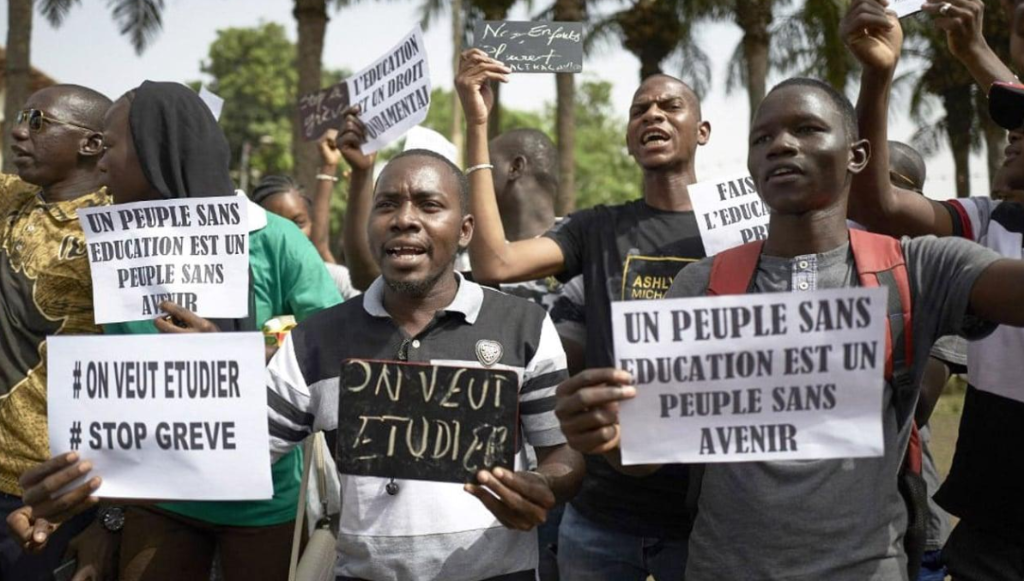
The three-week silence of Mali’s transitional authorities has been shattered as senior government officials held their first direct talks with striking university lecturers this week. The meeting comes after nearly a month of campus closures and mounting pressure on both sides to resolve a dispute over unpaid research bonuses dating back to 2017.
Government breaks months-long standoff with higher education union
The high-level encounter between the Syndicat national de l’enseignement supérieur et de la recherche scientifique (SNESUP) and state representatives marks the first concrete engagement from Mali’s transitional government since the strike began on October 26. While the contents of the discussions remain undisclosed, the meeting signals an end to the authorities’ prolonged absence from negotiations.
The SNESUP leadership has yet to issue formal statements regarding potential compromises or timelines for resolution. For now, the union confirms it will brief its members before determining whether to maintain or suspend the strike action. No concessions have been publicly acknowledged by the government at this stage.
Unresolved research bonus fuels academic disruption
At the heart of the crisis lies a long-overdue presidential decree (2017-0850/P-RM) that established a research bonus for university lecturers. Nearly nine years after its adoption, lecturers report receiving no payments, prompting SNESUP to demand immediate implementation.
The union insists on three key demands:
- Formal issuance of the research bonus amount and its payment mechanism
- Compensation for outstanding arrears from previous academic years
- Guarantees for future disbursements aligned with the 2017 decree
Without resolution, the strike continues to paralyze Mali’s higher education sector, affecting thousands of students and academic programs nationwide.
Students bear the brunt of prolonged campus closures
The strike has already disrupted the academic calendar, leaving students uncertain about exam schedules, course completion, and graduation timelines. Earlier mediation attempts—including community and religious leader-led discussions on November 7—failed to secure a truce.
While the government’s newfound willingness to engage may introduce fresh momentum, SNESUP remains firm: “The time for talks must now yield to tangible outcomes.” The union has called for a member-wide consultation before considering any suspension of the strike.
From stalemate to negotiation? Authorities face test of credibility
With the strike now in its fifth week, transitional leaders hold the key to de-escalation. Analysts suggest the government must move beyond initial dialogue and propose concrete measures to satisfy SNESUP’s demands. Failure to do so risks entrenching the crisis, further destabilizing Mali’s higher education system and prolonging the hardship for students and faculty alike.
For lecturers, the issue is no longer abstract policy but a longstanding promise of support—one they insist must be honored without further delay.
