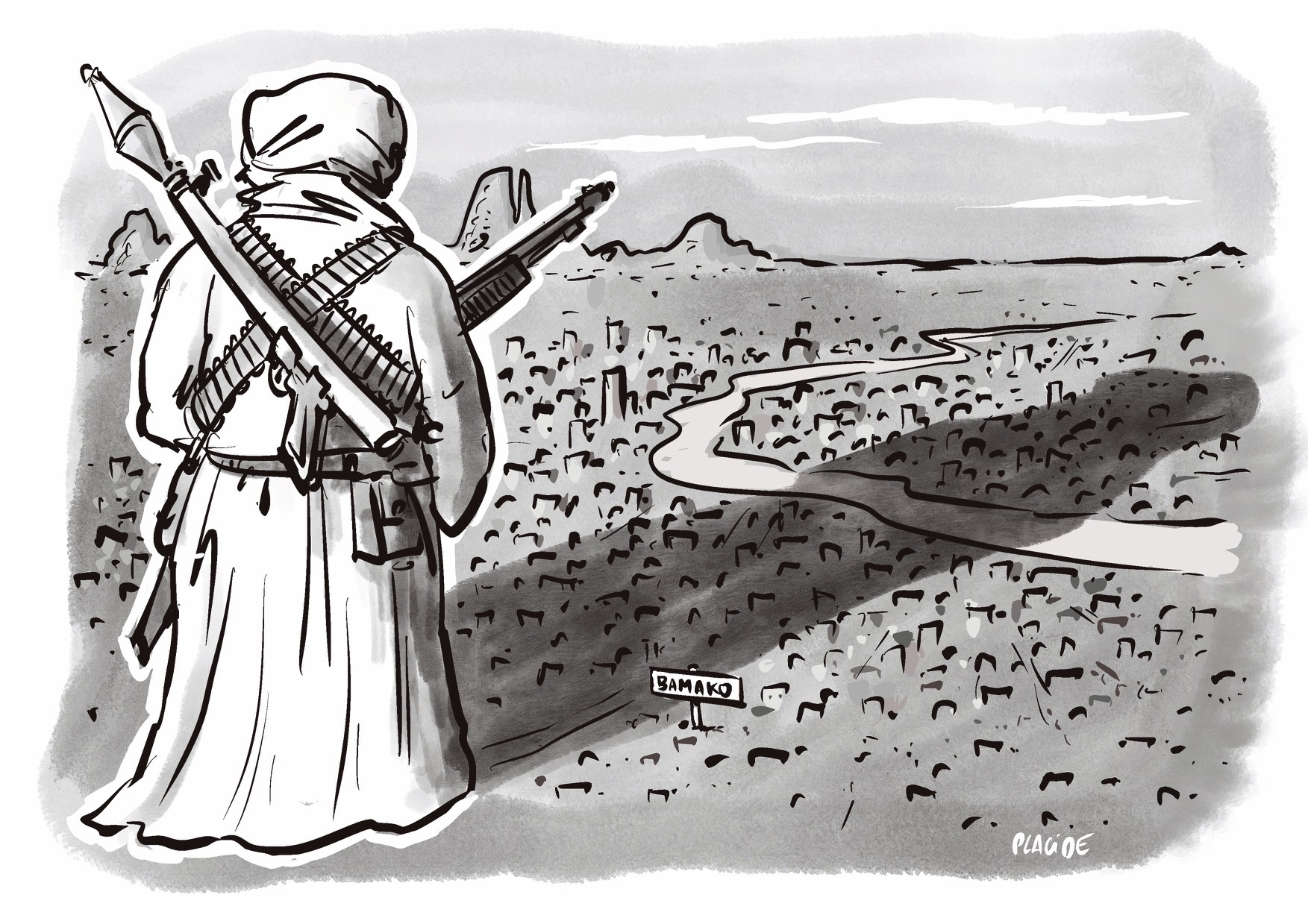
Malians recently observed Eid al-Adha, locally known as Tabaski, under an unprecedented cloud of apprehension. This somber atmosphere follows a complex assault on April 25 that profoundly rattled the military regime and tragically claimed the life of Defense Minister Sadio Camara. Adding to the tension, the Group for the Support of Islam and Muslims (GSIM) had ominously hinted at a potential “final assault” on Bamako, aiming to destabilize the ruling junta.
Historically, jihadist factions frequently time their military operations to coincide with significant Muslim holidays, driven by the belief that such actions earn them greater divine favor.
This year, the traditional celebratory sheep were largely unattainable for most households, both in urban centers and remote rural areas. This scarcity is a direct consequence of the immense pressure exerted by armed groups. In the countryside, these groups levy a portion of livestock as a form of taxation or seize entire herds for resale. In Bamako, they have imposed a city-wide boycott—a tactic previously employed in Burkina Faso and other Malian localities. While not entirely impenetrable, as Malian security forces forcefully keep most major routes open, this boycott significantly dampens the morale of Bamako residents.
Similar astronomical prices for livestock were also observed in Niamey, Niger. This capital city, and particularly its western regions, traditionally a key source of cattle, has been subjected to relentless attacks by GSIM and the Islamic State in the Sahel. These two formidable groups have recently targeted numerous military and civilian positions, resulting in a high number of casualties. They have exploited the operational vacuum created by the Nigerien army’s redeployment further north, as part of the planned offensive to reclaim Kidal.