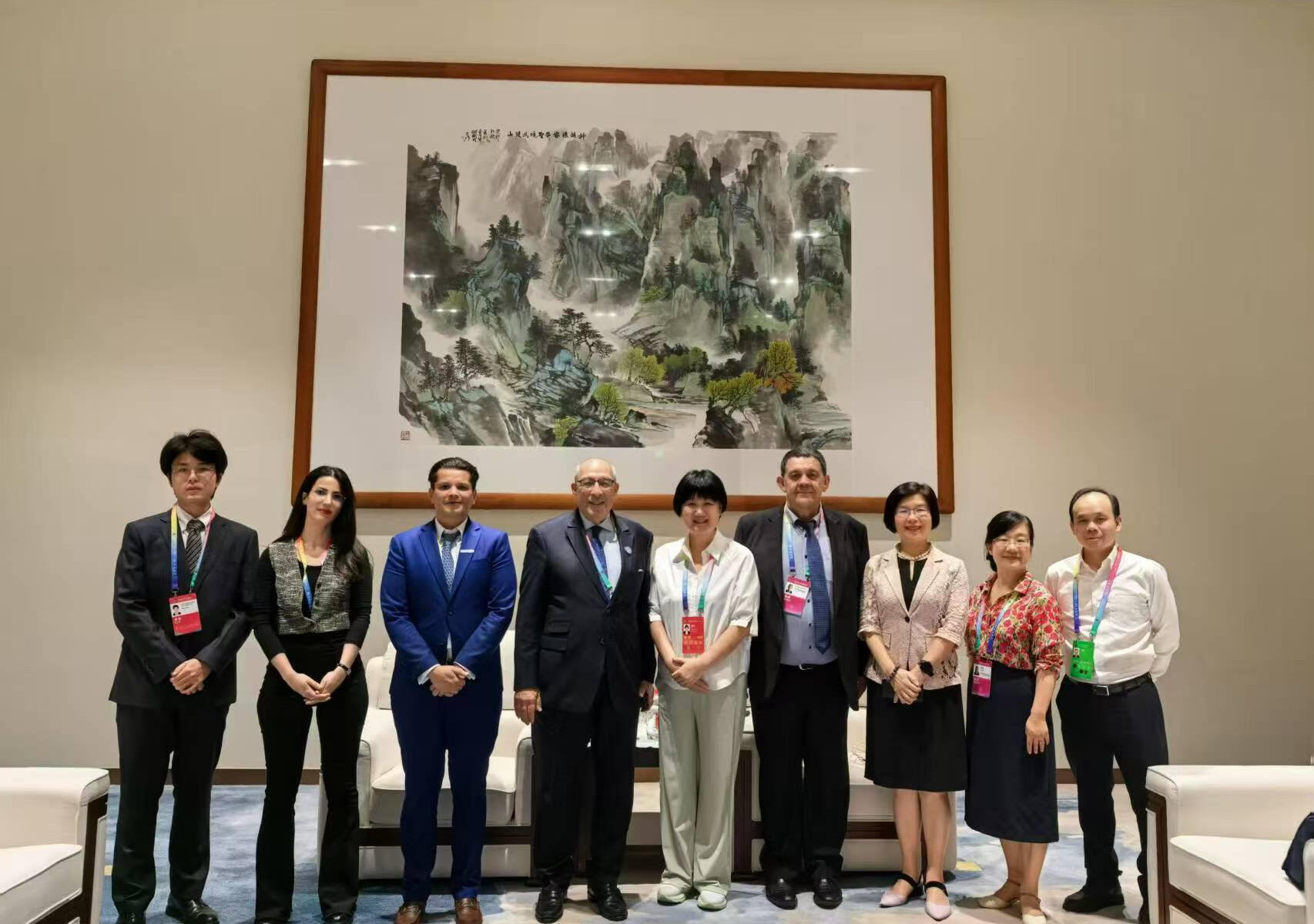
Beijing became the stage for a decisive acceleration of the strategic partnership between Morocco and China during the 4th China International Supply Chain Expo (CISCE). Minister Delegate for Investment Karim Zidane and Moroccan Ambassador to China Abdelkader El Ansari actively courted Chinese industry giants, delivering a clear and ambitious message: the Kingdom aims to establish itself as the indispensable industrial hub linking Europe, Africa, and the Atlantic basin.
Morocco’s investment momentum is historic, with 381 projects approved worth 580 billion dirhams and Chinese foreign direct investment reaching 2 billion dirhams in 2025. Ambassador El Ansari reaffirmed that the partnership sealed in 2016 by King Mohammed VI and President Xi Jinping is a concrete engine of growth, not merely a declaration of intent. He addressed economic operators directly, underscoring Morocco’s readiness for the next phase of collaboration.
The Moroccan appeal now rests on a comprehensive value proposition that goes beyond labor and tax incentives. The Kingdom offers unmatched connectivity through world-class infrastructure – including Tanger Med, Nador, and Dakhla ports – transforming Morocco into an ideal logistical gateway. Access to international markets via over 56 free trade agreements and a central role in the African Continental Free Trade Area (AfCFTA) allows Chinese firms to bypass customs barriers and reach more than one billion consumers. This foundation is strengthened by robust sectoral expertise in automotive, aerospace, electric mobility, and renewable energy, areas where Sino-Moroccan complementarity is increasingly evident.
Minister Zidane emphasised the concept of a “triangular partnership.” For him, Morocco is not merely an export destination but a key partner for Africa’s industrialisation. The model is clear: China provides technology and capital, while Morocco contributes its expertise, political stability, and continental influence to sustainably transform African industrial fabric. This vision aligns with preparations for the 2030 World Cup, where infrastructure and sustainable mobility projects open unprecedented opportunities for Chinese groups.
According to Ambassador El Ansari, the challenge now is to transform the growing confidence – already illustrated by the presence of around one hundred Chinese companies on Moroccan soil – into a deep and lasting industrial anchorage. In Beijing, Morocco no longer simply promotes its merits; it is laying the groundwork for a future where “Made in Morocco” becomes a natural extension of global value chains, confirming the Kingdom as a strategic linchpin in a reconfiguring world.