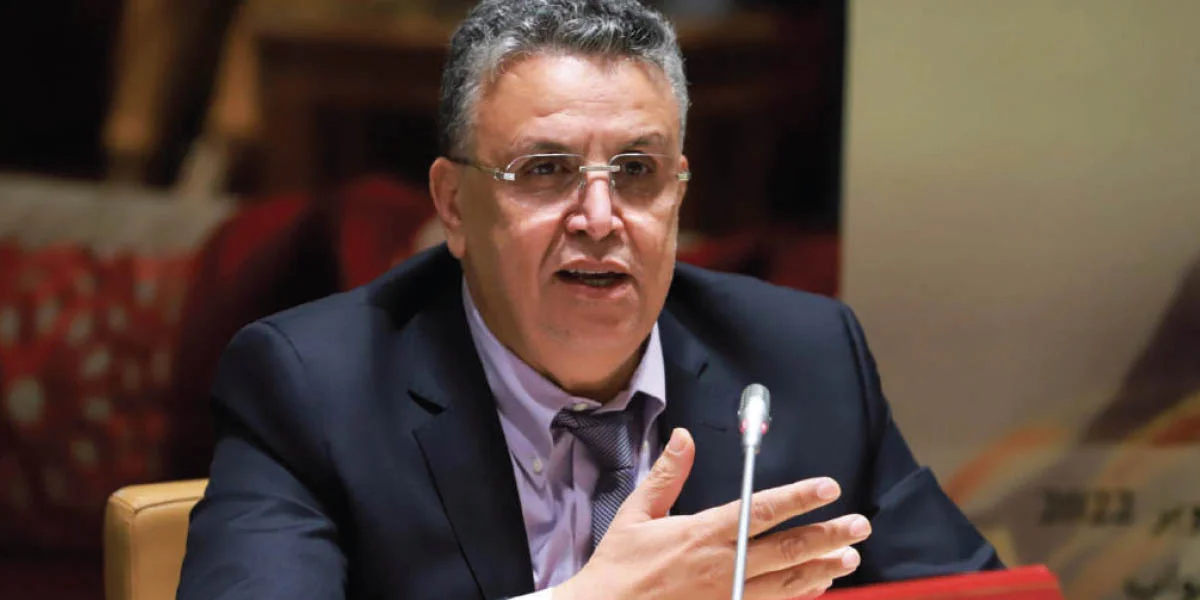
Morocco’s Minister of Justice, Abdellatif Ouahbi, has once again brought attention to the longstanding dispute over Ceuta and Melilla, asserting that Rabat remains committed to negotiating the return of these cities, which it views as integral parts of its territory. In a recent interview, the minister emphasized that the issue remains ‘on the table,’ framed within a broader strategy of dialogue and patience. He noted that the topic frequently surfaces during high-level meetings between Moroccan and Spanish officials, underscoring the persistence of Morocco’s position.
The minister also addressed the recent surge in migration attempts on July 30 and 31, where hundreds crossed into Ceuta. Ouahbi stressed that Spain must take full responsibility for the repatriation of unaccompanied Moroccan minors who entered Spanish territory. He criticized Spain’s approach, which calls on Morocco to curb irregular migration while simultaneously allowing those who reach Spanish soil to pursue legal procedures.
Ouahbi further highlighted the need for both countries to align their legal frameworks and operational mechanisms to combat irregular migration. He firmly rejected the notion that Morocco should act as Europe’s sole enforcer in managing migration flows, framing the challenge as a shared responsibility.
Spain swiftly responded to Morocco’s claims, with the Ministry of Foreign Affairs issuing a clear rejection. A statement reiterated that the status of Ceuta and Melilla is ‘not and will never be up for discussion,’ affirming that these territories are ‘irrevocably part of Spain’s internationally recognized territorial integrity.’
Albares remains diplomatic, Imbroda sharpens rhetoric
During a visit to Ceuta, Spanish Foreign Minister José Manuel Albares avoided addressing the sovereignty dispute in his public remarks. Instead, he focused on the recent migration crisis, acknowledging Morocco’s willingness to take back unaccompanied minors who arrived during the mass crossings. His measured tone contrasted sharply with the fiery reaction from Melilla’s regional president, Juan José Imbroda.
Imbroda, a member of Spain’s opposition Popular Party, took a direct swipe at Morocco’s handling of the situation. ‘What purpose do Ceuta and Melilla serve if you cannot manage what you already have, and your youth are fleeing?’ he remarked in a widely circulated statement. He described the migration surge as an ‘international embarrassment’ for Morocco, urging the country to ‘dignify its response to this crisis.’
The Moroccan Ministry of the Interior weighed in on the same day, framing the migration challenge as a ‘shared responsibility.’ It cautioned against online calls for further crossings on August 15, warning that tackling irregular migration and human trafficking cannot rest solely on one country’s efforts. While the statement steered clear of the sovereignty debate, it reinforced Morocco’s stance that collaboration—not unilateral action—is essential for sustainable solutions.