Navigating the diplomatic thaw between Niger and ECOWAS
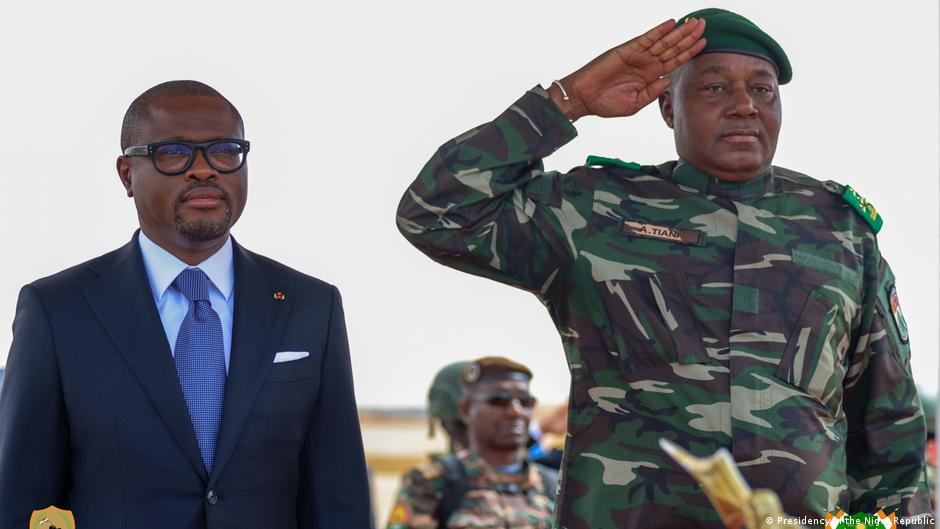
Three years after the military takeover that ousted President Mohamed Bazoum, the ruling junta in Niamey continues to face strained relations with the Economic Community of West African States (ECOWAS). The regional bloc had swiftly condemned the coup, leading to a prolonged diplomatic chill.
On July 30, 2023, just four days following the coup against President Bazoum, ECOWAS issued a firm demand for his reinstatement. The organization simultaneously announced a series of sanctions and threatened the use of force to restore constitutional order. This ultimatum was perceived as a declaration of war by Mali and Burkina Faso, both of which are also under military rule. Consequently, it became evident that Niger’s diplomatic standing with ECOWAS could not be isolated from the broader context involving Mali and Burkina Faso.
These three nations subsequently solidified their alliance by forming the Alliance of Sahel States (AES), a decisive step towards their eventual disengagement from the sub-regional organization. Their formal withdrawal from ECOWAS took effect in late January 2025. Despite this separation, channels of communication between the two blocs surprisingly remain open.
Lansana Kouyaté steps in as mediator
Pape Ibrahima Kane, an expert in international organizations, confirms that the AES member states have agreed to the appointment of former Guinean Prime Minister, Lansana Kouyaté, as ECOWAS’s primary negotiator with the Alliance. This move signals a potential breakthrough in the ongoing diplomatic stalemate.
At the recent ECOWAS meeting held in Freetown on July 18, 2026, the new President of the ECOWAS Commission, Birame Diop of Senegal, was mandated to prioritize regional security issues in the initial discussions. Kane expressed optimism, stating, “We are at the beginning of a very promising process because both parties are truly on the same wavelength to engage in dialogue.”
Kane further highlighted Niger’s unique reliance on Nigeria and Bénin, both ECOWAS members, for its electricity supply and access to the port of Cotonou. He is confident that Lansana Kouyaté will carefully consider these specific dependencies, along with the broader interests of the AES, during his negotiations with ECOWAS.
Romuald Wadagni’s diplomatic outreach
Further encouraging signs for continued dialogue include the appointment of Bassirou Diomaye Faye as the current ECOWAS Chairman. Following his election in May 2024, Faye promptly visited the AES countries, demonstrating a commitment to engagement. Additionally, the recent assumption of power by Romuald Wadagni in Bénin has brought a fresh approach. Wadagni notably chose Niger as his first international destination after his inauguration, before proceeding to Burkina Faso and Mali, signaling a clear intent to de-escalate tensions.
Pape Ibrahima Kane observes that “They (Bassirou Diomaye Faye and Romuald Wadagni) are in a much better position than others (Alassane Ouattara, Patrice Talon, Macky Sall) who were accused of all sorts of things. There is also a new team that will take office in Abuja at ECOWAS, which will begin to roll out a program that will be less rigid than the previous one.”
Sahanine Mahamadou, special advisor to Mohamed Bazoum for NGOs and head of the customary, religious, social, and humanitarian affairs unit, maintains that ECOWAS has consistently sought dialogue with Niger. “It has always been the military who have refused dialogue. If these individuals are truly patriots, they must seek avenues to hand over power to civilians, because the world has evolved; it is no longer feasible for military personnel to govern our states.”
Mahamadou’s statements implicitly advocate for the return to power of Mohamed Bazoum, who has yet to sign a letter of resignation. In March, a resolution passed almost unanimously by the European Parliament condemned the detention of Mohamed Bazoum and his wife, urging their immediate release. This non-binding text provoked a strong reaction from Niamey, which denounced it as interference and paternalism.
The fate of Mohamed Bazoum
For Jérôme Pigné, president and founder of the Strategic Reflection Network on Security in the Sahel, a crucial question arises: how can the EU uphold its values with Niger while simultaneously maintaining dialogue with Niamey? “Evidently, the issue of President Mohamed Bazoum’s illegal detention is a thorn in the European Union’s side when it seeks to engage with Niger. But generally speaking, Europeans need to decide what they want. Is it to compromise on principles in the name of realpolitik? It’s a balancing act, and for now, no one has found the solution.”
Pigné underscores Niger’s historical partnership with the EU, noting that the bloc is currently “rethinking its cooperation framework with Niger, as well as with its neighbors.” He affirms that “dialogue is necessary, and it exists.”
In a study published last March, the German Institute for International and Security Affairs (SWP), based in Berlin, suggested that “Europe should offer extensive support to the current military regimes to stabilize their countries.” This European assistance could encompass enhanced military and security cooperation, including intelligence sharing, provision of military equipment, and investments in security force training. The SWP also advocates for EU support in improving the economic situation in Niger and other Sahelian nations, while urging continued political dialogue with regional political and social actors. However, the study concludes that “Europe should not expect to be able to induce the juntas to change their behavior.”