When school holidays become a classroom for resilience
In N’Djamena, the summer break isn’t just about relaxation for many students—it’s a practical lesson in resilience and financial independence. Among them is Léa, a high school student from the Kilwiti neighborhood, who has chosen to sell cassava to secure funds for her upcoming academic year.
Balancing school and entrepreneurship
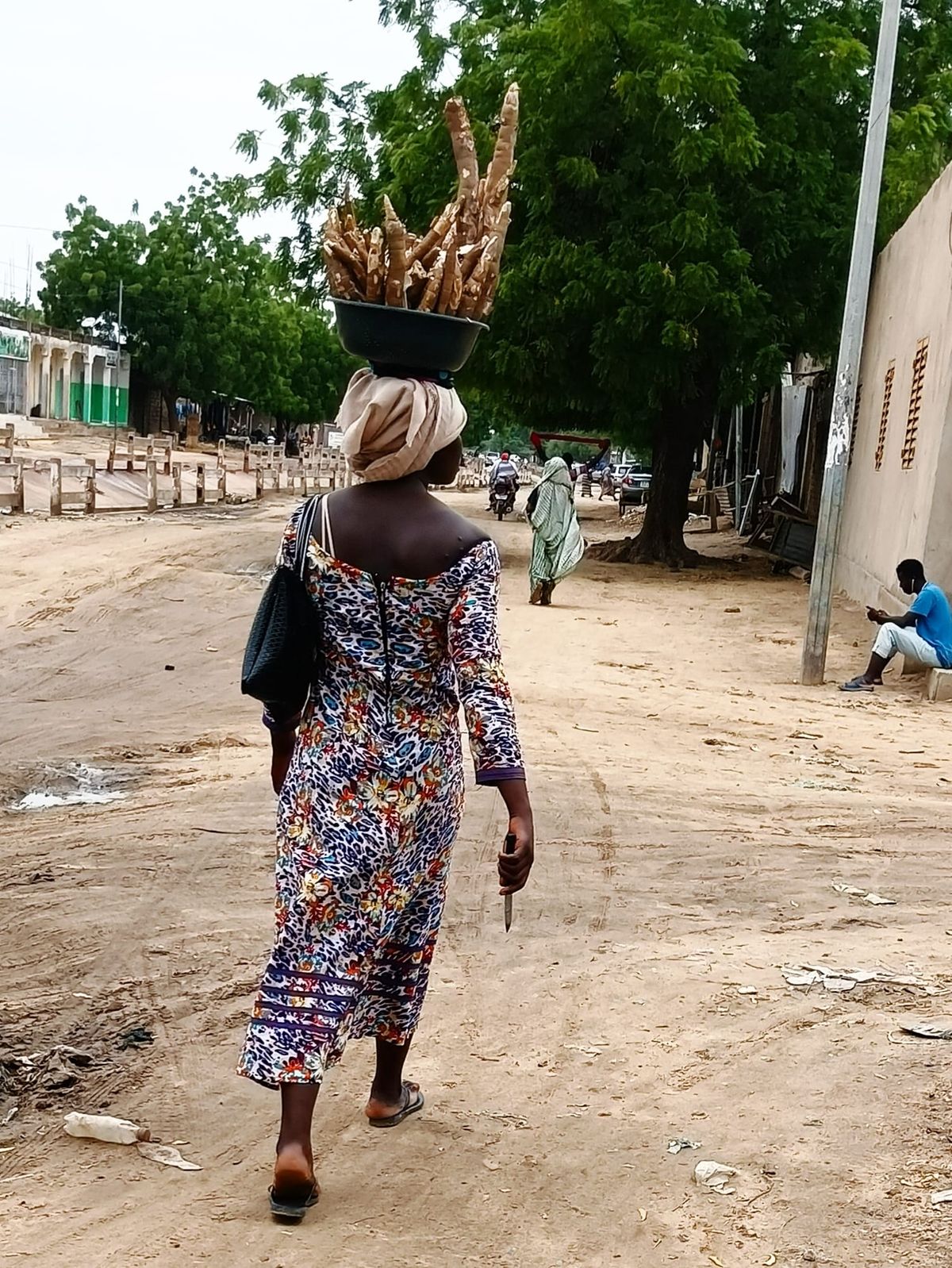
With a basin of cassava balanced on her head, Léa navigates the bustling streets of N’Djamena daily, offering her produce to passersby. Living with her mother in Kilwiti, she sees this temporary trade as more than just a way to earn money—it’s an investment in her future.
« We live in a challenging economic environment, and the cost of education keeps rising. Selling cassava helps me save for school supplies and fees before the new term begins, » she explains.
The price of cassava fluctuates between 50 and 500 FCFA per unit, depending on size and quality. While Léa isn’t alone in her venture—many young women in her neighborhood have embraced similar trades—the hurdles are real. Rising costs have made it difficult to turn a profit without adjusting prices, leading to misunderstandings with customers.
« People often complain when we sell portions for 100 or 200 FCFA, unaware that we purchase the cassava at nearly the same rate. We can’t sell at a loss, » she shares. Still, she acknowledges the kindness of some customers who support her efforts, recognizing the larger struggle against poverty in the country.
Poverty’s grip on Chad’s youth
The economic backdrop is stark: nearly half of Chad’s population—44.8%—lives below the national poverty line. Extreme poverty is even more pronounced, with 36.5% surviving on less than $2.15 per day. These figures paint a grim picture of limited opportunities, particularly for the younger generation striving to break free from financial constraints.
For Léa and her peers, selling cassava is more than a side hustle; it’s a mindset shift. Faced with an uncertain job market and the limitations of formal education in securing stable careers, these students are proactively building financial independence. They’re learning the value of hard work, negotiation, and adaptability—skills that textbooks alone can’t teach.
« This isn’t just about money. It’s about proving to ourselves that we can take control of our futures, one cassava sale at a time, » Léa reflects.