N’Djamena weddings embrace sudanese customs, sparking cultural debate
Weddings in N’Djamena, the capital of Chad, are undergoing a cultural transformation that is reshaping traditional matrimonial practices. While some view this shift as a natural evolution, others raise concerns about the gradual erosion of local customs. The fusion of Sudanese influences in contemporary Chadian weddings has become so pronounced that it now dominates the landscape of modern-day nuptials.
From tradition to modernity: key changes in chadian weddings
Increasingly, Chadian weddings in N’Djamena incorporate practices that closely mirror Sudanese customs. One of the most visible changes is the application of henné on the hands and feet of both the groom and bride before the ceremony. The groom is often escorted in a procession to the bride’s home, where he may lift her into his arms in front of guests before carrying her to their new residence. Days later, another event is held where he presents jewelry to his wife in the presence of both families. These customs, once foreign to Chadian traditions, are now commonplace in the city’s wedding scene.
Traditional Chadian weddings, by contrast, were rooted in deep cultural values. Elders played a central role, offering guidance on family obligations, patience, and the sanctity of marriage. After the dowry was settled, the bride and groom maintained limited contact until the wedding day, when she was accompanied by her mother and grandmothers. These elders would impart wisdom on household responsibilities, respect, and the art of building a harmonious home.
Another distinctive feature of traditional Chadian weddings was the symbolic handover of the bride to her new neighbors a week after the ceremony. Families would ask neighbors to gently guide and advise her, fostering a sense of communal support. This practice reinforced social bonds and ensured that young brides received continuous support from their new community.
Modern influences and the fading voice of tradition
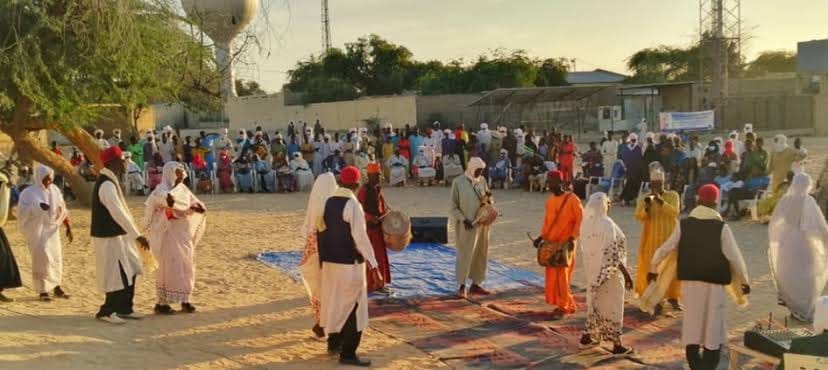
The entertainment aspect of weddings has also evolved. Griots, traditional drummers, and folk singers, who once narrated the history and values of Chadian communities through their performances, are being replaced by contemporary music and staged events. Elders and cultural custodians worry that this shift diminishes the transmission of cultural heritage to younger generations.
In neighborhoods across N’Djamena, wedding ceremonies now often feature Sudanese-inspired themes: elaborate decorations, matching outfits, henné sessions, modern music, and highly choreographed entrances for the bride and groom. The line between a Chadian and Sudanese wedding has blurred to the point where guests sometimes struggle to tell them apart.
« A Chadian wedding used to be a life lesson, » remarks a community elder from the Bololo district. « The elders spoke, the young listened, and everyone left with valuable lessons. Now, people prioritize spectacle over substance. »
Maman Azma, a mother and director of the Lamy Fortain association, echoes these concerns. « Our daughters now know the customs from abroad, but many have no idea about the traditions their grandmothers once upheld. If we don’t preserve them, they will vanish forever, » she warns.
Balancing openness and preservation: voices from the ground
Not everyone views this cultural blending negatively. Some young couples see the adoption of foreign customs as a celebration of beauty and diversity. « We borrow traditions we find appealing, but that doesn’t mean we reject our own culture, » says one newlywed. « What matters most is preserving the core values of marriage. »
Cultural experts emphasize that the challenge lies not in rejecting external influences but in ensuring that Chadian traditions are not overshadowed. The goal is to create a balance where modernity and tradition coexist, allowing future generations to connect with their heritage while embracing new ideas.