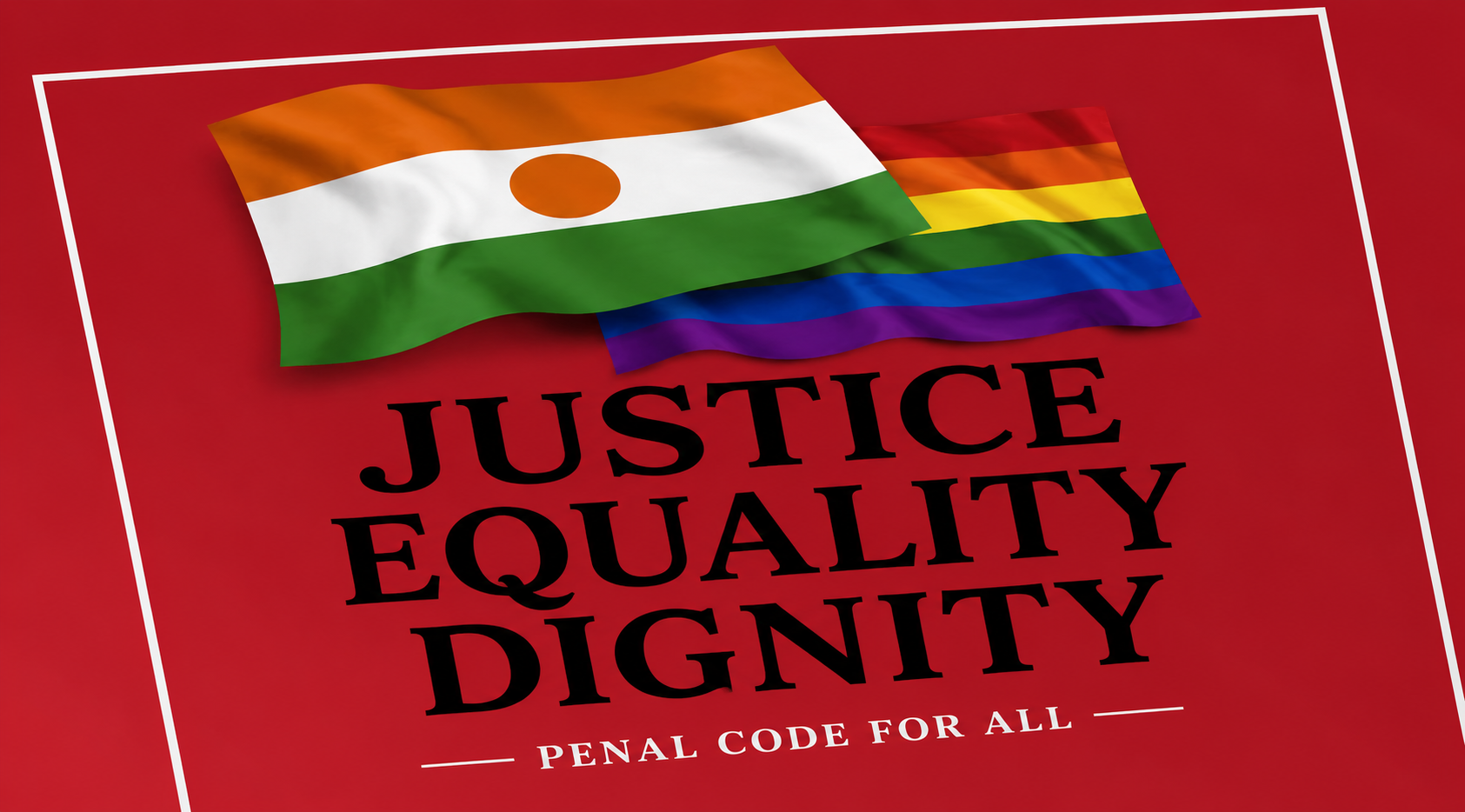
Niger has enacted sweeping legal changes that redefine the country’s stance on same-sex relations and LGBTQIA+ activism. The new penal code, quietly adopted in February under the current military leadership, introduces previously nonexistent criminal sanctions targeting both intimate conduct and civil engagement within the queer community.
what the revised law actually enforces
The legislation, published in the official gazette, extends beyond the mere prohibition of homosexual acts to encompass a broader range of related offenses:
- Core penalties: Individuals convicted of engaging in or attempting « indecent or unnatural acts » or participating in LGBTQIA+ practices face sentences ranging from five to ten years behind bars.
- Enhanced penalties: In cases deemed aggravated, sentences can escalate to a maximum of 20 years’ imprisonment, depending on the specific nature of the offense.
- Unprecedented fines: Financial penalties accompany incarceration, with fines reaching up to 500 million West African CFA francs—equivalent to roughly €750,000—imposed without the possibility of mitigation or probation.
- Crackdown on organized support: The law equally criminalizes anyone involved in organizing, managing, financing, or participating in LGBTQIA+ associations, clubs, or gatherings. Witnesses to same-sex marriages are also subject to identical punishments.
government’s justification: sovereignty and cultural purity
Proponents of the reform, led by General Abdourahamane Tiani, frame the changes as a defense of national identity and indigenous values. Justice Minister Alio Daouda articulated the rationale publicly:
« Our objective is to align our legal framework with the social and cultural foundations that define Niger. »
This stance reflects a broader nationalist agenda within the junta’s governance, emphasizing resistance to perceived Western cultural interference. The tightening of societal norms is not unprecedented; earlier this year, authorities removed sexual education modules from school curricula and banned applications promoting reproductive health, citing incompatibility with the country’s predominantly Muslim and conservative social fabric.
regional trend toward stricter legislation
Niger’s move places it within a growing wave of legislative crackdowns across West Africa, driven by shifting political landscapes and religious advocacy:
- Niger (February 2026): Transitioning from legal ambiguity to one of the region’s harshest regimes, the new code now imposes up to 20 years’ imprisonment under aggravated circumstances, paired with crippling financial penalties.
- Senegal (May 2026): The country has doubled existing penalties for « unnatural acts, » raising the maximum sentence to a decade in prison.
- Burkina Faso (2025): Mirroring its neighbor, Burkina Faso formally criminalized homosexuality last year, setting the maximum penalty at five years’ imprisonment.
- Ghana (2024–2026): After prolonged legislative and judicial debate, Ghana’s finalized anti-LGBTQ+ law criminalizes related practices and advocacy, with penalties ranging from three to five years in prison.
human rights groups raise urgent alarms
The enforcement of the new penal code has ignited widespread concern among international and domestic human rights organizations. Advocates warn that the legislation intensifies risks for an already marginalized minority, heightening exposure to violence, false accusations, and extortion. Aid workers on the ground express fears that such measures will drive at-risk populations into complete secrecy, severely undermining access to essential health services, including HIV prevention and treatment.
With over 30 African nations now criminalizing same-sex relations, Niger’s alignment with the continent’s most repressive legal frameworks underscores a troubling regional shift toward institutionalized discrimination.