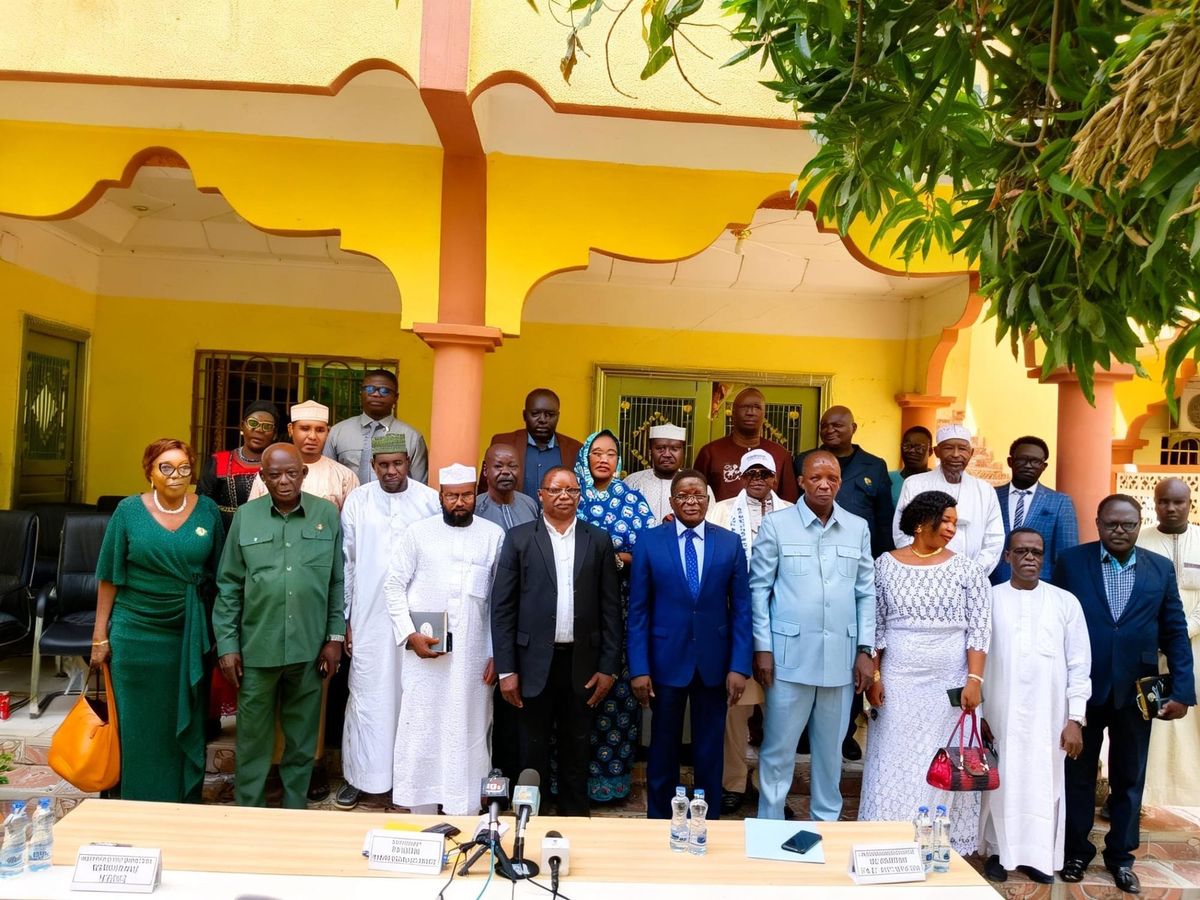
The Permanent Framework for Political Dialogue (CPDP) in Tchad has broken its silence five months after its official launch. During a press briefing on June 13, 2026, its chairman, Pahimi Padacké Albert, unveiled a comprehensive roadmap designed to guide the organization’s efforts toward one overarching goal: restoring lasting trust and healing the nation’s democratic landscape.
Building a foundation of trust
In setting the stage, Chairman Padacké Albert traced the CPDP’s origins to the Political Agreement Protocol signed on May 13, 2025. This inclusive body unites all legally registered political parties in Tchad, operating under a balanced 30-member coordination—fifteen from the presidential majority and fifteen from the democratic opposition. The organization’s mission is clear: to serve as the engine of essential political calm and reconciliation.
« Without a calm and peaceful political climate, without a consensual electoral reform, and without an inclusive approach […], no political dialogue can truly restore trust, » declared the CPDP leader.
A three-pronged strategy for sustainable reform
The newly presented roadmap functions as an operational guide, structured around three strategic pillars:
- Electoral system overhaul: The foremost priority involves reshaping the bodies responsible for elections, updating the electoral code, revisiting the distribution of National Assembly seats, reforming the Senate selection process, and re-evaluating territorial boundaries and opposition status. The objective is to align electoral rules with international transparency standards.
- Supporting measures: This pillar focuses on securing the electoral process through the creation of a reliable voter registry and implementing fair financing mechanisms for political parties.
- Cross-cutting initiatives: Emphasizing continuity and inclusivity, this area calls for collaboration with state institutions, technical and financial partners, and ongoing engagement with political parties that did not initially sign the protocol.
Mobilizing public engagement
To translate these ambitions into reality, Senator Padacké Albert underscored the need for « strong political will » at every level of government. He also urged media organizations to widely disseminate the roadmap, ensuring every citizen in Tchad understands the CPDP’s mission and actions.
The CPDP now plans to develop a detailed action plan, complete with precise implementation methods and a phased timeline. Whether this commitment to dialogue can ease persistent tensions and usher in sustained political serenity remains to be seen.