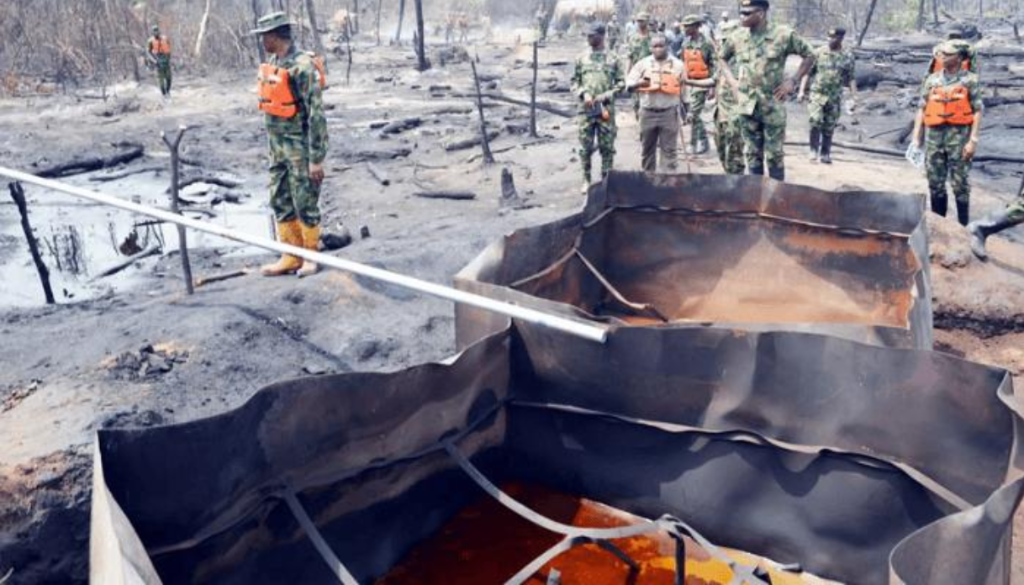
Nigerian authorities have dismantled a massive underground oil refining facility in Ogun State, exposing a sophisticated illegal operation with potential foreign involvement. The installation, discovered during a raid by the Economic and Financial Crimes Commission (EFCC) in Ogere, may have processed thousands of liters of illicit fuel products daily, raising serious concerns about the country’s control over its hydrocarbon resources.
Massive illegal refinery uncovered in Ogun State
The clandestine facility, spanning over three hectares, contained advanced industrial equipment capable of refining crude oil residues into marketable diesel. Investigators found underground storage tanks, heating systems, separation devices, and cooling units—all evidence of a highly organized operation. One primary tank alone held an estimated 90,000 liters of processed fuel.
The refinery utilized so-called “black sludge,” a residual byproduct often smuggled from major oil hubs like Warri and Port Harcourt. These materials underwent heating and chemical separation to produce automotive gas oil (AGO), commonly sold as diesel in Nigeria. Yet, officials confirmed the operation had no valid permits or regulatory oversight.
Investigators probe supply chains and financial networks
Attention now shifts to tracing the origin of raw materials, financing sources, and distribution channels. Authorities suspect a well-structured logistical network capable of transporting crude residues over long distances before processing and exporting the refined product. Questions persist about potential local accomplices who may have facilitated land use, security, or regulatory exemptions.
While the raid led to no immediate arrests, authorities remain committed to uncovering the full extent of the operation. Investigations aim to identify financiers, logistics providers, and end-user markets—whether domestic or international.
Environmental and economic risks of illegal refining
Beyond legal violations, the refinery poses severe environmental hazards. Unregulated refining releases toxic emissions, contaminates soil and water supplies, and increases fire and explosion risks for nearby communities. The absence of industrial safeguards endangers both human health and natural ecosystems.
Economically, the operation undermines Nigeria’s formal fuel market. Illicit refineries avoid taxes, bypass safety standards, and sell adulterated products that damage vehicle engines and industrial equipment. This creates unfair competition for licensed businesses and deprives the government of critical revenue needed for infrastructure and social programs.
Foreign operators under scrutiny in Nigeria’s oil sector
This incident raises concerns about oversight of foreign economic actors operating in Nigeria’s strategic oil sector. While the investigation focuses on individuals linked to the facility, it also highlights broader scrutiny of foreign economic presence in African resource-rich nations. Authorities emphasize that legal responsibility applies regardless of nationality—no organization or government is above Nigerian law.
Nigeria’s sovereignty at stake in the oil sector
The dismantling of this refinery underscores systemic challenges in managing Nigeria’s vast oil wealth. Despite being Africa’s largest producer, the country continues to struggle with illegal refining, smuggling, and resource diversion. The government faces the dual task of dismantling clandestine networks while strengthening regulatory frameworks to prevent future violations.
This case is more than an enforcement success—it’s a test of national authority over critical infrastructure. Without effective control, even abundant resources cannot translate into economic sovereignty or public benefit.