Amidst the complex geopolitical landscape of West Africa, recent commercial directives from Niger’s transitional authorities are drawing significant scrutiny from economic operators and regional analysts alike.
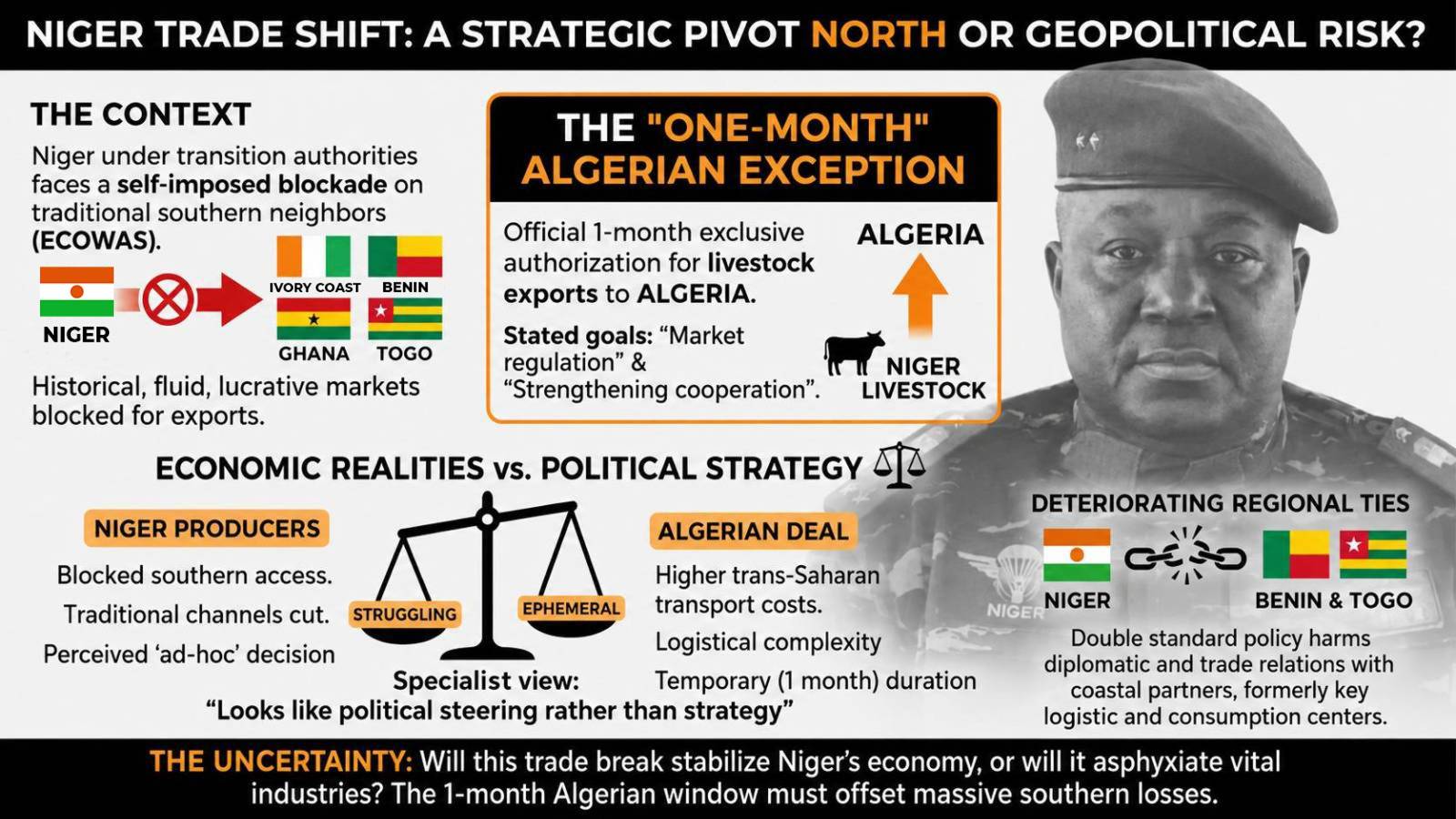
While trade routes to key Gulf of Guinea nations, including Côte d’Ivoire, Bénin, Ghana, and Togo, remain either entirely shut or severely restricted for exports, the Nigerien government has unexpectedly forged a new path northward.
An exclusive gateway through Algiers
Niamey has formally sanctioned a special one-month window for the export of livestock to Algeria. Official statements suggest this temporary waiver is intended to facilitate “internal market regulation” and bolster “economic cooperation” between Niamey and Algiers.
Although the official narrative emphasizes the diversification of partnerships, the economic realities on the ground present a far more intricate and challenging picture for local producers.
Economic actors express bewilderment
For many observers, the stark disparity in treatment between traditional trading partners raises fundamental questions about the long-term rationale behind such policies. Historically, the Gulf of Guinea has served as the most natural, efficient, and profitable outlet for Nigerien livestock.
“Restricting access to natural markets in the south while simultaneously granting a fleeting one-month opening to the north appears to be more a case of political improvisation than a well-considered economic blueprint,” commented a specialist in Sahelian cross-border trade, who requested anonymity.
By prioritizing Algeria over its immediate ECOWAS neighbors, the ruling junta appears to be solidifying an ideological departure, potentially jeopardizing a pastoral sector already under strain from successive crises.
Regional ties face increasing strain
This policy of “two weights, two measures” continues to perplex regional partners and is steadily eroding diplomatic and fraternal ties with coastal states. Bénin and Togo, traditionally vital logistical arteries and consumer markets for Niger, now find themselves sidelined in favor of a trans-Saharan axis that presents considerably greater logistical complexities.
Confronted with decisions some perceive as impulsive or lacking a comprehensive understanding of the microeconomic fabric, Nigerien herders are effectively caught in the crosscurrents of geopolitics. The critical question remains: can a single month of exports to Algeria truly offset the substantial losses from the lucrative Ivorian, Béninois, or Ghanaian markets? This outcome is highly uncertain, particularly given that the significant costs of trans-Saharan transport are likely to absorb a large portion of any anticipated profits.
Only time will tell if this disruptive economic diplomacy can stabilize Niger’s economy or if it will ultimately stifle the nation’s vital sectors.