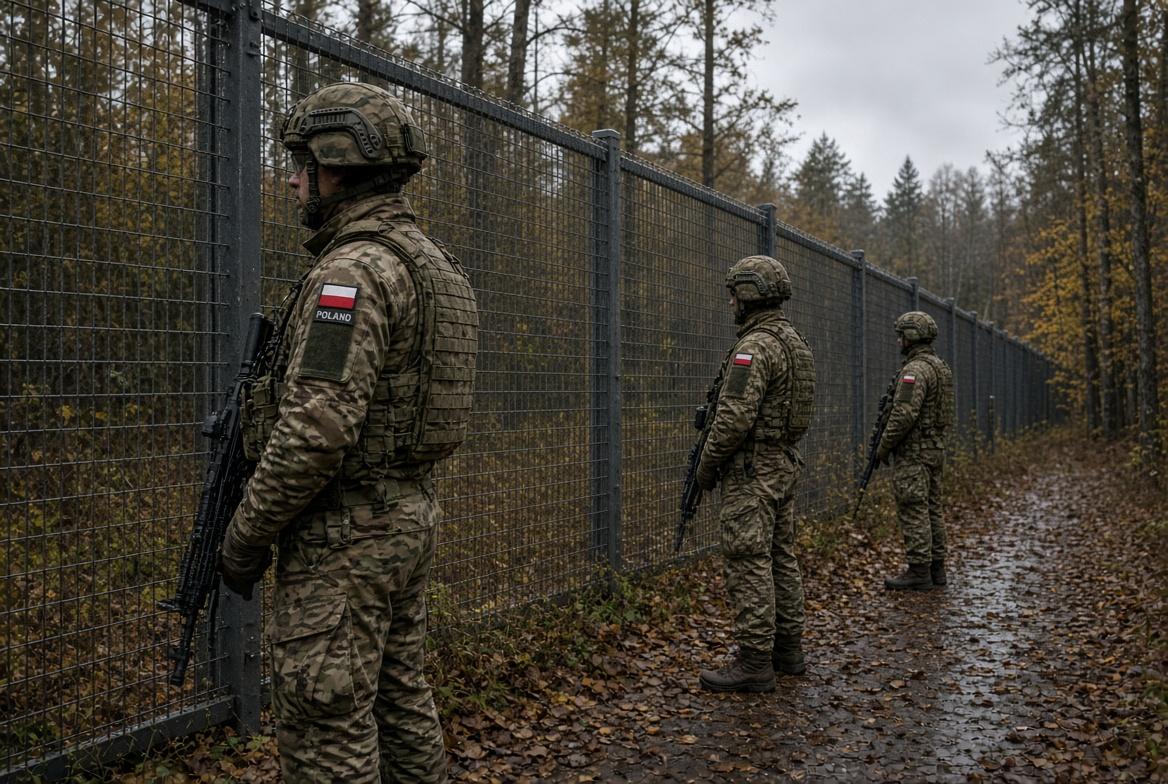
Tensions along the NATO-Russia border have escalated sharply in the Baltic Sea region, prompting Poland to launch an emergency security crackdown along its northeastern frontier. With intelligence pointing to coordinated hybrid threats from Moscow, Warsaw has activated a sweeping border defense operation targeting infiltration, drone incursions, and sabotage risks in the area adjacent to the heavily fortified Kaliningrad exclave.
Why Poland is tightening its Baltic border defenses
Poland’s border region, stretching from the tri-border area with Lithuania and Belarus to the shores of the Gulf of Gdańsk, has become a flashpoint in Europe’s shadow war with Russia. The Polish government has described the situation as a direct and credible threat requiring an immediate, multi-layered defensive response. Recent months have seen an uptick in irregular aerial activity, including unauthorized drone flights and possible reconnaissance missions, raising alarms across regional security circles.
Multi-agency security operation takes shape
The nationwide initiative integrates military, police, and counterterrorism units under a unified command structure. Key objectives include:
- Establishing a real-time monitoring grid to detect and intercept infiltration attempts at land and maritime crossings;
- Deploying specialized rapid-response teams trained in counter-sabotage and asymmetric warfare;
- Shielding critical infrastructure—power grids, transport hubs, and telecommunications nodes—from targeted strikes;
- Enhancing maritime surveillance to deter hybrid operations launched from or through Kaliningrad’s militarized zone.
The operation reflects Poland’s pivot toward deterrence-first policy in response to Russia’s evolving hybrid warfare strategy. By sealing the frontier with advanced sensor networks and armed patrols, Warsaw aims to preemptively neutralize threats before they materialize.
Kaliningrad as the epicenter of regional instability
The Russian exclave of Kaliningrad, encircled by NATO territory, has emerged as a key node in Moscow’s hybrid toolkit. Analysts cite multiple vectors of pressure being tested in the Baltic theater:
- Drone overflights and electronic surveillance probes near Polish airspace;
- Attempts to weaponize migration flows through Belarus and Lithuania;
- Cyber intrusions targeting Polish government and private sector networks;
- Subversion efforts among local populations and diaspora groups to foment unrest.
These tactics mirror those used during the Ukraine conflict but are now being adapted against NATO’s eastern flank. Poland’s response signals a clear stance: any hostile action—whether overt or covert—will meet with an immediate and robust countermeasure.
Europe’s new security frontier: What this means for the West
While global attention remains fixed on the war in Ukraine, the Baltic Sea region has quietly become the frontline of a broader confrontation. Poland’s decisive border security initiative underscores a broader shift in NATO’s eastern strategy: from reactive containment to proactive deterrence. By erecting a layered security shield, Warsaw is setting a precedent for allied nations facing similar hybrid threats.
The message is unambiguous: Russia’s tactics may be non-linear, but the alliance’s response will be swift, unified, and uncompromising. As Polish officials have stated, in the face of Kremlin aggression, there is no room for hesitation—only resolute action.
