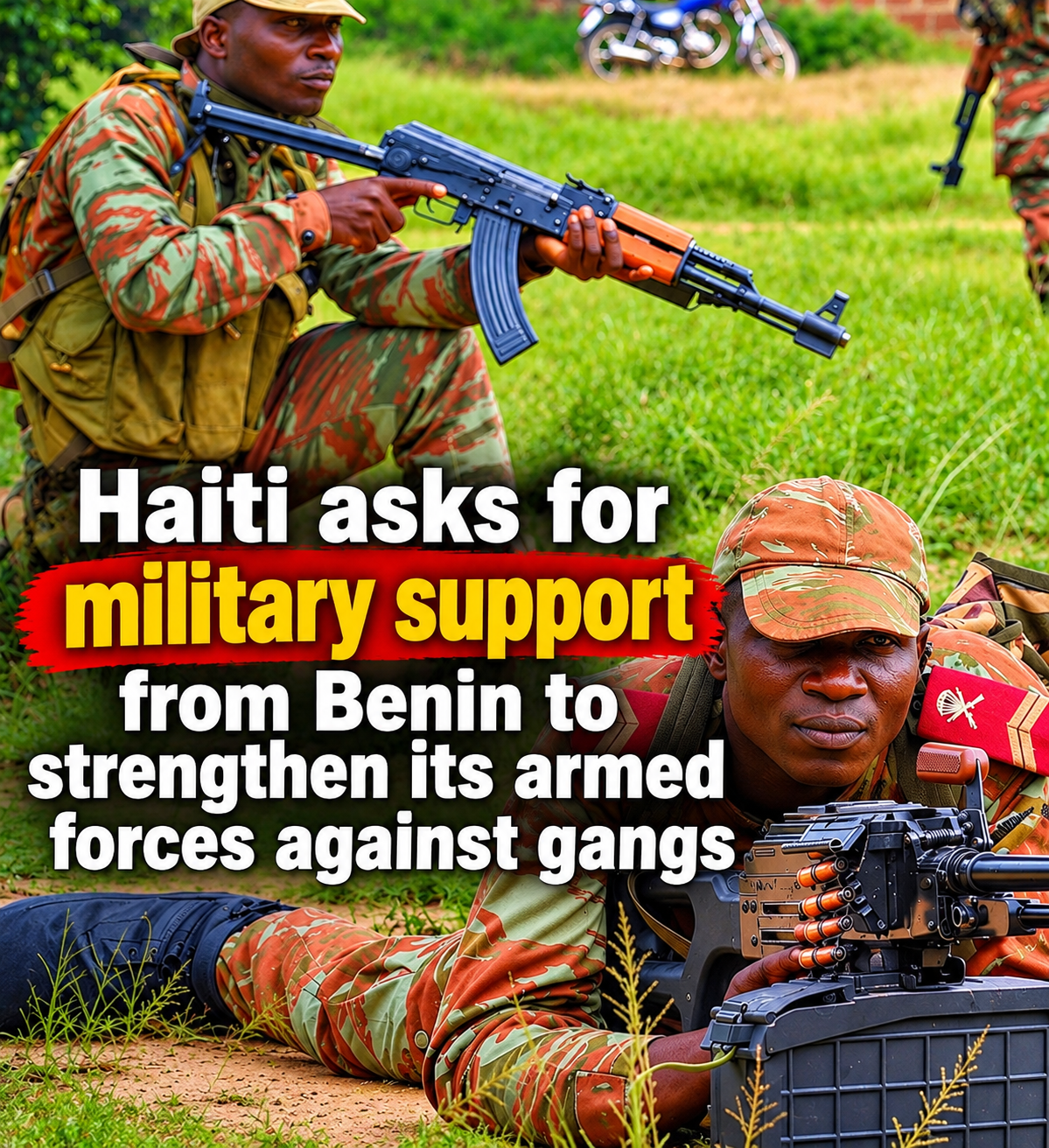
As armed gangs deepen their stranglehold across Port-au-Prince, Haitian officials have initiated a strategic shift to bolster their national security forces by leveraging military expertise from Benin. This move underscores a targeted approach focused on enhanced training and operational readiness, signaling a critical response to escalating instability.
Port-au-Prince seeks operational upgrades through Beninese military collaboration
Haiti’s prolonged security crisis has intensified the need for structural improvements within its armed forces. With armed gangs expanding their territorial control, disrupting civilian life, and undermining state institutions, the Haitian government is prioritizing capacity-building among its security personnel. The proposed military partnership with Benin is centered on strengthening tactical training, operational discipline, and inter-unit coordination to effectively counter emerging threats.
Discussions between senior military officials from both nations, held in Cotonou on November 3, 2026, laid the groundwork for this potential collaboration.
Benin’s security experience offers a model for Haiti’s defense reform
Benin’s selection as a partner reflects recognition of its proven track record in addressing internal security challenges. Despite facing threats in its northern regions, the country has successfully refined its defense strategies, modernized its operational frameworks, and elevated the professional standards of its military personnel. Such capabilities present a valuable opportunity for Haiti, provided adaptations are made to address the unique dynamics of its urban insurgency.
The Haitian context demands a tailored approach, as armed gangs operate with significant influence across densely populated urban areas, exerting pressure on state authority and civilian infrastructure. Training initiatives must therefore emphasize adaptability, situational awareness, and precision in asymmetric warfare to ensure meaningful impact.
Military training as a cornerstone of Haiti’s security restructuring
The path to sustainable security reform requires more than increased troop numbers or equipment procurement. A lasting solution is contingent upon the professionalization of Haiti’s military, with an emphasis on leadership, tactical execution, and coordinated response mechanisms. Training programs facilitated by Benin could serve as a catalyst for these improvements, equipping Haitian forces with advanced techniques in urban combat, intelligence coordination, and rapid deployment.
Beyond technical skills, such training fosters a culture of accountability and operational discipline within Haiti’s security apparatus. This holistic development is essential to restoring public trust and reinforcing the credibility of state institutions amidst persistent instability.
South-South cooperation redefines military partnerships in crisis response
The proposed partnership highlights a growing trend: leveraging shared experiences among nations with comparable security challenges. By engaging Benin’s expertise, Haiti is exploring an alternative to traditional reliance on external military support, positioning itself to benefit from regionally relevant solutions. This model prioritizes knowledge transfer, institutional mentorship, and long-term capability development over short-term interventions.
Benin’s role could extend beyond formal training to include advisory support, institutional assessments, and strategic planning. The collaboration underscores the potential of South-South cooperation in tackling complex security crises through localized solutions.
Measuring success: From dialogue to tangible operational outcomes
While the November 2026 discussions mark a significant step in Haiti’s search for security solutions, the true measure of success will lie in execution. The proposed military partnership must translate into measurable improvements: enhanced soldier proficiency, improved operational readiness, and demonstrable progress in countering gang influence.
However, military reform alone cannot resolve Haiti’s multidimensional crisis. A comprehensive security strategy must integrate institutional coordination, community engagement, and sustained investment in public infrastructure. The Beninese collaboration represents a valuable component of this broader effort, but its impact will depend on consistent implementation and political commitment.
As Haiti navigates one of its most critical junctures in decades, the decision to seek Beninese military expertise reflects a pragmatic response to a deteriorating security environment. The outcome of this partnership could redefine the trajectory of Haiti’s defense capabilities and set a precedent for future regional collaborations in crisis response.