Budget rejection exposes deepening divide in Senegalese governance
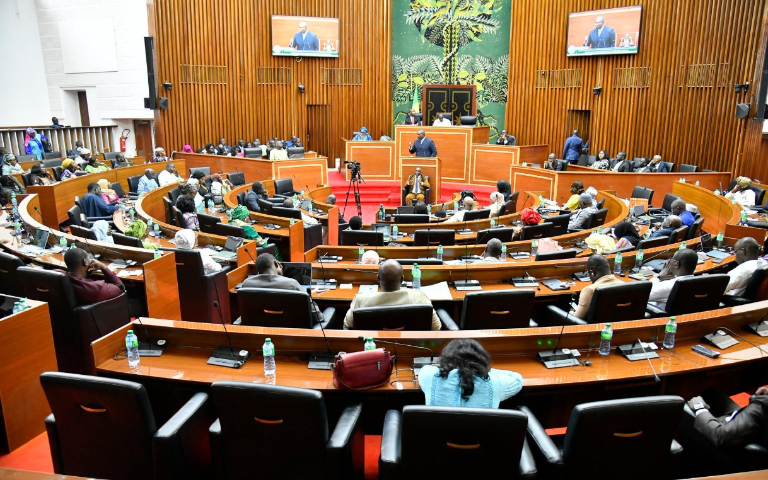
The political rift between Senegalese President Bassirou Diomaye Faye and his former party, the Pastef, has now reached critical institutional levels. On Tuesday, November 3, 2026, the National Assembly rejected the 2026 revised budget proposal, delivering a sharp setback to the government and intensifying the confrontation between the executive branch and the ruling party’s parliamentary majority.
The vote concluded with 109 lawmakers supporting the preliminary question to dismiss the bill, against 20 in opposition and three abstentions, out of 132 participating deputies. The outcome signals a fundamental breakdown in what was once automatic political alignment within the ruling coalition.
Parliamentary rebellion: from unity to opposition
The budget rejection was spearheaded by Amadou Ba, a Pastef member of parliament, who filed a preliminary motion to block the government’s proposal. The strategy effectively ended debate on the bill without substantive discussion of its financial provisions.
This maneuver exposes a growing ideological and strategic divide between President Faye—head of the executive—and Ousmane Sonko, former prime minister and now speaker of the National Assembly. Once united in opposition, the two leaders have seen their relationship deteriorate since Sonko’s departure from government in May 2026.
The Pastef maintains a dominant parliamentary majority, but no longer functions as a unified support base for Faye’s administration. This creates an unprecedented situation: a president leading a government that can no longer rely on automatic parliamentary backing, even on urgent financial matters.
Financial disputes fuel institutional confrontation
At the heart of the disagreement are substantial discrepancies in fiscal projections. The government’s revised budget proposed revenues of 5,848.7 billion West African francs—down from 6,188.8 billion originally projected. Expenditures were set at 7,583.9 billion, pushing the budget deficit to 7.6% of GDP, from an earlier estimate of 5.4%.
Parliamentarians, led by Pastef members, have criticized the budget’s allocation choices, particularly a 555 billion cut in investment credits, which threatens funding for critical infrastructure projects. They are also demanding greater transparency in financial decision-making, especially regarding energy subsidies, family security grants, and priority social spending.
The Ministry of Economy and Finance, under Cheikh Diba, claims to have met all parliamentary information requests but faces skepticism over the government’s economic assumptions and fiscal transparency.
Fiscal framework under scrutiny
- Revenue shortfall: A 340 billion franc CFA reduction in expected revenue, undermining public investment capacity.
- Spending cuts: Targeted reductions in capital expenditure, raising concerns over delayed infrastructure delivery.
- Deficit growth: Budget deficit widens to 7.6% of GDP, complicating debt sustainability and fiscal credibility.
The standoff reflects competing priorities: the government argues for rapid fiscal adjustment to economic pressures, while parliament insists on exercising full oversight over public spending.
Global implications: funding, debt, and IMF negotiations
The budget deadlock could extend far beyond domestic politics. Senegal is actively negotiating a new financing program with the International Monetary Fund (IMF). The adoption of a revised budget is a key milestone in securing that support, particularly in the context of rising public debt and macroeconomic instability.
A prolonged impasse risks undermining investor confidence and delaying much-needed financial resources. Domestic payment delays to contractors, suppliers, and strategic sectors could further strain the national economy.
This is not just a political crisis—it directly threatens the state’s ability to meet its financial obligations and maintain economic stability.
Institutional paradox: a de facto power struggle
Senegal now faces a delicate governance paradox. While not a formal cohabitation, the situation resembles elements of divided executive power: a president and government operating independently of a parliamentary majority that no longer fully supports them.
The November 3 vote raises a critical question: how far can this internal power struggle escalate before it compromises democratic institutions?
To date, no consensus has emerged. The government must find a path forward to resolve the budget crisis, while Pastef-led lawmakers remain steadfast in pressing their demands for fiscal accountability and transparency.
What is clear is that the rejection of the 2026 revised budget marks a turning point in Senegal’s political evolution. Behind the technicalities of fiscal policy and parliamentary procedure lies a deeper struggle over the balance of power between Bassirou Diomaye Faye and Ousmane Sonko—and the future direction of Senegal.