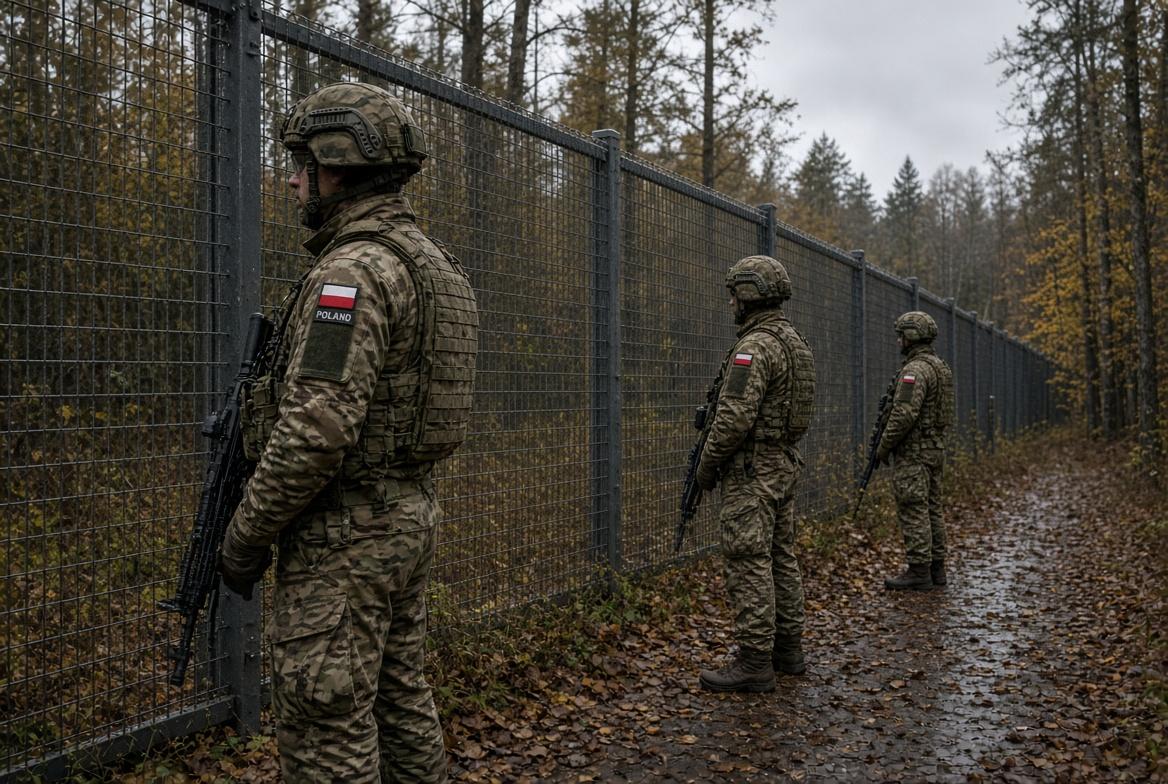
The Baltic frontier has become the latest flashpoint in the escalating standoff between NATO and Moscow. In response to a surge in suspected covert operations, unauthorized drone intrusions, and intelligence reports pointing to imminent sabotage threats emanating from Russian-controlled Kaliningrad, Poland has launched an unprecedented border security operation along its northeastern frontier.
Poland’s fortified border shield: A multi-layered defense against hybrid warfare
Varsovie is not merely reinforcing its border—it is erecting a comprehensive security bulwark designed to neutralize Russia’s asymmetric tactics. The operation integrates several elite military and law enforcement units into a single, cohesive defense framework:
- Border Guard Rapid Response Teams: Specialized units trained to detect and intercept unauthorized crossings, equipped with advanced thermal imaging and motion sensors.
- Anti-Terrorism Units: Deployed to counter potential sabotage attempts on critical infrastructure, including energy grids, rail networks, and communication hubs.
- NATO-Aligned Defensive Positions: Reinforced checkpoints and surveillance towers positioned to monitor airspace, ground movements, and electronic signals.
This integrated approach reflects Poland’s recognition that modern threats transcend traditional military incursions. The strategy targets not only physical infiltration but also digital espionage, psychological warfare, and manipulated migration flows—each a tool in Russia’s hybrid warfare arsenal.
Kaliningrad’s shadow tactics: Why Poland’s security surge is critical
The Russian exclave of Kaliningrad serves as a strategic staging ground for Moscow’s hybrid operations in the Baltic. Recent incidents—unidentified drones violating Polish airspace, suspicious maritime incursions, and cyber intrusions targeting government and energy systems—have escalated tensions to their highest level since the Cold War.
Poland’s security clampdown is not an isolated reaction but part of a broader NATO strategy to deter further aggression. By deploying advanced radar systems, deploying mobile strike units, and conducting round-the-clock patrols, Warsaw is effectively closing the door on Russia’s covert operatives before they can strike.
Energy, transport and communication: The lifelines under heightened protection
Securing the lifeblood of the nation
Poland’s northern infrastructure—home to major pipelines, highway arteries, and undersea cables—has become a prime target in Russia’s shadow conflict. The government has confirmed increased patrols around:
- Critical energy pipelines supplying heating and electricity to major cities.
- Rail networks linking Poland to Baltic trade routes and EU markets.
- Cybersecurity hubs managing national data and communications infrastructure.
These measures are designed to ensure continuity of essential services and prevent any disruption that could destabilize Poland’s economy or public safety.
Psychological and cyber deterrence: The silent front
Beyond physical defenses, Poland is reinforcing its digital and informational front. Cybersecurity commands have been heightened to counter disinformation campaigns, while state media and security agencies are coordinating to debunk false narratives aimed at sowing division or sparking public panic.
Poland as NATO’s eastern watchdog: A new era in regional deterrence
Poland has emerged as the linchpin of NATO’s eastern defense strategy. By taking decisive action along the Kaliningrad border, Warsaw is sending a clear message: no room for ambiguity. The operation signals that hybrid warfare—whether through sabotage, espionage, or information manipulation—will meet an immediate and robust counter-response.
As the world focuses on the conflict in Ukraine, the Baltic region remains a simmering cauldron of tension. Poland’s security surge is not just a national measure; it is a strategic imperative for all of NATO. With Kaliningrad as a potential launchpad for further aggression, deterrence through strength has become the new doctrine.
In this high-stakes environment, Poland is no longer waiting for threats to materialize. It is acting preemptively—ensuring that its borders, its people, and its allies are protected against Russia’s most covert forms of warfare.
