Strengthening human rights safeguards in the Sahel under escalating threats
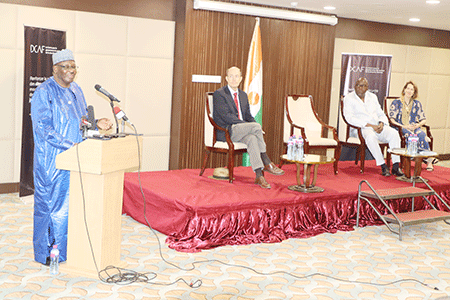
In a significant move to bolster human rights protections, a regional conference was launched in Niamey under the leadership of Mr. Maty El Hadj Moussa, Chair of the National Human Rights Commission (CNDH). The two-day event, held on Tuesday, May 23, brought together key stakeholders to address pressing challenges in the Sahel’s three-border zone—comprising Burkina Faso, Mali, and Niger. Among the dignitaries present were the Deputy Secretary-General of the Ministry of Justice, the DCAF Africa Director, the German Ambassador to Niger, and other distinguished guests.
Core objectives of the initiative
The conference aims to:
- Educate stakeholders on best practices for upholding human rights in conflict zones;
- Enhance institutional capacities to prevent rights violations through improved governance and legal frameworks;
- Strengthen internal and external oversight bodies to ensure they fulfill their roles effectively in safeguarding rights and the rule of law.
Voices from the frontline: addressing systemic challenges
In his opening remarks, Mr. Moussa highlighted the dire humanitarian situation in the three-border region, where both unidentified armed groups and certain security forces have been implicated in widespread rights abuses. He described the crisis as an asymmetric war where civilians face unimaginable violence, noting that “any suspicion of cooperation with authorities can result in deadly consequences.”
He called for collective action from human rights defenders, emphasizing the need to “chart pathways toward peace, security, and stability” for affected communities.
The Deputy Secretary-General of the Ministry of Justice, Mr. Moussa Sahirou Tchida, underscored the importance of collaborative efforts across the Sahel. He praised international partners, particularly European Union member states, for their support, including funding this critical conference. He reaffirmed the government’s commitment to stabilizing the region through joint initiatives.
Ms. Anne Benette, Director of the DCAF Africa, pointed out that political, social, and environmental crises in the Sahel have intensified governance complexities. She noted how insecurity, transnational crime, and communal tensions have eroded social cohesion and triggered widespread rights violations. She described the event as a vital platform for sharing solutions, identifying gaps, and fostering collective responses to uphold the rule of law.
The German Ambassador to Niger, Mr. Herman Nicolai, warned that the Sahel is experiencing one of Africa’s most rapid escalations in violence. He cited the decade-long onslaught by extremist groups and organized crime syndicates, which have left thousands of civilians and security personnel dead or displaced.