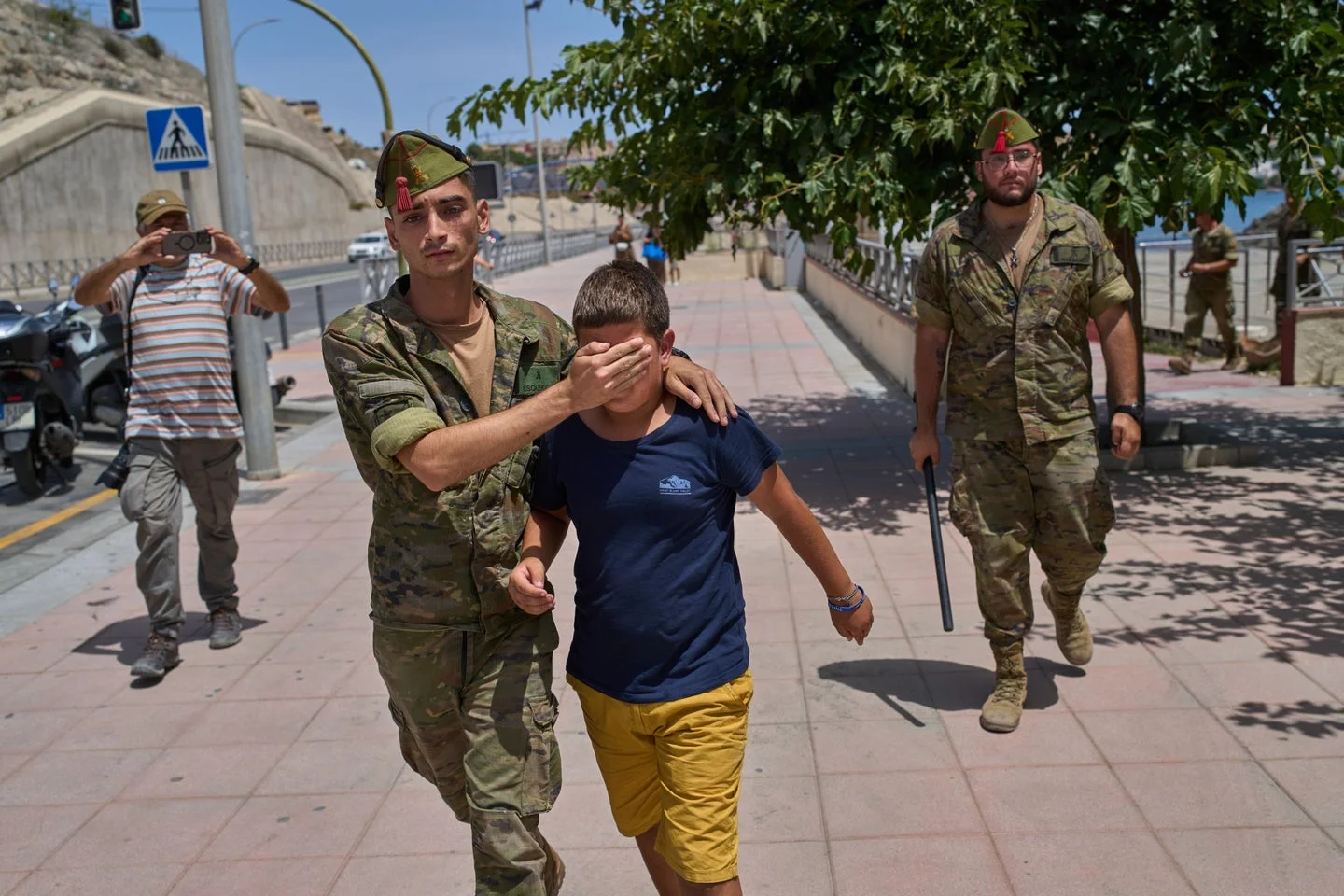
Morocco’s Justice Minister, Abdellatif Ouahbi, has urged the repatriation of Moroccan minors currently in Spain, including those who arrived in Ceuta during the recent migration surge. This call aligns with royal directives instructing relevant Moroccan ministries to streamline the identification and return process for these minors.
The exact number of affected minors remains unclear. Spanish authorities documented 1,527 unaccompanied minors in Ceuta following the crisis, though this figure may include individuals already present before the late July influx. Officials continue to refine these numbers as assessments proceed.
Legal pathways exist, but return is not automatic
A bilateral agreement between Morocco and Spain, signed in 2007, governs the repatriation of unaccompanied Moroccan minors. The accord, which addresses irregular migration prevention, child protection, and “coordinated returns,” outlines mutual obligations, including family tracing and individualized assessment. However, the agreement does not permit mass or expedited returns.
Spanish law requires a case-by-case review to ensure each minor’s return aligns with their best interests. Authorities must verify family ties, consult Moroccan counterparts, and allow the child to express their views. The prosecutor’s office also plays a critical role in these assessments. This rigorous process explains why minors, unlike adults, cannot be swiftly repatriated during border operations.
2021’S repatriation crisis casts a long shadow
The caution stems from a 2021 incident when Spanish authorities repatriated several hundred minors to Morocco amid a Ceuta migration surge. The Spanish judiciary later ruled these returns illegal in January 2024, citing violations of due process—specifically, the failure to conduct sufficient individual assessments. The ruling serves as a stark reminder of the legal risks tied to collective repatriations.
While Rabat demands the return of its nationals and Madrid seeks to ease Ceuta’s overcrowding, Spanish officials must adhere to domestic and international legal standards. Each case requires meticulous documentation to withstand potential legal challenges.
Alternative measures: dispersing minors across Spain
As repatriation negotiations stall, Madrid has prioritized transferring minors from Ceuta to other autonomous regions within Spain. This temporary solution aims to alleviate pressure on the enclave’s resources while separate discussions on repatriation continue. The move has sparked political tensions, with national leaders advocating for regional distribution and opposition figures pushing for prioritized returns to Morocco.
Melilla’s president, Juan José Imbroda, has also advocated for the full implementation of the 2007 agreement with Rabat. The current impasse reflects less a refusal by Spain to repatriate the minors than the legal and procedural constraints governing the process. Morocco has expressed readiness to receive the children, but Spain must first complete individualized assessments.
The coming weeks will test the effectiveness of Moroccan-Spanish cooperation in expediting family tracing and meeting repatriation prerequisites. The 2021 judicial ruling underscores the high stakes: any rushed collective operation could expose both governments to further legal scrutiny.