Behind the headlines: who really supplies Africa’s military against terrorism?
The narrative of Russia as Africa’s top military backer against terrorism is taking a hit. Fresh data from the Stockholm International Peace Research Institute (SIPRI) reveals a different picture—one where Beijing and Washington lead the charge in arms deliveries to the continent. Despite Moscow’s high-profile security partnerships in conflict zones like Mali, Burkina Faso, and Niger, its export volumes simply don’t match those of its two rivals.
Between 2021 and 2025, Washington topped the list by supplying 19% of major arms imports across Africa, while China came in second at 17%. Russia, once touted as the continent’s go-to defense partner, ranked third with 15%, trailing even France (8.3%). In Sub-Saharan Africa specifically, China’s dominance is even more pronounced, accounting for 22% of arms imports compared to Russia’s 12% and Turkey’s 11%.
China’s defense push: from drones to strategic partnerships
Beijing is rapidly expanding its African military footprint, offering a wide array of equipment—armored vehicles, surveillance and combat drones, air defense systems, artillery platforms, and transport aircraft. Its approach goes beyond simple sales: China provides maintenance, training, and even technology transfers, embedding its influence in local defense ecosystems.
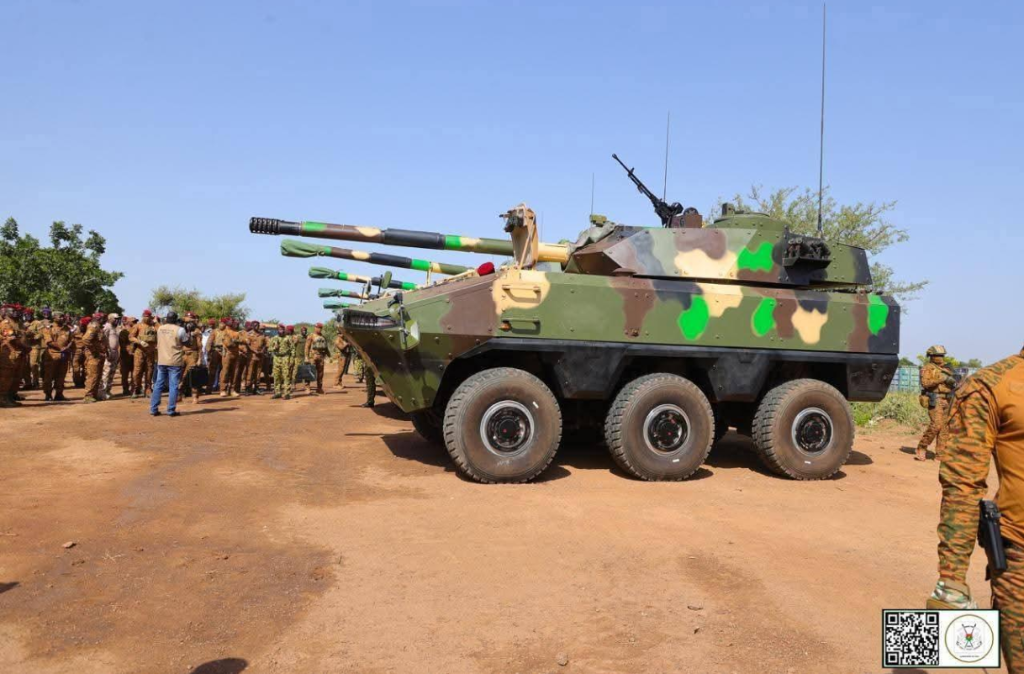
In 2024, Burkina Faso took delivery of 116 Chinese infantry carriers and six assault vehicles, according to SIPRI data. Mali has deepened ties with NORINCO, China’s state-owned arms manufacturer, securing armored vehicles, advanced weaponry, and operational training. These deals aren’t just about firepower—they address critical needs in mobility, surveillance, and early threat detection across terror-hit regions.
The real game-changer? Drones. In areas where armed groups exploit vast, poorly monitored terrain, Chinese-made unmanned systems give African forces the edge in reconnaissance and precision strikes. Beyond logistics, Beijing is also investing in long-term capacity building, reducing client dependence on foreign maintenance.
Russia’s paradox: visibility vs. actual exports
Russia hasn’t disappeared from Africa’s defense scene—far from it. In Central African Republic (CAR) and Mali, Moscow maintains a strong operational presence through military advisors, training teams, and Wagner-affiliated structures now restructured under the Africa Corps. This hands-on engagement, including direct advisory roles and field support, amplifies its political and media profile across the Sahel.
Yet the numbers tell a different story. SIPRI reports a staggering 64% drop in Russia’s global arms exports from 2016–2020 to 2021–2025. Sanctions, diverted production to Ukraine, and domestic supply constraints have crippled its ability to sustain large-scale African contracts. While Moscow still sells weapons systems and offers operational support, it no longer leads the market in volume or variety.What matters most for African security: beyond the arms race
The real question for African governments isn’t which country sells the most weapons—it’s which partnerships deliver lasting security. Counterterrorism demands more than rifles and tanks. It requires reliable intelligence, air mobility, cross-border coordination, state presence in neglected regions, and well-trained forces.
New suppliers mean more choices—but also new risks. Dependence on foreign technology, high maintenance costs, parts availability, and potential arms proliferation are real concerns. Diversification in defense suppliers can strengthen strategic autonomy, but without proper frameworks, it can also create vulnerabilities.
One truth stands clear: Africa’s military security is not a monologue led by one partner. While Russia remains a key player through its advisory and training roles, it is no longer the continent’s top arms exporter. The data confirms the United States leads in overall African imports, and China dominates in Sub-Saharan Africa. The balance of power in Africa’s defense sector is shifting—and it’s being driven less by ideology and more by deliverables, durability, and long-term partnership.
Africa’s military supply chain: what next?
As African nations navigate growing terror threats, the competition among suppliers intensifies. But the future won’t be decided by who sells the most weapons—it will be shaped by who delivers the most effective, sustainable security solutions.
China is leveraging industrial strength, flexible financing, and technology transfer to build lasting partnerships. The U.S. combines financial aid with high-end equipment and training programs. Russia, despite logistical hurdles, continues to offer rapid-deployment advisory teams and asymmetric support—often a lifeline in crisis zones.For African leaders, the strategic imperative is clear: balance supply sources, invest in local defense industries, and prioritize systems that integrate with regional networks. The age of single-provider dependency is over. The future of Africa’s defense lies in intelligent diversification—and those who adapt fastest will shape the continent’s security landscape for years to come.