In a dramatic diplomatic showdown at the United Nations Security Council on October 30, 2026, Russia delivered a decisive veto against a US-backed resolution that sought to reframe the Western Sahara peace process. The proposed American plan aimed to center Morocco’s autonomy initiative as the exclusive foundation for negotiations and to fundamentally transform the UN mission in the disputed territory. However, when Moscow blocked the resolution, the Council faced an impasse with no viable compromise in sight.
Moscow’s veto not only rejected the American proposal but also triggered the failure of a separate Russian counter-resolution. Both initiatives—one pushing for political transformation and the other advocating status quo—collapsed under the weight of opposing geopolitical agendas. With the mandate of the UN Mission for the Referendum in Western Sahara (MINURSO) expiring at midnight, the territory’s future remains shrouded in uncertainty.
US-backed resolution seeks to redefine peace process framework
The Security Council convened to vote on a one-year extension of MINURSO’s mandate, originally set to expire on October 31, 2026. The American proposal went beyond simple renewal: it sought to rebrand the mission as MINUSO, remove references to a referendum from its title, and position Morocco’s autonomy plan as the sole basis for future dialogues. The draft also hinted at gradually phasing out the peacekeeping component in favor of a political mission.
The stated objective was to accelerate a resolution by prioritizing a framework broadly accepted by Rabat while sidelining other options, including full independence. However, this approach clashed directly with Russia’s insistence on preserving the principle of self-determination for the Sahrawi people—a cornerstone of the original UN settlement plan initiated in 1991.
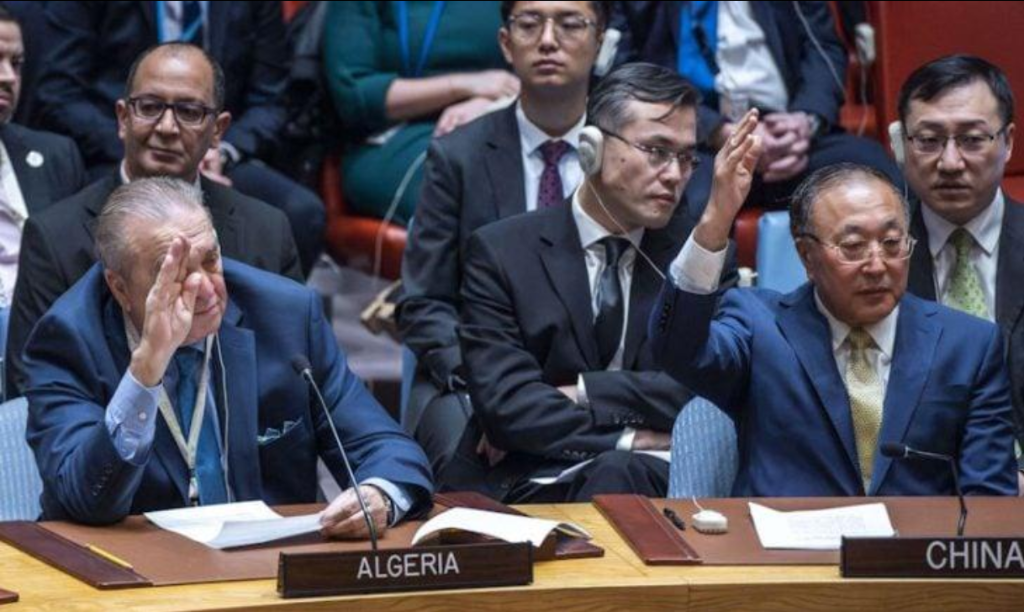
Eleven Council members supported the US draft, while China, Pakistan, and Somalia abstained. Russia’s veto effectively killed the resolution, underscoring the deep divisions among permanent members over how to advance the stalled peace process.
Russia’s counter-proposal fails to break the deadlock
In response to the American failure, Moscow introduced a minimalist alternative: a one-year extension of MINURSO’s existing mandate with no structural changes. The Russian delegation argued that preserving the status quo was essential to avoid an abrupt withdrawal of UN presence in Western Sahara.
Yet the proposal received only three votes—from Russia, China, and Somalia—while the United States voted against it and eleven other members abstained. The absence of a solid majority rendered the initiative unviable, leaving the Council without a clear path forward.
The dual rejection signals a profound diplomatic paralysis. Washington’s bid to redefine the mission was blocked by Moscow’s veto. Moscow’s own attempt to maintain the current framework failed due to insufficient support. Together, these outcomes expose an institutional gridlock that transcends the Western Sahara issue, reflecting broader geopolitical tensions among permanent Council members.
Core dispute: self-determination vs. autonomy under Moroccan sovereignty
The conflict at the heart of the Security Council debate is not merely procedural—it strikes at the fundamental rights of the Sahrawi population. Since MINURSO’s inception in 1991, the mission’s core mandate has included preparing for a referendum on self-determination. Yet decades of disagreement over voter eligibility and referendum modalities have repeatedly halted progress.
The Moroccan autonomy initiative, presented as the only realistic pathway, proposes limited self-rule under Moroccan sovereignty. The Polisario Front, representing the Sahrawi people, rejects this framework, arguing it denies true self-determination and undermines the possibility of full independence as outlined in UN resolutions.
The Russian veto prevents the US plan from moving forward, but the failure of Moscow’s counter-proposal reveals that the Council remains deeply polarized. Neither side can impose its vision without triggering opposition from the other or from a broader majority. The result is a frozen political process, leaving the Sahrawi people without a clear mechanism to determine their future.
MINURSO’s uncertain future and regional implications
With the Security Council unable to adopt any resolution, MINURSO’s mandate expired without renewal at the end of October 2026. The mission remains technically in place until a new decision is made, but its operational continuity is now in question. The absence of a renewed mandate raises urgent concerns about the protection of civilians, the monitoring of ceasefire violations, and the viability of future peace talks.
Beyond Western Sahara, this diplomatic deadlock sends a troubling signal across North Africa and the Sahel. The failure to resolve the conflict—or even to agree on a process—risks destabilizing regional security and undermining trust in multilateral institutions. The international community now faces a stark choice: allow the impasse to persist or seek a new, more inclusive framework that can bridge the divide between self-determination and sovereignty.
A turning point for international law and peacekeeping
October 30, 2026, marks a historic moment in UN diplomacy—a day when two competing visions for Western Sahara both failed to secure Council approval. The events of that Friday did not just delay a resolution; they undermined the credibility of the UN’s ability to mediate complex conflicts when permanent members’ interests diverge.
The question now is whether the international community can move beyond this impasse. Can a revised approach—one that reaffirms the right to self-determination while acknowledging Morocco’s strategic concerns—gain traction in a divided Security Council? Or will Western Sahara remain trapped in a cycle of diplomatic stalemate, with its people paying the price of geopolitical rivalry?