Mali’s struggles expose deeper cracks in Sahel security alliances
As Mali grapples with its worst security crisis in years, neighboring allies appear paralyzed. Neither the Alliance of Sahel States—comprising Mali, Burkina Faso, and Niger—nor ECOWAS (from which Bamako withdrew in early 2025) have managed to offer meaningful solutions. The result is a palpable void in regional strategy: declarations of condemnation without concrete action, political maneuvering, and a glaring lack of unified response. Bakary Sambe, director of the Timbuktu Institute and researcher at Gaston-Berger University in Saint-Louis, examines how this moment is reshaping West Africa’s security landscape.
Mali’s latest attacks: a turning point or just another crisis?
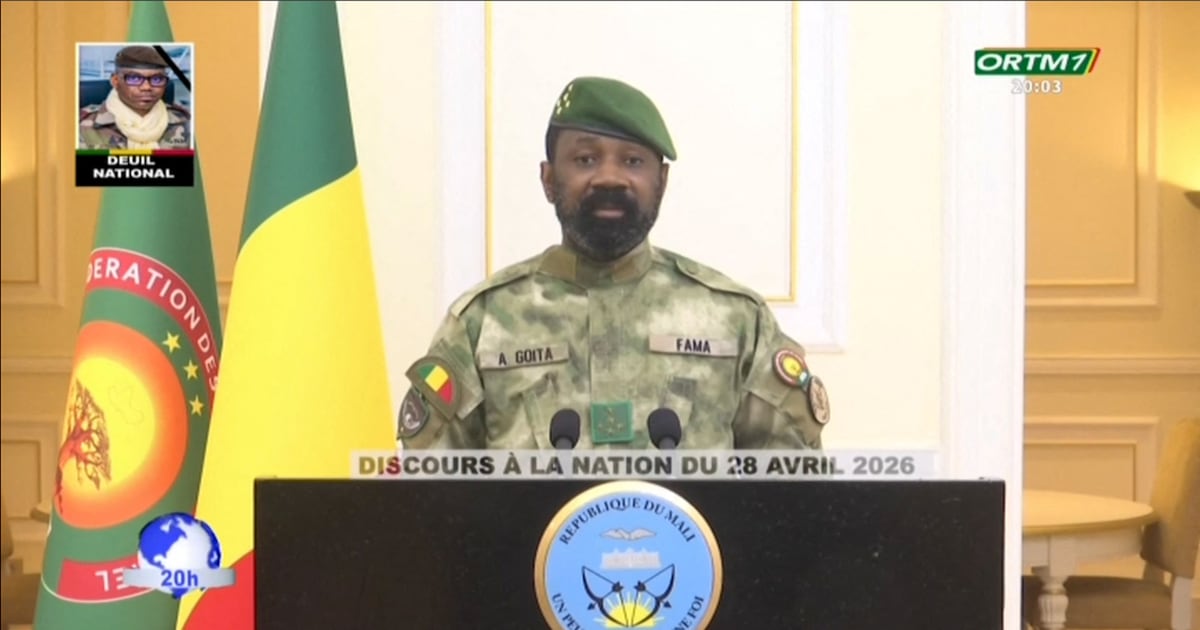
The coordinated assault on April 25, particularly the deadly strike in Kati where Defense Minister Sadio Camara was killed, sent shockwaves through the region. While some speculate about regime change or a fall of Bamako, such predictions may be premature. Life in the capital continues amid chaos, and Malians, long accustomed to instability, are once again demonstrating their resilience. Despite clashing statements from military authorities, the National Movement for the Liberation of Azawad (MNLA) and the Support Group for Islam and Muslims (JNIM), the country’s institutions have yet to collapse.
Allies in name only: the fragile reality of the Alliance of Sahel States
Burkina Faso’s interim leader, Captain Ibrahim Traoré, described the attacks as part of a “monstrous conspiracy,” yet Ouagadougou’s response remains cautious. Burkina Faso’s own security crisis—marked by recent heavy losses among its troops—limits its ability to support Mali. Similarly, Niger, while bound by the Liptako-Gourma Charter (often compared to NATO’s mutual defense clause), faces internal turmoil that prevents full implementation. The charter’s ideals of mutual defense exist only on paper; strategic maturity and troop-sharing capabilities remain underdeveloped. This week, Niger declared a national day of fasting and prayer against terrorism—a symbolic gesture with little practical impact.
The Malian crisis lays bare the impotence of regional alliances in addressing Sahel insecurity.
ECOWAS’s cautious comeback in a fragmented Sahel
After Bamako’s withdrawal from ECOWAS, the regional bloc is attempting to rebuild its influence. A landmark meeting in Lomé, Togo, brought together officials from the Alliance of Sahel States, ECOWAS, the African Union, France, the European Union, and Russia—a rare convergence underscoring shared concerns. Mali’s Foreign Minister Abdoulaye Diop reaffirmed the country’s openness to dialogue, provided it respects Sahelian sovereignty, signaling ECOWAS’s gradual re-entry into the Sahelian security debate.
The bloc is keen to shed its image as an organization prone to military intervention, such as its controversial stance during Niger’s 2023 crisis. While ECOWAS plans to deploy a 1,650-troop counterterrorism brigade by late 2026, broader peacekeeping missions remain uncertain. There is growing consensus that isolating the central Sahel from West Africa would be a strategic blunder. The April 25 attacks have reignited discussions on minimal cooperation in intelligence-sharing and resource pooling.
Russia’s strategic retreat in the Sahel signals the collapse of a key diplomatic and security narrative.
US interest returns to a Sahel in turmoil
Washington’s renewed engagement in the Sahel—despite Donald Trump’s relative disinterest in Africa—highlights shifting priorities. US diplomats have returned to the region, including Niger, where American forces were previously expelled. The stakes have changed: the demise of pro-Russian factions in Mali, exemplified by Camara’s death, and the withdrawal of Wagner Group paramilitaries from Kidal underscore Moscow’s waning influence. The myth of Russia as a reliable security guarantor in the Sahel is crumbling, dealing a blow to its diplomatic and military leverage.
For the US, this presents an opportunity to counter Russian presence, leveraging geostrategic and resource-related arguments to strengthen its foothold in Mali.
Gulf of Guinea at risk: Burkina Faso in the crosshairs
While coastal nations like Benin, Ghana, Côte d’Ivoire, and Togo watch developments in Burkina Faso with concern, the real threat of spillover lies elsewhere. A deterioration in Mali’s security could primarily impact Senegal or Mauritania. The fear of a domino effect across the Sahel is justified, raising questions about the Alliance of Sahel States’ long-term viability. Populations demand tangible solutions, not just rhetoric.
Togo’s Foreign Minister Robert Dussey has proposed forging a new “bridge with the Sahel,” though the practical scope of this initiative remains unclear.
Splitting the Sahel from West Africa would be a counterproductive security strategy.
Can Burkina Faso withstand the storm?
A repeat of Mali’s scenario in Burkina Faso is unlikely. The MNLA does not operate in Burkina Faso, and the country’s crisis stems from different triggers: deep-rooted security challenges and internal political instability. Paradoxically, the severity of the attacks may bolster the junta’s legitimacy. National unity around the military and territorial integrity has never been stronger in Bamako, silencing dissent under a wave of patriotism. Authorities no longer need to rally the public—the sentiment is already there.
As for Burkina Faso, despite large swathes of territory outside government control, no protest movement has emerged to significantly aid jihadist groups like the JNIM or destabilize the regime. For now, the status quo persists.