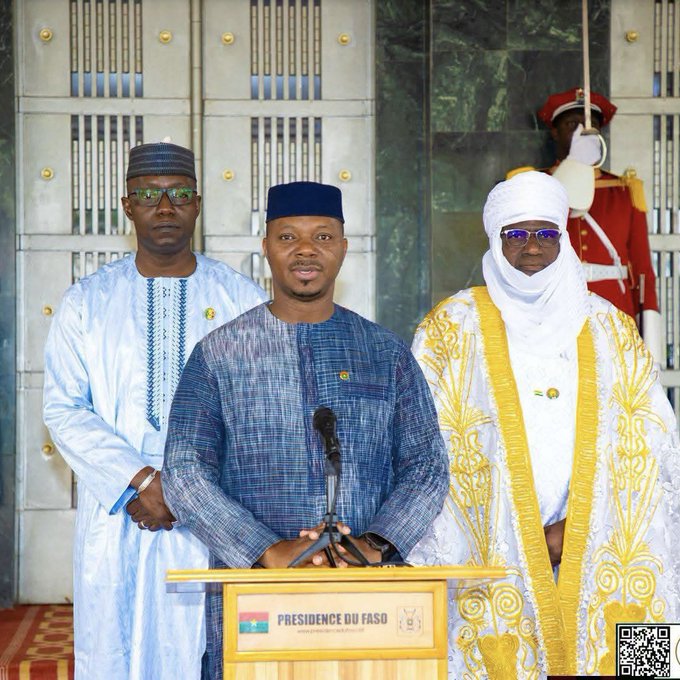
The Confederation of Sahel States (AES) is advancing its institutional framework as lawmakers from Burkina Faso, Mali, and Niger convened in Ouagadougou. The meeting, held under the guidance of AES President Captain Ibrahim Traoré, marked a key step toward the official launch of the confederal parliament.
Following the discussions, officials confirmed that the appointment of deputies is imminent, paving the way for the assembly’s inaugural session. The parliament’s primary functions will include representing the interests of the three nations’ citizens, supporting the AES’s institutional operations, and reinforcing the political vision shared by the member states. This development underscores the alliance’s commitment to establishing independent governance structures after its withdrawal from the Economic Community of West African States (ECOWAS).
Security crisis overshadows political progress
The timing of the meeting has drawn scrutiny, as the region faces an escalating jihadist insurgency. Recent weeks have seen a surge in attacks across Burkina Faso, Mali, and Niger, inflicting heavy casualties on both military forces and civilian populations. Critics argue that prioritizing the parliament’s formation over urgent security measures raises questions about the alliance’s strategic focus. The absence of a high-level emergency response to the crisis has fueled skepticism about whether the AES’s political ambitions align with the immediate needs of its people.
While the long-term benefits of a confederal parliament are acknowledged, detractors contend that the alliance’s leadership may be perceived as placing institutional development ahead of the security challenges gripping the region. For many citizens, tangible solutions to the violence remain the top priority, leaving room for debate over the AES’s current trajectory.
A shift in regional dynamics
Analysts also view this institutional progress as a signal of growing political divergence in West Africa. By consolidating its own governance bodies, the AES is reinforcing its autonomy from ECOWAS, potentially deepening the rift between the two blocs. This separation could complicate future efforts to foster broader regional cooperation, both politically and in matters of security.