A political message from the National Assembly floor
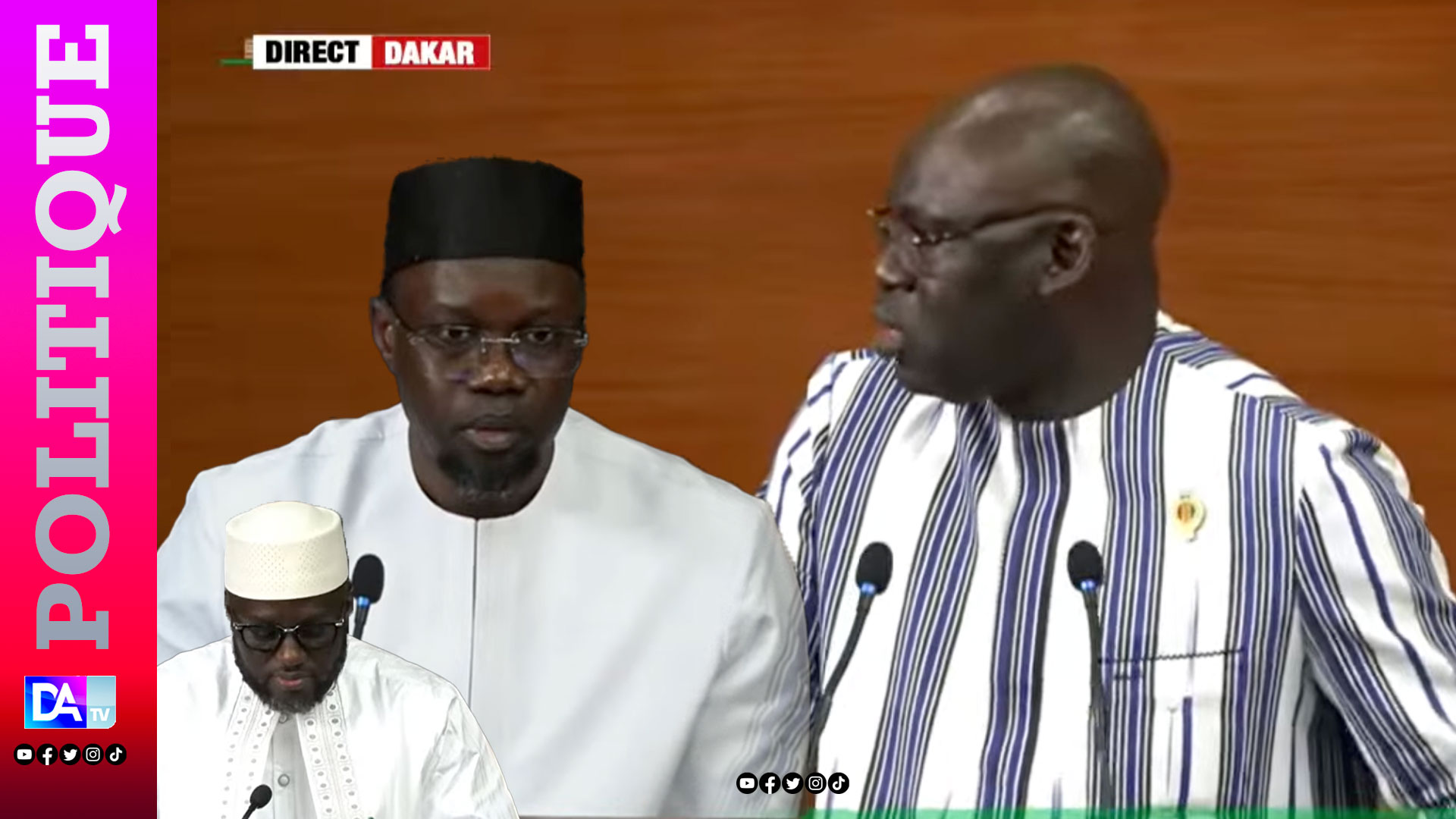
Mbaye Dione’s address before the National Assembly went beyond economic issues tied to the IMF, national debt, and local government funding. In the latter part of his speech, the deputy chose to widen his focus to the nation’s political climate and the relationship between the ruling majority and the opposition.
Turning to the Assembly’s president, he requested that a message be relayed to Ousmane Sonko. The statement was intended to be solemn, given what Dione described as an unusual political tension.
‘We are not his enemies’
The most striking part of his intervention was this: ‘We are not his enemies. We are his opponents.’
With these words, Mbaye Dione sought to draw a clear line between political opposition and personal hostility. In his view, opposing a government, a majority, or a political direction does not mean being against the country, nor being an enemy of those in power.
The deputy reminded that Sénégal’s opposition claims a republican posture. It intends, he said, to play its full role in democratic debate—supporting the government when necessary, but also opposing when it deems it useful.
A reminder of Ousmane Sonko’s own opposition past
Mbaye Dione also invoked Ousmane Sonko’s political history to strengthen his argument. He recalled that Sonko himself was once a prominent opposition figure who used institutional platforms to express his disagreements.
According to the deputy, Ousmane Sonko must now accept that other political leaders do not share his positions. Contradiction, Dione stressed, is part of a healthy democracy’s normal functioning.
For Mbaye Dione, someone who once opposed must be able to accept opposition today. He called for political consistency in how adversaries are treated.
The National Assembly must not become a forum for settling scores
In his speech, Mbaye Dione also emphasized the National Assembly’s role in the country’s institutional balance. He reminded that this body holds an important rank in the Republic and must remain a space for debate, oversight, and accountability.
The deputy warned against any attempt to turn the chamber into a site of personal confrontation or political score-settling. In his view, the National Assembly must serve the nation, not become an arena for inter-camp battles.
This warning reflects a broader concern: preserving the dignity of Parliament and the quality of democratic debate.
An opposition that asserts its responsibility
Mbaye Dione portrayed the opposition as a responsible force committed to republican principles. He stated that opposition deputies are not in a mode of systematic obstruction, but rather of vigilance.
‘We will act as responsible republicans, as courageous opponents,’ he declared in essence.
Through these words, the deputy defends an opposition capable of supporting good decisions while firmly contesting those it deems contrary to the national interest.
A call for political calm
Beyond the direct appeal to Ousmane Sonko, Mbaye Dione’s remarks ring as a call for calm in relations between the government and the opposition. The parliamentarian invites the new authorities to recognize the legitimacy of political contradiction.
His message rests on a simple idea: in a democracy, governing does not mean silencing the opposition, and opposing does not mean working against the country.
By reminding that opponents are not enemies, Mbaye Dione seeks to steer political debate back onto institutional and republican ground.