Senegal’s economic divide: Sonko vs Faye’s clashing visions
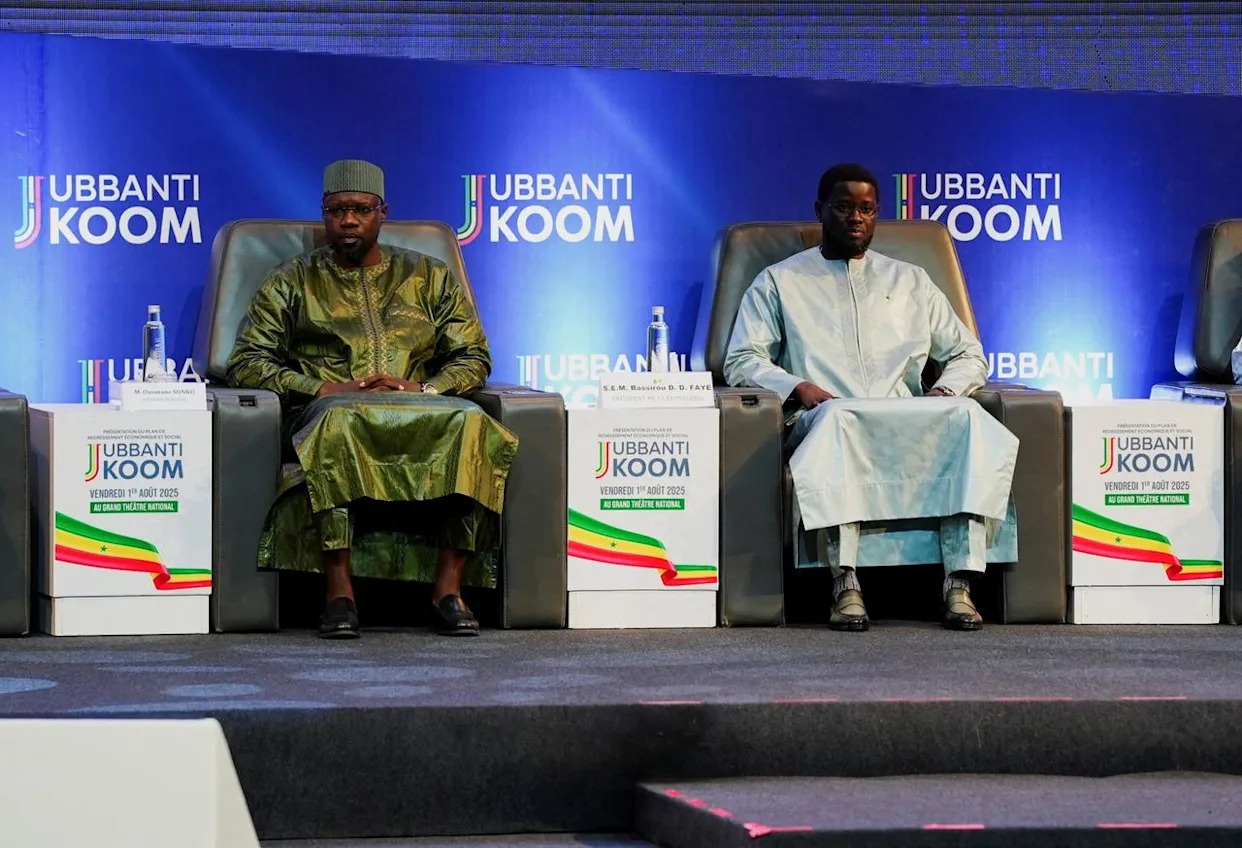
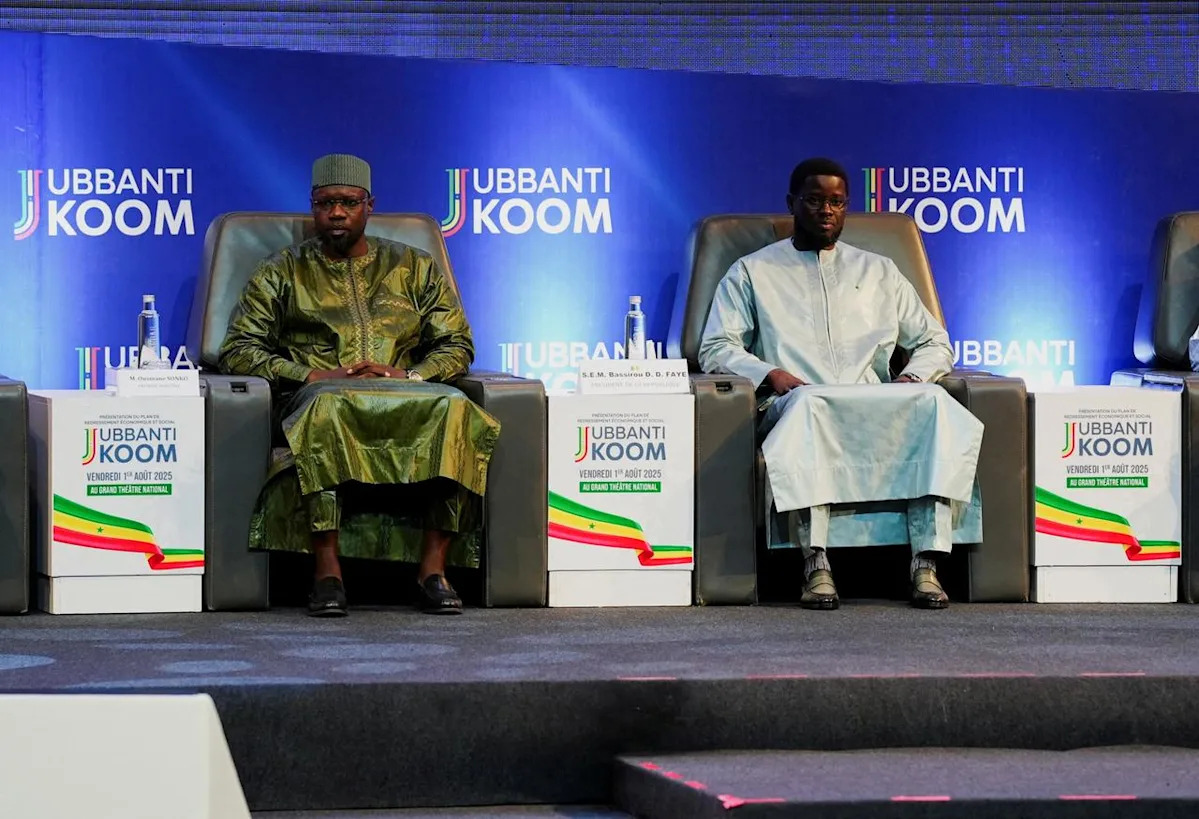
The dismissal of Ousmane Sonko as Prime Minister by President Bassirou Diomaye Faye on May 23, 2026, marks more than a political rupture. It exposes the irreconcilable clash between two diametrically opposed economic philosophies that once coexisted under the same banner. Two years after Faye’s election in April 2024, the presidential duo has fractured over three pivotal economic issues shaping Senegal’s future: debt management, hydrocarbon policy, and the role of foreign capital in domestic development.
Debt: The unbridgeable chasm
The most glaring point of contention revolves around Senegal’s staggering debt burden. In September 2024, Sonko publicly exposed undisclosed debt commitments inherited from Macky Sall’s administration. By March 2025, an IMF assessment revealed approximately €7 billion in unrecorded liabilities, pushing the country’s debt-to-GDP ratio beyond 100%. Annual debt servicing consumes 5,500 billion CFA francs (€8.4 billion), while refinancing needs approach 6,000 billion francs (€9.1 billion). The sovereign credit rating has been downgraded three times in twelve months.
These figures set the stage for a fundamental dispute. Sonko’s approach centered on outright rejection of debt restructuring, framing his stance as a moral crusade against the previous regime. His rhetoric resonated with public opinion, the diaspora, and his militant base, positioning him as a defender of national sovereignty rather than a negotiator in Washington’s corridors. Faye, however, pursued a pragmatic path, engaging directly with the IMF in November 2025 and spearheading a national dialogue in May 2026 to address the crisis.
With a suspended €1.55 billion IMF program, frozen access to international markets, and the looming specter of sovereign default by 2028, Sonko’s hardline position became economically untenable—despite its political utility in mobilizing the Pastef (Patriotes africains du Sénégal pour le travail, l’éthique et la fraternité), the party he founded in 2014.
Related Posts