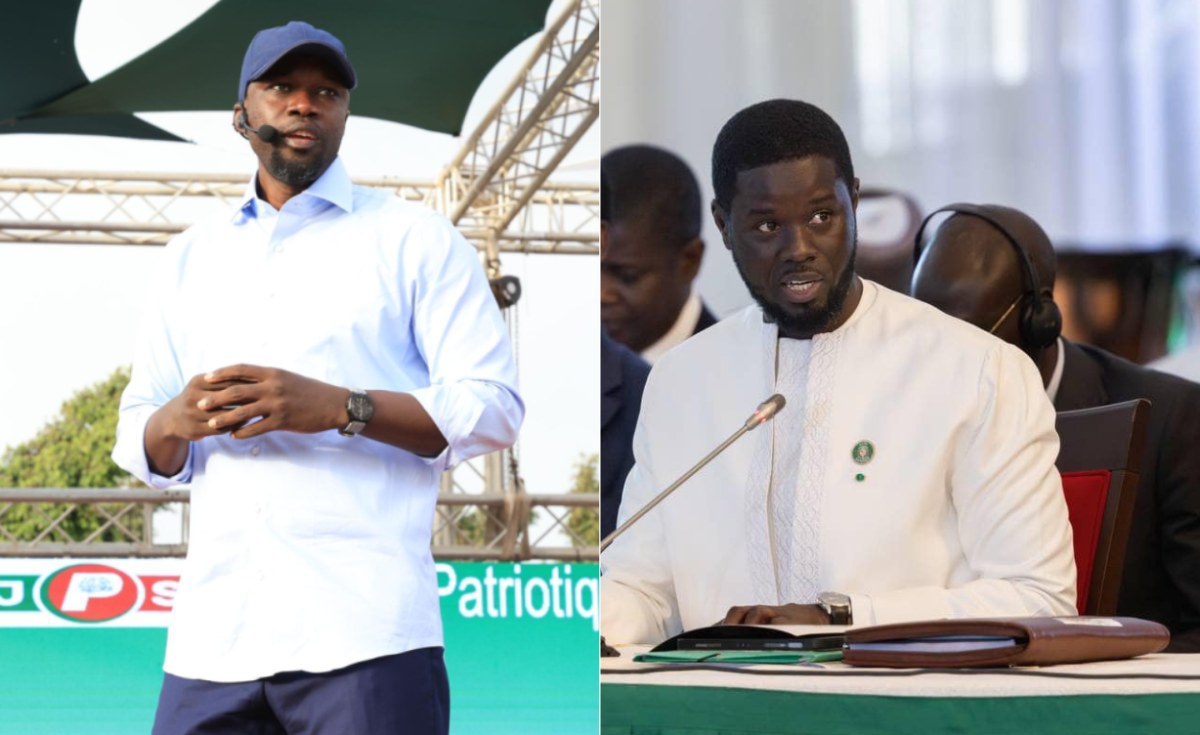
The Senegalese political landscape is navigating one of its most fragile periods since the Bassirou Diomaye Faye – Ousmane Sonko administration took office in March 2024. Once hailed as the unbreakable duo behind the Pastef’s revolutionary project, recent events reveal growing divisions between the head of state and the party’s founding leader.
This tension emerges in a context where, in 2024, Ousmane Sonko—prevented from running due to legal challenges—backed his close ally Bassirou Diomaye Faye as the Pastef’s presidential candidate. Both men, then imprisoned, secured a historic victory that marked the end of Macky Sall’s era and the dawn of a new political chapter for Senegal.
From opposition unity to power dynamics
Power often reshapes alliances forged in opposition. Over a year into their mandate, the relationship between Faye and Sonko appears to have entered uncharted territory. Sonko’s recent statements, laced with sharp criticism and revelations about alleged political agreements tied to their rise, signal a push to reclaim political primacy.
Symbolic break: the party and the state
As the new government led by Prime Minister Al Aminou Lo approaches its formation, Sonko has made a decisive move: no Pastef members will join the cabinet. This stance not only breaks from the governance model born of the 2024 victory but also hints at a growing divide between party structures and state institutions.
Legitimacy under scrutiny
The current standoff revolves around competing claims to legitimacy. President Bassirou Diomaye Faye draws his mandate from universal suffrage and the functioning of republican institutions. Meanwhile, Ousmane Sonko remains, for many supporters, the architect of the movement that propelled the Pastef to power and the central figure behind its rise.
This duality echoes historical precedents in African politics, where movements that seize power often face internal rivalries between the electoral leader and the party’s political strongman. When these power centers clash, the risks of institutional paralysis and political fragmentation escalate.
Stability vs. reform: a national balancing act
While a definitive split remains unlikely, the intensifying tensions and hardening rhetoric point to an ongoing power realignment. Both leaders still share a voter base and a political vision whose core goals retain strong backing among their followers.
The stakes now extend beyond personal ambitions. They touch on Senegal’s ability to maintain democratic stability while advancing the economic and social reforms promised to its citizens. As a regional democratic model, the evolving dynamic between Faye and Sonko could leave a lasting imprint on the Pastef’s future and the nation’s political equilibrium.
The coming months will reveal whether this crisis culminates in a strategic reconciliation, a contentious cohabitation, or an outright political fracture between the two key architects of Senegal’s 2024 political shift.