President Diomaye Faye leads direct negotiations with the IMF over hidden debt crisis
While Senegal’s Prime Minister Ousmane Sonko hosted an economic symposium in Dakar focusing on innovative alternatives to traditional financial solutions, President Bassirou Diomaye Faye’s administration made a clear statement from Nairobi this week. The presidential cabinet confirmed that the Head of State is personally overseeing negotiations with the International Monetary Fund (IMF) to address a financial crisis triggered by the discovery of undisclosed liabilities inherited from the previous administration in 2024.
Direct talks to secure new financing framework
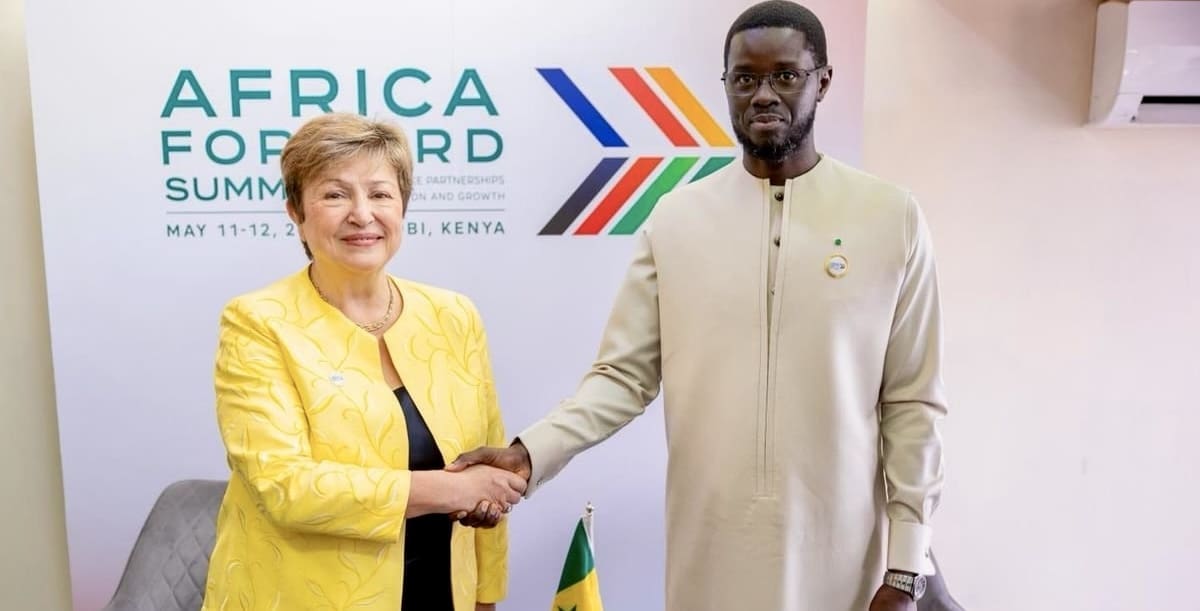
During the Africa Forward Summit in Nairobi, President Faye met with IMF Managing Director Kristalina Georgieva to explore potential solutions to Senegal’s mounting debt burden. The discussions centered on restructuring options and economic stability measures, with both leaders agreeing to continue bilateral talks. The presidential communication office emphasized that this issue is a top priority for the Head of State, who is fully committed to resolving it.
Beyond debt restructuring, the two officials also addressed the economic fallout from regional instability, particularly the escalating energy costs linked to conflicts in the Middle East and their adverse impact on Senegal’s national economy.
Government stance on IMF demands
Last year, Prime Minister Sonko publicly rejected IMF proposals for debt restructuring, dismissing them as an unacceptable imposition. The revelation of accounting discrepancies in 2024 led the IMF to suspend a $1.8 billion financing program, leaving Dakar in urgent need of new funding. With public debt now exceeding 130% of GDP, the government is seeking an alternative loan arrangement to stabilize the economy and restore fiscal credibility.
The IMF has since revised its growth forecasts for Senegal downward, warning of a wider-than-anticipated current account deficit. The new administration’s proactive approach to these negotiations reflects a broader strategy to regain control over the country’s economic trajectory amid rising global uncertainty.