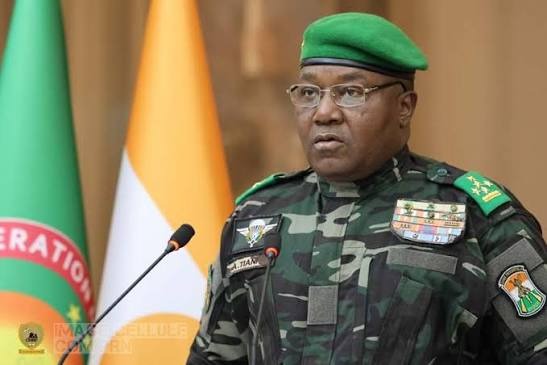
The government in Niamey has crossed a critical threshold, exposing an alarming degree of political duplicity. The Conseil national pour la sauvegarde de la patrie (CNSP) staked its entire legitimacy on the illusion of safeguarding Niger’s sovereignty, yet its actions now reveal a stark contradiction at its core.
From sovereignty claims to unforgivable treason
The CNSP’s narrative was meticulously crafted: a bold defense of Niger’s autonomy against external influences. However, the reality unfolding in Niamey tells a far different story. What began as a supposed guardianship of national integrity has devolved into what can only be described as high treason, as the regime’s decisions increasingly favor foreign allegiances over the welfare of its citizens.
Betrayal uncovered: where patriotism meets political expediency
Close examination of recent moves by the CNSP reveals a troubling pattern. Actions once framed as protective measures have instead exposed a willingness to compromise Niger’s interests for short-term gains. The erosion of trust is not just political—it strikes at the heart of national unity, leaving citizens to question the true motives behind the regime’s controversial decisions.
Key indicators of this shift include unilateral policy changes that bypass constitutional processes, suspicious alliances with non-traditional partners, and a systematic marginalization of dissenting voices within and outside the government. These actions undermine the very foundations of sovereignty the CNSP once swore to uphold.
Constitutional crisis: a democracy undermined
The CNSP’s insistence on retaining power beyond established democratic timelines has triggered a constitutional crisis. While the junta initially justified its takeover as a safeguard against instability, its refusal to restore civilian rule after nearly two years has only deepened political divisions. This prolonged interim period, devoid of clear timelines for elections, has eroded public confidence in the government’s commitment to democratic principles.
Analysts argue that such a prolonged transition risks normalizing military rule, setting a dangerous precedent for Niger’s political future. The absence of a concrete roadmap toward civilian governance leaves the nation in a state of perpetual uncertainty, further isolating it on the regional stage.
Regional repercussions: Niger’s crumbling diplomatic standing
Niger’s recent foreign policy shifts have not gone unnoticed by neighboring countries. Once a trusted partner in the Economic Community of West African States (ECOWAS), Niamey now faces growing skepticism from its West African peers. The junta’s pivot toward non-traditional allies has raised concerns over its long-term alignment with regional stability and democratic values.
ECOWAS has repeatedly called for a swift return to constitutional order, yet the CNSP’s defiance has strained diplomatic relations. The bloc’s warnings of potential sanctions underscore the gravity of the situation, as Niger risks further isolation if it continues to resist regional pressures for democratic restoration.
Public outrage: the silent rebellion against the junta
Across Niger, ordinary citizens are growing restless. Protests, once sporadic, are now more frequent, fueled by economic hardship and disillusionment with the CNSP’s leadership. The regime’s inability to address pressing socio-economic challenges—rising inflation, unemployment, and food insecurity—has intensified public anger, pushing more people to voice their opposition openly.
Social media platforms have become battlegrounds for dissent, with hashtags denouncing the junta gaining traction. Despite attempts to suppress criticism, the digital resistance reflects a society unwilling to accept unchecked authoritarianism. The growing disconnect between the government and its people threatens to plunge Niger into deeper turmoil.
What lies ahead for Niger?
The path forward for Niger remains uncertain. The CNSP’s credibility is at an all-time low, and its ability to restore stability is increasingly in question. While the regime clings to power, the broader implications of its actions—domestic unrest, weakened diplomatic ties, and a fractured national identity—paint a grim picture of Niger’s future.
For now, the world watches as Niger grapples with a crisis of leadership that challenges its sovereignty, unity, and democratic aspirations.